Koi Enrichment: Volume, Depth, and Somewhere to Overwinter
On This Page▾

A koi is a decades-long commitment to an animal that will reach the length of your arm. The enrichment question is mostly a construction question.
Koi reach around two feet, live for decades, shoal, and learn who feeds them. Nearly every welfare problem they have traces to a pond that was built for the fish in the bag. Volume, depth and a stable winter refuge come first, and everything on this page after that is comparatively easy.
What the Research Says
There is no controlled koi enrichment study to point at. Koi are carp, among the most-studied fish in aquaculture, and the useful literature is about space, stocking density, water quality and social behavior, not enrichment as a category.
The group size work on aquarium fish, done on neon tetra, found effects were species-specific, which is a reason not to import shoal-size numbers from a tetra into a pond. What is clear about koi is that they are social, they feed together, and they learn routines and people.
So this guide is built on natural history and on the physical requirements of a very large, very long-lived fish, and it says so instead of dressing that up.
Koi genuinely do learn individual people, and long-term keepers describe fish that surface for one household member and ignore another. For a fish sold as pond decoration, that is a considerable amount of animal.
Volume, Then Depth
The whole thing. Adult koi need thousands of gallons rather than hundreds, and a pond built to the fish you bought is a pond you will be rebuilding.
Depth matters separately from volume. At least three to four feet in part of the pond in most temperate climates, so the bottom does not freeze and stays thermally stable through winter. That deep zone is where the fish overwinter, and a shallow pond is a pond where a hard winter is an event and not a season.
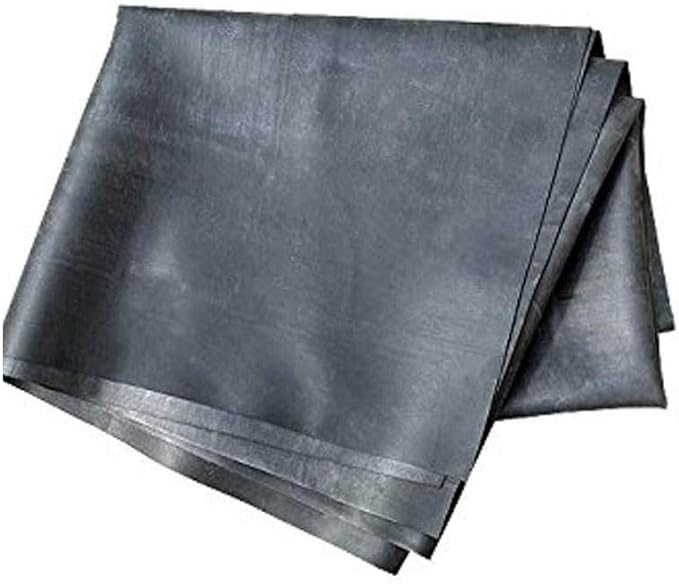
A properly sized pond liner is the starting point, sized to the pond you are actually digging.
Filtration and Aeration for the Adults
Size the system for the fish the koi will become, not the ones swimming now.
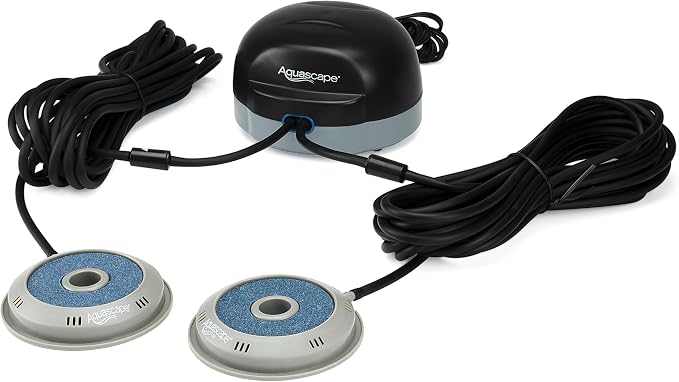
The dangerous window is summer, when warm water holds less oxygen and a heavy fish load is producing the most waste. A pond aerator is cheap against what it prevents, and it also keeps a hole in winter ice for gas exchange.
A Group
Social shoaling fish that feed and move together. A single koi is a poorer arrangement than a group, and the constraint is pond volume, not compatibility.
Stock for the adults. The commonest route to an overstocked pond is buying a sensible number of small fish.
Structure and Shade
Open water for swimming, plus shaded areas and some cover. Shade keeps summer temperatures down and gives fish somewhere to be out of direct sun, and cover matters for a pond fish with herons above it.
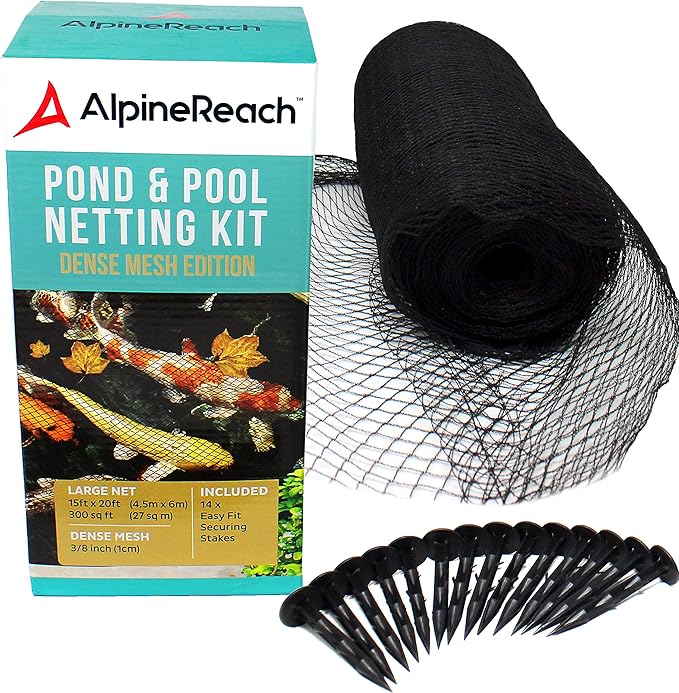
Pond netting handles the predator side and keeps autumn leaves out, which is a water quality problem as much as a tidiness one.
Plants help with shade, cover and water quality, and koi will eat and uproot them. Protect planting in baskets or give it a shallow zone the fish cannot fully reach.
Feeding as Interaction
The enrichment koi keepers already do without calling it that. They learn a routine, they surface for it, and most will take food from a hand.
Vary where and when feeding happens, scatter food across the surface, never one corner, and use foods that float and take time to work at. In cold water, feeding drops away entirely below roughly 48 to 50°F, and pushing food into fish that cannot digest it is a common winter mistake.
Winter, Deliberately
Koi overwinter in the deep zone at low metabolic rate. What they need is depth, a hole kept open in the ice for gas exchange, no feeding once the water is cold, and to be left alone.
Do not break ice by hitting it, which sends a shockwave through the water. An aerator or a floating heater keeps a hole open properly.
Priority Order
- Volume and depth sized for two-foot adults
- Filtration and aeration rated for the adult fish load
- A deep zone that stays thermally stable through winter
- A group, never a single fish
- Shade, cover and predator netting
- Feeding as interaction, varied in place and timing
- Correct winter handling, which mostly means leaving them be
What Not to Do
Do not build a pond for the fish you are buying. Do not size filtration for the current stocking. Do not build shallow and hope. Do not feed in cold water. Do not smash ice to open a hole. Do not keep one koi alone. And weigh the koi versus goldfish comparison before deciding, since goldfish are the right answer for a lot of ponds that get koi.
Sources & Further Reading
1 source
- No enrichment study for this species. This guide is built on koi natural history and on the physical requirements of a very large, long-lived pond fish, plus the group size work done on neon tetra.
- Saxby A, Adams L, Snellgrove D, Wilson RW and Sloman KA (2010). The effect of group size on the behaviour and welfare of four fish species commonly kept in home aquaria. Applied Animal Behaviour Science
❓ Frequently Asked Questions
Is there research on koi welfare?
Not in the form of a controlled enrichment study. Koi are carp, one of the most-studied fish groups in aquaculture, and the useful evidence is about space, water quality, stocking density and social behavior rather than about enrichment as such.
How big do koi get?
Around two feet is normal for a well-kept adult and larger is possible. They are sold at a few inches, which is the root of nearly every koi welfare problem: a pond built for the fish in the bag rather than the fish it becomes.
How deep should the pond be?
Deep enough that the bottom does not freeze and stays thermally stable, which in most temperate climates means at least three to four feet in part of the pond. Depth is what makes overwintering survivable rather than merely survivable-looking.
Are koi social?
Yes. They are shoaling fish that feed and move together, and a solitary koi is a poorer arrangement. They also learn a feeding routine and readily learn to take food from a hand.
What is the biggest killer?
Water quality in an overstocked pond, usually in summer when warm water holds less oxygen and a heavy fish load is producing the most waste. Filtration and aeration have to be sized for the adult fish, not the current ones.
Do they need plants?
Plants help with shade, water quality and cover, and koi will eat and uproot them. The usual answer is planting protected in baskets or in a separate shallow zone the fish cannot fully reach.
📰 More on the Koi
🛒 Recommended Gear
As an Amazon Associate, we earn from qualifying purchases through the links above - at no extra cost to you.
Written by Michael Ryan
Mike keeps two rescued bearded dragons, Dex and Cera, and writes the care guides on BeastlyFacts from his own research and mistakes. He is not a veterinarian.
More about Michael Ryan →Comments
No comments yet - be the first!