When a Fish Dies: What to Do Next
On This Page▾

A dead fish in a home aquarium is two problems at once: a body to deal with, and a tank that may still hold whatever killed it. The next hour has an order. Confirm the death, get the body out, and test the water before changing any of it. Then work out why it happened. Disposal comes last, and the quickest options, the toilet and the nearest pond, are the two that do harm.
Make Sure It Is Dead
A fish lying still is not proof. Loss of movement, no response to touch and a limp body all point to death. Two checks are more reliable for most fish. The gill covers stop moving and stay still for at least 30 minutes, and the eyes no longer roll when the fish is gently rocked from side to side. That eye roll is a reflex, and losing it is one of the clearer signs. A heartbeat proves less than it seems, because a fish's heart can keep beating after the brain has died.
A fish that is still breathing is not ready for any of what follows. If it is failing and cannot recover, ending its life humanely is a separate decision, and it comes first.
Take the Body Out Now
Once death is confirmed, the body comes out of the tank. Three reasons sit behind that. Some infections, Mycobacterium among them, pass to fish that eat an infected dead fish. Decaying matter is a source of fungal infection, and clearing it out is part of preventing one. And decay adds ammonia to the water, which at high enough levels kills fish.
If a vet or lab may want to see it, wrap the body in wet paper towels, seal it in a bag and keep it in the fridge, never the freezer, since freezing damages the tissue a lab examines.
Test the Water Before You Change It
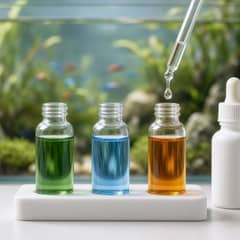
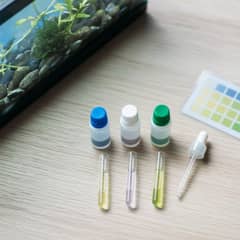
Raised ammonia or nitrite, swings in pH and low oxygen all cause disease in fish, and none of them can be seen. Test ammonia, nitrite, pH, alkalinity (KH) and temperature, and write the readings down. Frequent tests and a written record are how a change in water quality gets noticed.
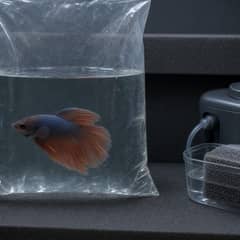
If a vet or lab may get involved, take a water sample first, before any water is changed. Keep it in its own container, separate from the fish, refrigerated and in the dark. The water a fish travels in does not show what is happening in the tank, so it does not count as the sample.
Sample, then test, then change. A sample taken after the change describes the new water. One taken before it describes the water the fish died in.
Any ammonia reading above zero is a warning, because even a low level stresses fish and damages their gills. Stop or cut feeding for a day or two, change a quarter to half of the water if the new water tests free of ammonia, and retest every day until the reading is zero. Check the filter too: a failing filter is a common cause, and warmer water or a higher pH makes the same reading more dangerous. A water conditioner that binds ammonia buys time but does not fix the cause.
At 2 mg/L (2 ppm on most kits) or higher, change at least half the water. In a betta tank, the change stops at half and is repeated daily until ammonia reads 0. The other exception is old tank syndrome: very high ammonia, often above 10 mg/L, little or no alkalinity (KH), and a low pH. There a simple water change is the wrong move. The new water raises the pH, and the rise can turn the ammonia already in the tank toxic and kill the fish. A tank like that comes back on small changes, daily at first, over about a month, never one big one.
Look for a Cause
The cause usually sits in the tank's recent history. New arrivals first, and whether they went through quarantine before joining the tank; a new fish needs at least 30 days there. Then the timeline: when the first odd behavior showed, and how many fish have been sick or died each day since. Then the routine: when the water was last changed and how much went out, and whether feeding or maintenance changed recently.
The body carries clues while it is fresh. Note gills that look discolored, bloody or frayed, and any sores or growths on the skin.
Then watch the rest of the fish closely, a few times a day. Rubbing against surfaces, gasping at the surface, lying on the bottom, clamped fins, sunken or bulging eyes, sores, or a fish that stops eating all mean the trouble is still in the tank. When most of the fish sicken and die within a day, the cause is usually the water.
When a Vet or Lab Is Worth Calling
Call a vet who treats fish, or a fish disease lab, as soon as you suspect disease. Without tests, fish diseases are often misdiagnosed, and treating for the wrong one can leave the fish worse off.
A lab can use a body only if the fish died recently and still has clear eyes and red gills; one that has started to decompose or smells is no use. Call the lab before sending anything, and keep the body cold on ice packs on the way.
Disposing of the Body
Do not flush it. A toilet can drain to a waterway, and a dead fish can carry disease, so the body goes somewhere it cannot pass anything on or reach open water. Never put a fish into a pond, stream or lake either, alive or dead. A released aquarium fish can become an invasive species, and the damage lands on the waterway, on the people who fish and boat it, and on whoever pays to clean it up. The tank's water and plants follow the same rule: none of it goes into a lake, river or wetland.
A small dead fish can go out double bagged in the household trash, or be buried on your own property under at least two feet of soil, in ground that stays dry at that depth, where pets, pests and wildlife cannot reach it. Check your local rules first, since what is allowed depends on where you live. If the fish may have died of an infection, ask your vet before choosing.
Looking After the Fish That Are Left
Once the body is out, the rest of the hour belongs to the tank. Sample and test the water before changing any of it, keep testing until ammonia reads zero, and watch the fish that are left for rubbing, gasping or a lost appetite. If more of them get sick, call a vet who treats fish before reaching for a medicine, since treating the wrong disease can make things worse.
Sources & Further Reading
Last reviewed 4 Nov 2026 · 6 sources
- UF/IFAS Extension: Submission of Fish for Diagnostic Evaluation (FA55, Stilwell, Yanong and Francis-Floyd); Ammonia in Aquatic Systems (FA16, Francis-Floyd, Watson, Petty and Pouder)
- AVMA Guidelines for the Euthanasia of Animals: 2020 Edition (American Veterinary Medical Association) (PDF, downloads)
- Merck Veterinary Manual: Disorders and Diseases of Fish (Francis-Floyd and coauthors); Environmental Diseases of Aquatic Animals in Aquatic Systems; Management of Aquarium Fish
- Washington Invasive Species Council: Pet Owner
- Minnesota Department of Natural Resources: Aquarium owners
- Florida Department of Environmental Protection: Disposal of Deceased Domestic Animals Guidance Document (PDF, downloads)
Frequently Asked Questions
Should the dead fish or a sick one go to the lab?
A sick one, when there is a choice. Labs learn the most from fish that are close to death or showing the signs most of the group shares, and three to five of those is usually enough.
Is it safe to handle a dead fish with bare hands?
Wash your hands afterward, as after any work in an aquarium. Mycobacterium, which fish can carry, can cause a skin infection in people that may progress to something more serious, and anyone with a weakened immune system should probably leave tank work to someone else.
What can I do with live fish I can no longer keep?
Give them to a responsible hobbyist, or ask a pet store to take them. Both keep the fish out of local waters, which is where an unwanted aquarium fish does its damage.

Written by Michael Ryan
Mike keeps two rescued bearded dragons, Dex and Cera, and writes the care guides on BeastlyFacts from his own research and mistakes. He is not a veterinarian.
More about Michael Ryan →You May Also Like

Subscribe - it's free
An occasional email when something new is worth your time. No spam.
Health and More