Sulcata Tortoise vs. Russian Tortoise: Which Tortoise Actually Fits Your Space
On This Page▾

Both start out as palm-sized hatchlings that look nearly identical in size at the pet store, which is exactly how so many sulcata owners end up surprised a few years later. The difference between these two isn't temperament or diet, it's how much space and how many decades you're signing up for.
The Comparison
| Sulcata Tortoise | Russian Tortoise | |
|---|---|---|
| Adult weight | 80-110 lbs, males past 200 | 2-3 lbs |
| Adult shell length | 24-30 inches | 6-10 inches |
| Adult housing | Outdoor pen, 100+ sq ft minimum | Indoor tortoise table, permanent |
| Growth rate | Fast - grows into full size in 5-10 years | Slow - years to reach full size |
| Brumation/hibernation | Not built for it, needs warmth year-round | Cold-hardy, can brumate safely |
| Escape risk | Powerful digger, needs buried fencing | Persistent digger and climber despite size |
| Lifespan | 70-100+ years | 40-50 years |
| Beginner-friendly? | No - frequently surrendered due to size | Yes |
Size Is the Whole Story Here
A Russian tortoise tops out at 6 to 10 inches and 2 to 3 pounds, a size it holds for its entire adult life. A sulcata starts at that same hatchling size and grows into an 80 to 110 pound animal, or past 200 for a large male, with a shell over two feet long, making it the third-largest tortoise species in the world after the Galapagos and Aldabra giant tortoises. That growth happens fast, often reaching most of its adult size within 5 to 10 years, which is exactly the window where so many sulcata owners realize their indoor setup has become hopelessly inadequate.
A sulcata tortoise's shell can grow past two feet in length even though the hatchling that produced it emerged from an egg smaller than a golf ball, one of the largest adult-to-hatchling size ratios of any commonly kept reptile.
Housing: A Table vs. Acreage
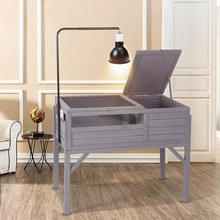
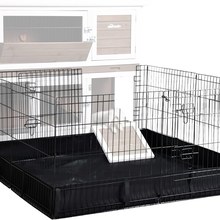
A Russian tortoise can live its whole life on a well-set-up open-top tortoise table, indoors, with no yard required. A sulcata can use that same kind of table only while it's a juvenile. As an adult, it needs genuine outdoor space, ideally several hundred square feet, plus a heated shelter for cold nights. That outdoor requirement isn't a nice-to-have, it's the difference between a healthy adult sulcata and a stressed, cramped one.
Choose a Sulcata only if you have, or will soon have, real outdoor acreage and a heated shelter for a full-grown adult. This is one of the largest tortoise species alive, and underestimating that growth is the single biggest reason sulcatas end up surrendered to reptile rescues.
Escape-Proofing Looks Different at Each Scale
Both species dig, but the stakes are completely different. A Russian tortoise's digging is manageable within an indoor table's walls. A sulcata is a powerful, dedicated digger capable of undermining ordinary fencing, which is why any outdoor sulcata enclosure needs fencing buried at least 12 inches deep from day one, not added after the first escape.
The Lifespan Commitment Is Generational
A Russian tortoise's 40 to 50 year lifespan is already longer than most pets people keep. A sulcata's 70 to 100+ years is on another scale entirely, genuinely long enough to outlive the person who buys it as a hatchling. That's not a hypothetical, it's the single biggest reason sulcatas end up surrendered to reptile rescues: the animal is fine, the space and multi-generational plan around it never existed.
A Russian Tortoise is the better fit if you want a tortoise that stays manageable indoors for its entire life. It's cold-hardy and can brumate safely with proper preparation, something a sulcata, built for the edge of the Sahara, simply isn't equipped for.
Bottom Line
Pick a Russian tortoise if you want a tortoise that stays manageable indoors for its entire life and don't have serious outdoor space to offer. Pick a sulcata only if you genuinely have, or will soon have, the outdoor acreage and heated shelter a full-grown adult needs, and you're comfortable planning for an animal that may outlive you. This is one comparison where the "cooler-looking" hatchling is very often the wrong choice for the home it's going into. The sulcata and Russian tortoise encyclopedia profiles cover the Sahel and Central Asian origins behind that size gap.
Sources & Further Reading
❓ Frequently Asked Questions
Can a sulcata tortoise be kept indoors permanently?
Not realistically, once it's grown. A hatchling can start on an indoor tortoise table, but sulcatas are the third-largest tortoise species on earth, reaching 80 to 110 pounds with a shell 24 to 30 inches long, and an adult needs outdoor space measured in dozens to hundreds of square feet. A Russian tortoise can live comfortably on an indoor table for its entire life.
How big does a sulcata tortoise get compared to a Russian tortoise?
There's no real comparison. An adult sulcata weighs 80 to 110 pounds, and a large male can pass 200, on par with a large dog. An adult Russian tortoise weighs just 2 to 3 pounds and stays around 6 to 10 inches long, small enough to hold in two hands for its whole life.
Which tortoise is better for a beginner, sulcata or Russian?
Russian tortoise, clearly. It stays small enough for permanent indoor housing, is cold-hardy, and doesn't force a major home or yard renovation. A sulcata is one of the most commonly surrendered exotic pets specifically because new owners underestimate how fast a cute hatchling turns into an animal that needs a heated outdoor enclosure and buried fencing.
How long do sulcata and Russian tortoises live?
Both are multi-generational commitments. A Russian tortoise commonly lives 40 to 50 years. A sulcata can live 70 to 100+ years with good care, meaning a hatchling bought today could realistically outlive the person who bought it and need to be rehomed to family.
Do sulcata tortoises and Russian tortoises need to brumate or hibernate?
Russian tortoises are cold-hardy and can brumate safely with proper preparation, and many keepers in suitable climates let them do so outdoors or in a controlled indoor setup. Sulcatas come from the edge of the Sahara and are not built for brumation at all, they need consistent warmth year-round and a heated shelter for any night that drops much below 50°F.
Can you keep a sulcata and a Russian tortoise together?
It's not recommended. Beyond the enormous size mismatch, which puts a Russian tortoise at real risk of injury from an adult sulcata, the two species have different climate and UVB needs that are hard to satisfy simultaneously in one shared enclosure. Keep them in separate, species-appropriate setups.
🐢 How Much Does a Russian Tortoise Really Cost?
🐢 How Much Does a Sulcata Tortoise Really Cost?
🐢 How to Handle a Russian Tortoise
🐢 How to Handle a Sulcata Tortoise (While You Still Can)
🐢 Common Russian Tortoise Health Issues and What Causes Them
🐢 Common Sulcata Tortoise Health Issues and What Causes Them
🐢 Russian Tortoise Enclosure Setup: Compact Housing With Real Requirements
🐢 Sulcata Tortoise Enclosure Setup: Indoor Is Temporary, Outdoor Is the Goal
🐢 Russian Tortoise Enrichment: Digging, Grazing, and Exploration
🐢 Sulcata Tortoise Enrichment: A Hundred Pound Grazer in a Back Garden
🐢 Are Russian Tortoises Legal? State-by-State Guide
🐢 Is It Legal to Own a Sulcata Tortoise? State-by-State Guide
🛒 Recommended Gear
As an Amazon Associate, we earn from qualifying purchases through the links above - at no extra cost to you.
Written by Michael Ryan
Mike keeps two rescued bearded dragons, Dex and Cera, and writes the care guides on BeastlyFacts from his own research and mistakes. He is not a veterinarian.
More about Michael Ryan →Comments
No comments yet - be the first!