Goldfish Enrichment: Space, Plants, and Foraging Done Right
On This Page▾

For goldfish, enrichment and housing quality are basically the same conversation. Decor cannot rescue a bowl or chronically poor water, and no amount of planting fixes an undersized, under-filtered tank.
Correct tank volume, filtration, and a fully cycled tank come before plants, toys, or tankmates. If any of those are still wrong, that's the actual welfare problem to fix first, not a lack of decor.
What the Research Says
Work tracking where goldfish spend their time found they spent roughly 90% of it in planted compartments versus about 10% in barren open space, a real, measurable preference for structure over emptiness. Interestingly, the same research didn't find a strong preference for live plants specifically over closely matched artificial ones. The structure and cover seem to be what matters most, not necessarily whether it's alive.
Separate research on substrate particle size found it genuinely affects foraging time: coarse sand supported more natural foraging behavior than many coarser gravel options, and goldfish kept foraging even when food wasn't the only thing driving the behavior.
The practical takeaway from both studies together: structure and a foraging-friendly substrate carry real enrichment value on their own, live plants are a nice bonus for water quality too, but they're not doing enrichment work that artificial structure can't also do.
Space and Layout
Fancy goldfish need at least 20 gallons for the first fish and about 10 more per additional fancy. Commons and comets need considerably more room and are genuinely better suited to a pond long term. A long, wide footprint beats a tall column, goldfish are horizontal swimmers, and deliberate open swim lanes matter as much as any structure you add. Avoid fin-trapping clutter, sharp ornaments, and tight plastic plants that can tear delicate fancy fins.
Plants and Structure
Given the research above, planted or structured zones are worth having, live or artificial. Rhizome-based plants like anubias and java fern, attached to hardscape rather than buried in substrate, tend to hold up better than plantings goldfish can uproot outright. Expect some nipping and disturbance regardless of what you choose, tough plants or an acceptance of occasional replacement both work. Keep hardscape secured so nothing can topple onto a fish, and stick to smooth surfaces only for fancy varieties.
Substrate and Foraging
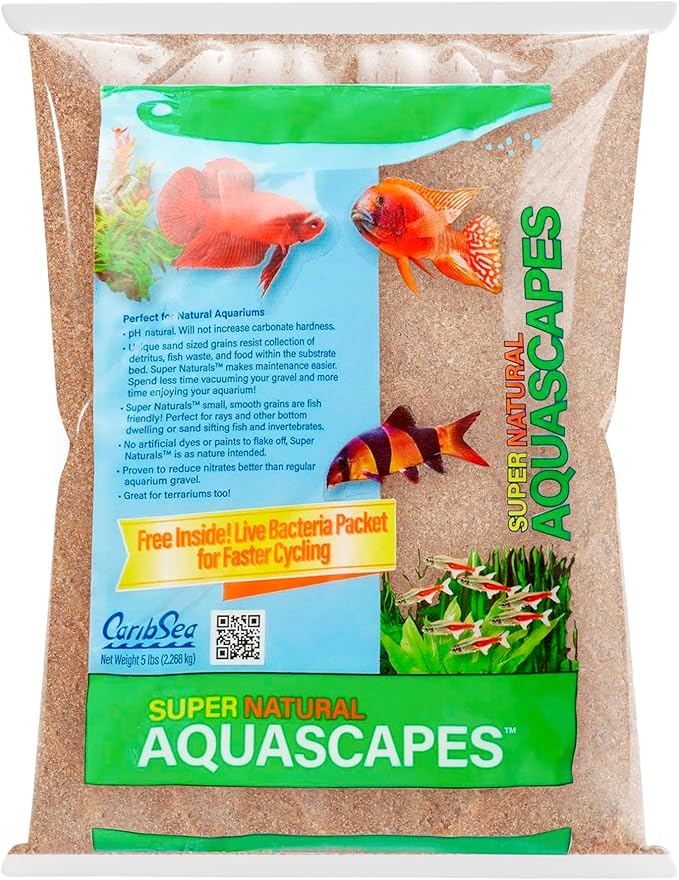
Fine sand or smooth rounded gravel supports the natural sifting behavior the research above measured directly. Skip sharp gravel and anything small enough to be swallowed and risky if it is. A bare-bottom tank is easier to keep clean for some keepers, but it removes a genuine foraging opportunity that a proper substrate provides. Sinking foods pair naturally with this setup, encouraging mid and bottom-level foraging instead of surface gulping, which also helps reduce air-gulping in fancy varieties.
Feeding Presentation
Measured portions matter regardless of presentation, since goldfish have no true stomach. Sinking pellets as the staple presentation encourage the same natural foraging the substrate work above supports, and occasional vegetable forage adds variety. Enrichment is not a license for extra food, remove anything uneaten to protect water quality.
Social Stocking
Goldfish often do well with same-type tankmates, matching fancy with fancy and single-tail with single-tail keeps body shape and swim speed compatible and reduces competition at feeding time. This only works if filtration and tank volume genuinely support the combined bioload of everyone in the tank, stocking for company without the space and filtration to back it up isn't enrichment: it's just crowding.
What Not to Do
A bowl or a nano tank marketed as a home isn't fixed by adding a plant, the volume problem is the actual issue. A bare, sterile box with no structure and no foraging outlet is genuinely under-enriched even with perfect water. Sharp decor and fin-ripping plastic plants cause real injury. Overstocking under the label of "companionship," using plants to excuse weak filtration, and overfeeding under the label of "enrichment" are all the same mistake wearing a different name, none of them substitute for getting the actual tank right.
Sources & Further Reading
❓ Frequently Asked Questions
What counts as enrichment for a goldfish?
Open space to swim, structure and planting for cover, a substrate that supports foraging, and a feeding style that lets natural bottom-sifting behavior happen. None of it substitutes for correct tank volume, filtration, and water quality, those come first.
Do goldfish prefer live plants over artificial ones?
Research tracking where goldfish spend their time found they spent roughly 90% of time in planted areas versus about 10% in barren open space, but didn't show a strong preference for live plants specifically over closely matched artificial ones. Structure and cover seem to be what matters, not necessarily whether it's alive.
What substrate is best for goldfish foraging?
Fine sand or smooth rounded gravel supports natural sifting behavior. Research on substrate particle size found it measurably affects how much time goldfish spend foraging, with coarse sand outperforming a lot of coarser gravel options for this specifically. Avoid sharp gravel or anything easily swallowed.
What plants survive in a goldfish tank?
Tough, rhizome-based plants attached to hardscape rather than planted in substrate hold up best, anubias and java fern are commonly recommended since goldfish tend to uproot and nip at looser plantings. Expect some damage regardless, and either choose plants tough enough to take it or accept occasional replacement.
Can goldfish be kept together for social enrichment?
Often yes, goldfish frequently do well with same-type tankmates, fancy with fancy, single-tail with single-tail, since matching body types and swim speed reduces competition. This only works if filtration and tank volume support the combined bioload, stocking for company without the space to back it up isn't enrichment.
Does water movement matter for enrichment?
A mild current from adequate filtration can encourage more natural swimming activity, but avoid exhausting flow, especially for heavy-bodied fancy varieties that aren't built for strong currents.
📰 More on the Goldfish
📘 Goldfish care guide
🐟 How Much Does a Goldfish Really Cost?
🐟 How to "Handle" a Goldfish (Net and Cup, Not Hands)
🐟 Common Goldfish Health Issues (And What Actually Prevents Them)
🐟 Goldfish Tank Setup: Bigger Than You Think, Filtered More Than You'd Guess
🐠 Goldfish Feeding: Schedule, Diet, and Why They Stop Eating
🛒 Recommended Gear
As an Amazon Associate, we earn from qualifying purchases through the links above - at no extra cost to you.
Written by Michael Ryan
Mike keeps two rescued bearded dragons, Dex and Cera, and writes the care guides on BeastlyFacts from his own research and mistakes. He is not a veterinarian.
More about Michael Ryan →Comments
No comments yet - be the first!