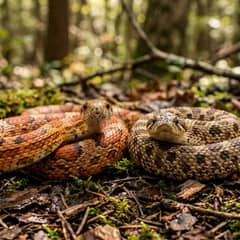
Hognose Enrichment: They Were Asked, and They Chose
On This Page▾

The hognose study did what most enrichment research does not: it let the snakes vote.
Given a choice between an enriched side and a standard one, with shelters and a thermal gradient on both, western hognose snakes chose the enriched side, and the preference got stronger as the study went on. Boldness did not predict it. Every snake leaned the same way.
What the Research Says
Nagabaskaran, Skinner and Miller set up a preference test, published in the journal Animals in 2022. The enriched side had burrowing substrate, interactive stimuli and a large water dish. The standard side had paper towel substrate and a smaller dish. Crucially, both sides had shelters and a thermal gradient, so what was being compared was enrichment on top of adequate husbandry rather than enrichment against neglect.
The snakes preferred the enriched side, and the preference strengthened over time. It was stronger still when the enriched side happened to be the cooler one, which the authors connect to hognose burrowing behavior. No relationship was found between enrichment preference and individual boldness.
Substrate You Can Vanish Into
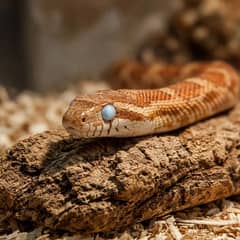
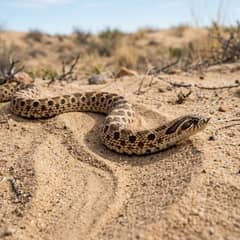
The hognose rostral scale is an upturned, shovel-shaped digging tool. A snake on paper towel is carrying specialized equipment it will never use.
Give it enough loose burrowing substrate to disappear into completely, with reptile sand as the sand part of the mix. Depth is the variable, and a soil and sand mix that holds a tunnel instead of collapsing does the job better than any single material. A depth a hognose can vanish into takes more substrate than one small bag holds. Do not handle a hognose that is mid-dig, which interrupts the behavior the enclosure exists to allow.
Put the Digging on the Cool Side
This is the most transferable detail in the study. The preference was stronger when the enriched side was cooler, which means substrate depth and thermal choice reinforce each other when you place them together. Split them up and they compete.
Practically: deep substrate on the cool end, basking surface on the warm end, cover at both. The snake never has to choose between the temperature it wants and the behavior it wants.
A Water Dish Big Enough to Get Into
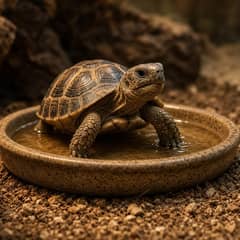
The enriched side in the study included a large water dish, and that word is doing work. A dish the snake can enter supports shedding and hydration and gives the animal an option it controls, which is the whole shape of enrichment for a reptile.
Cover at Both Ends
Two secure hides minimum, one warm and one cool, so being concealed never costs the snake its preferred temperature. Cork tubes and flats plus leaf litter break the floor up further, so the snake has cover everywhere.
Hognoses are famous for their defensive theater: hooding, hissing, and rolling over to play dead. Those are anti-predator responses, and a snake that performs them constantly during routine keeping is reporting something. Cover reduces how often it feels the need.
Priority Order
- Substrate deep enough to burrow into completely
- Deep substrate placed on the cool side, since that is what the study found preferred
- A water dish large enough to soak in
- Secure cover at both ends of the gradient
Let the Snake Keep Voting
Given the choice, the snakes in the study picked the enriched side more firmly the longer it was on offer, and a home enclosure can put that same choice in front of a hognose every day. Put the depth where the cool is, cover both ends, and let where the snake spends its time tell you what is working.
Sources & Further Reading
Last reviewed 9 Sep 2026 · 4 sources
- Nagabaskaran G, Skinner M and Miller N (2022). Western hognose snakes (Heterodon nasicus) prefer environmental enrichment. Animals, 12(23), 3347 (PDF, downloads)
- Burghardt GM (2013). Environmental enrichment and cognitive complexity in reptiles and amphibians. Applied Animal Behaviour Science, 147, 286-298
- Hutchings (2025). Recent scientific insight into the spatial needs of captive snakes. International Journal of Zoology
- Hoehfurtner et al. (2021). Does the provision of environmental enrichment affect the behaviour and welfare of captive snakes? Applied Animal Behaviour Science
Frequently Asked Questions
Is there research on hognose enrichment specifically?
Yes. Nagabaskaran, Skinner and Miller ran a 2022 preference test in Animals, offering western hognose snakes an enriched side with burrowing substrate, interactive stimuli and a large water dish against a standard side with paper towel and a small dish. Both sides had shelters and a thermal gradient, so the comparison was enrichment rather than basic husbandry. The snakes preferred the enriched side, and the preference strengthened over time.
Why does it matter that the preference got stronger?
Curiosity about something new wears off. A choice that keeps getting firmer points to something else: the snake has learned which side serves it better and goes back to it on purpose.
Why did the cooler enriched side get preferred more?
The authors tie it to burrowing. A digging snake heads for cooler, deeper ground anyway, so cool-side substrate lets one choice serve both needs.
How deep should hognose substrate be?
Deep enough to disappear into completely, not just to push through. These are dedicated burrowers with an upturned rostral scale adapted for digging, and shallow substrate removes the behavior the snout is built for.
Does boldness affect whether a snake uses enrichment?
The study found no relationship between enrichment preference and individual boldness levels, so a shy hognose is not opting out of enrichment. Every snake in the study leaned the same direction.
Is the hognose defensive display a stress signal?
Those moves are the snake's answer to a threat, so seeing them during ordinary care is worth acting on. More cover and deeper substrate give it somewhere to go other than the show.
More on the Hognose Snake
Recommended Gear
As an Amazon Associate I earn from qualifying purchases through the links above, at no extra cost to you.

Written by Michael Ryan
Mike keeps two rescued bearded dragons, Dex and Cera, and writes the care guides on BeastlyFacts from his own research and mistakes. He is not a veterinarian.
More about Michael Ryan →You May Also Like
Subscribe - it's free
An occasional email when something new is worth your time. No spam.
Deep Dive
Health and More