How to Handle a Green Iguana (And Why So Many Get Surrendered)
On This Page▾

Green iguanas can become calm, interactive animals with consistent handling from a young age, but the honest picture also includes real physical risk from an adult, and a surrender rate that's worth understanding before you buy.
The size problem, stated plainly
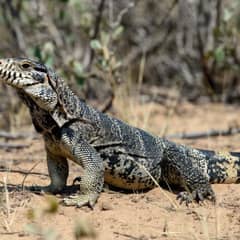
An adult male green iguana reaches 6 to 7 feet including tail and up to 20 pounds, a completely different animal from the small, manageable baby most people bring home. This mirrors a theme that runs through the other big lizards, the savannah monitor and the Argentine tegu, all three are large lizards commonly surrendered when owners discover the adult doesn't match what they signed up for. The iguana-specific twist: unlike the omnivorous monitor or the dog-like, trainable tegu, an iguana is strictly herbivorous and, notably, can become genuinely more dangerous during breeding season.
Three real physical risks
- Claws. Sharp and constantly used for climbing, capable of deep scratches during normal handling, not just defensive struggling.
- Tail-whipping. A real defensive strike, not a minor flinch. Large iguanas direct tail lashes at whatever's nearest, including a keeper's face, hard enough to cause welts and bruising.
- Tail autotomy. Like many lizards, the tail can drop under grasping pressure, even fairly light pressure. Never grab or restrain by the tail.
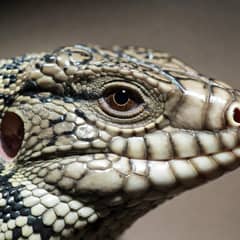
Green iguanas have a pale scale on top of the head called the parietal eye, a genuine third eye with a lens and a retina. It's wired to the pineal gland rather than to vision, and its job is detecting shadows moving overhead, an early warning system for birds of prey that's been with this species far longer than captivity has.
Breeding season changes everything, temporarily
This is genuinely worth knowing in advance. Testosterone-driven aggression in mature males is real and can transform a previously calm, handleable iguana into an unpredictable one for a period each year, head-bobbing, color intensifying toward orange or red, and territorial chasing or biting. Approaching from directly above triggers a strong defensive response too, it reads as an aerial predator attack to the iguana, approach from the side instead.
First-timer mistakes
- Buying a $30 baby without budgeting for what a 6-foot adult actually needs.
- Grabbing the tail during handling.
- Approaching from overhead instead of the side.
- Housing two males together, expect real fighting. Adults are territorial, and the enrichment guide has the field research on why hatchlings group up and adults do not.
The honest recommendation
If you're drawn to this species, go in with eyes open about the adult size and the temporary behavioral shift breeding season brings. This is not a species where the cute baby predicts the adult experience, and that mismatch is exactly why iguanas show up so often at reptile rescues.
Sources & Further Reading
Last reviewed 11 Aug 2026 · 2 sources
❓ Frequently Asked Questions
How big does an adult green iguana get?
6 to 7 feet including the tail, and up to 20 pounds. The small, manageable baby on the shelf gives no hint of it. It's the same story as the savannah monitor and Argentine tegu: large lizards that get surrendered once the adult arrives.
What are the physical risks of handling an adult iguana?
Three of them. Sharp claws capable of deep scratches during normal handling. Tail-whipping, a real defensive strike that can cause welts and bruising, including to the face. And tail autotomy, the tail can drop under grasping pressure, so never grab or restrain by the tail.
Does breeding season change an iguana's behavior?
Yes, in mature males. Testosterone can turn a previously calm iguana unpredictable for a stretch each year: head-bobbing, color running toward orange or red, and territorial chasing or biting.
Why do so many green iguanas end up surrendered?
Almost entirely a housing and size mismatch. A $30 baby gives no hint of the 6-foot adult coming, and by the time that adult needs a walk-in enclosure, many owners simply aren't prepared, which is exactly why iguanas show up so often at reptile rescues alongside monitors and tortoises.
How should you approach a green iguana to avoid triggering a defensive response?
From the side, never from directly above. Approaching from overhead reads as an aerial predator attack to the iguana and triggers a strong defensive response, regardless of how calm the animal normally is.
📰 More on the Green Iguana
Written by Michael Ryan
Mike keeps two rescued bearded dragons, Dex and Cera, and writes the care guides on BeastlyFacts from his own research and mistakes. He is not a veterinarian.
More about Michael Ryan →Comments
No comments yet - be the first!