Chameleon Hydration: Drippers vs. Misters vs. Foggers Explained
On This Page▾

Chameleons almost never drink from standing water, even when a bowl is sitting right in front of them. In the wild they drink moving water - droplets on leaves after rain, condensation collecting on foliage at dawn. That single behavioral quirk means hydration equipment isn't optional accessory shopping; it's the entire water delivery system for the animal.
Why a Water Bowl Doesn't Work
Chameleons rely on visual movement to recognize water as drinkable. A still bowl doesn't register as a water source, and many chameleons will dehydrate sitting inches from one. Some individuals can eventually be trained to drink from a bowl with a small aquarium bubbler creating surface movement, but this isn't reliable enough to depend on as a primary system.
The Three Main Systems
| System | How It Works | Best For |
|---|---|---|
| Dripper | Slow drip onto leaves from an elevated reservoir | Primary daily hydration; simple, low-tech, very reliable |
| Misting system | Timed nozzle sprays fine water droplets across the enclosure | Combining hydration with humidity control on a schedule |
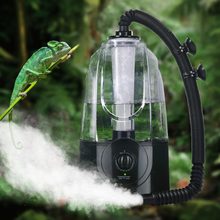
| Fogger / humidifier | Produces a cool mist or fog that raises ambient humidity | Boosting overnight humidity; less effective as a direct drinking source |
Most experienced keepers run two of these together rather than relying on just one - a dripper or mister for direct drinking opportunities, paired with a fogger overnight if the local climate runs dry.
Setting Up a Dripper Correctly
A dripper is usually a container with a small valve or a slow leak (some keepers use a modified cup with a pinhole) positioned above a broad-leafed plant so the drops land and roll across the leaf surface, rather than dripping straight down and pooling out of reach. Run it for 20 to 30 minutes, once or twice a day, timed to coincide with when the chameleon is naturally active and likely to notice the movement.
Some chameleon species, like the veiled chameleon, are drought-adapted enough to also drink water condensing on the casque - the helmet-like structure on top of the head - which channels droplets down toward the mouth as an additional natural adaptation.
Misting Schedules
Automatic misting systems on a timer solve the consistency problem that comes with manual spraying - a missed session here and there adds up quickly for an animal with no water storage capacity to fall back on. Three to five minutes, two to four times daily, spaced across the day and evening, covers both drinking opportunities and humidity needs for most species without soaking the enclosure.

Automatic vs. Manual: Is It Worth Automating?
A basic manual dripper costs very little and works fine for a keeper with a consistent schedule. Automatic misting systems on a timer cost more upfront, but they remove the single biggest point of failure in chameleon husbandry: a busy morning where misting gets skipped. Given how directly hydration lapses connect to the most common preventable cause of death in captive chameleons, most keepers with more than one chameleon - or a less predictable daily schedule - find the upgrade pays for itself in reduced risk alone, not just convenience.
Reading Dehydration Before It Becomes an Emergency
- Sunken eyes are usually the earliest and most reliable visual sign.
- Dark, dull coloration that doesn't brighten with normal handling or activity.
- Thick, stringy, or discolored (yellow-orange) urates in droppings - healthy urates should be white.
- Lethargy beyond a chameleon's normally slow-moving baseline.
Any of these warrants an immediate long misting session directly onto leaves near the chameleon, and if there's no improvement within a day, a reptile vet visit. Dehydration is one of the most common preventable causes of early death in captive chameleons, almost always tracing back to a hydration system that wasn't consistent enough, not a chameleon that was simply "difficult."
Hydration is only half the routine, and the veiled chameleon feeding guide covers the diet and supplement side that the dripper and mister above are keeping in balance. The Jackson's chameleon runs the same equipment at cooler, wetter montane numbers.
❓ Frequently Asked Questions
How long should a dripper run each day?
20 to 30 minutes, once or twice a day, is typical for most species. Timing it for when the chameleon is naturally active (usually shortly after lights-on) makes it far more likely the animal notices the movement and drinks.
Can I just use a spray bottle instead of a misting system?
You can, but consistency is the entire point of a hydration system, and manual misting is the first thing to slip on a busy day. A missed session or two matters more for a chameleon than for most reptiles, since they have no way to store water reserves the way some desert species can.
Do foggers replace the need for a dripper?
No. A fogger raises ambient humidity and can help with shedding and respiratory health, but it produces very little actual drinkable water on leaf surfaces compared to a dripper or misting system. Most keepers use a fogger as a supplement for overnight humidity, not as the primary drinking source.
How do I know if my chameleon is drinking enough?
Watch for tongue-flicking or lapping motion at leaves during misting or dripper sessions, and check urate color in droppings - it should be white, not yellow or orange. Sunken eyes are the clearest sign that intake has been insufficient for a while.
Is tap water safe for misting?
Only after dechlorination. Chameleons absorb far more through drinking droplets directly than most reptiles do through skin contact, so use the same dechlorinated or reverse-osmosis water for misting and drippers that you'd use for any sensitive aquatic pet.
🦎 How Much Does a Jackson's Chameleon Really Cost?
🦎 How Much Does a Veiled Chameleon Really Cost?
🦎 How to Handle a Jackson's Chameleon
🦎 How to Handle a Veiled Chameleon (Carefully, and Not Often)
🦎 Common Jackson's Chameleon Health Issues
🦎 Common Veiled Chameleon Health Issues and What Causes Them
🦎 Jackson's Chameleon Enclosure Setup: Considerably Cooler Than the Veiled Chameleon
🦎 Veiled Chameleon Tank Setup: The Dripper Isn't Optional
🦎 Jackson's Chameleon Enrichment: A Mountain Animal in a Warm House
🦎 Veiled Chameleon Enrichment: The First Two Months Change the Animal
🦎 Is It Legal to Own a Jackson's Chameleon? State Guide
🦎 Are Veiled Chameleons Legal? State-by-State Guide
🛒 Recommended Gear
As an Amazon Associate, we earn from qualifying purchases through the links above - at no extra cost to you.
Written by Michael Ryan
Mike keeps two rescued bearded dragons, Dex and Cera, and writes the care guides on BeastlyFacts from his own research and mistakes. He is not a veterinarian.
More about Michael Ryan →Comments
No comments yet - be the first!