Veiled Chameleon Feeding: Schedule, Diet, and the Supplement Schedule That Actually Matters
On This Page▾

Veiled chameleon feeding is a two-part job: what you feed matters, but how you supplement it matters just as much, this is one of the more supplement-dependent species in the hobby, and getting that schedule right is the difference between a healthy chameleon and one headed toward metabolic bone disease.
The Staple Diet
This species is primarily insectivorous. Build the diet around a genuine variety, crickets, dubia roaches, black soldier fly larvae, superworms, silkworms, and locusts all work well as regular staples, rotate between several rather than relying on just one. Hornworms, waxworms, and butterworms are higher in fat or water content and belong in treat territory, no more than about twice a week. Unusually for a chameleon, veiled chameleons will also take some plant matter, leafy greens and small amounts of vegetables or fruit, though this stays a minor addition rather than a dietary requirement.
Feeding Frequency and Portions
Size prey to the space between your chameleon's eyes, nothing bigger. Frequency drops as your chameleon matures:
- Babies (1 to 3 months): as much as they'll eat, roughly twice daily.
- Juveniles (3 to 6 months): around 10 to 12 small crickets daily.
- Sub-adults (6 to 12 months): 8 to 10 medium crickets daily or every other day.
- Adults (12-plus months): roughly 4 to 6 feeders every other day. Adult females specifically should be fed a somewhat restricted amount, overfeeding drives excessive egg production even without a male present.
Foods to Avoid
Skip wild-caught insects entirely, pesticide and parasite risk are real. Fireflies are toxic and should never be fed. Avoid feeders too large for the eye-spacing rule above, and don't lean too heavily on any single feeder type, crickets alone or mealworms alone create real nutritional gaps over time, and mealworm exoskeletons are genuinely hard to digest in quantity. Skip iceberg lettuce and onions if offering plant matter, neither provides real nutritional value.
Supplementation: The Part That Matters Most
This is genuinely the core of keeping this species healthy.
Dust feeders with plain calcium, no D3, no phosphorus, at nearly every feeding. Separately, use a calcium with D3 supplement about every other week, and a multivitamin with a real vitamin A source on roughly the same twice-monthly schedule. D3 specifically can become toxic in excess, which is exactly why it's dosed less often than plain calcium, proper UVB lighting lets your chameleon produce some of its own D3 naturally alongside this.
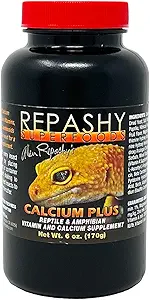
Combine supplementation with gut-loading your feeder insects, collard greens, mustard greens, dandelion, and squash all work, for 24 to 48 hours before offering them. A controlled study of 56 hatchling veiled chameleons (Hoby et al., 2010) found that when calcium and vitamin A were supplemented, the chameleons did not develop nutritional metabolic bone disease, independently of additional UVB and dietary cholecalciferol.
The Mistakes That Matter
Inadequate calcium, D3, or UVB is the single biggest risk with this species, and it leads directly to metabolic bone disease, one of the most frequently observed pathological conditions in herpetoculture. The opposite mistake is real too: over-supplementing vitamin A or D3 can cause throat swelling (gular edema) and organ stress, more isn't automatically safer here.
Overfeeding females specifically drives excessive, frequent egg-laying that depletes calcium reserves and raises the risk of egg-binding, a genuine emergency. The health issues guide has the signs of egg-binding and the point at which it becomes an emergency.
A Hydration Note Worth Knowing
Veiled chameleons generally don't recognize still water sitting in a bowl as something to drink, they respond to movement. Hydration comes from a dripper system and regular misting of leaves and branches, not a water dish. The chameleon hydration guide compares drippers, misting systems and foggers.
The Veiled Chameleon encyclopedia profile has the range and natural history.
Sources & Further Reading
Last reviewed 17 Aug 2026 · 1 source
- ReptiFiles: Veiled Chameleon Care Sheet
- Hoby, S., et al. (2010). "Nutritional Metabolic Bone Disease in Juvenile Veiled Chameleons and Its Prevention." Journal of Nutrition, 140(10), 1923-1931.
- PetSmart: Veiled Chameleon Care Guide
❓ Frequently Asked Questions
What do veiled chameleons eat?
Insects, rotated rather than repeated: crickets, dubia roaches, black soldier fly larvae, superworms, silkworms, and locusts are all regular staples. Hornworms, waxworms, and butterworms run high in fat or water, so they cap at about twice a week. Some plant matter goes down too, as a minor addition.
How often should I feed a veiled chameleon?
Babies (1 to 3 months) eat as much as they'll eat, roughly twice daily. Juveniles (3 to 6 months) eat around 10 to 12 small crickets daily. Sub-adults (6 to 12 months) eat 8 to 10 medium crickets daily or every other day. Adults (12-plus months) eat roughly 4 to 6 feeders every other day.
What is the correct calcium and vitamin schedule for a veiled chameleon?
Plain calcium, no D3 and no phosphorus, on nearly every feeding. Calcium with D3 goes on about every other week, and a multivitamin carrying a real vitamin A source runs on that same twice-monthly schedule. Excess D3 can turn toxic, which is why it's dosed less often.
Why is supplementation so important for this species?
Inadequate calcium, D3, or UVB leads directly to metabolic bone disease, one of the most commonly seen conditions in captive reptiles generally. A controlled study of 56 hatchling veiled chameleons found that supplementing calcium and vitamin A prevented the condition, independently of additional UVB and dietary cholecalciferol.
Can I over-supplement a veiled chameleon?
Yes, and it's a real risk. Over-supplementing vitamin A or D3 can cause throat swelling (gular edema) and organ stress, which is exactly why the twice-monthly schedule for those two supplements matters, more isn't automatically safer here.
How do veiled chameleons drink water?
Not from a bowl. Standing water generally doesn't register as something to drink, since they respond to movement, so hydration comes from a dripper system and from misting leaves and branches regularly.
Why does overfeeding matter more for female veiled chameleons?
Overfeeding females specifically drives excessive, frequent egg-laying even without a male present, which depletes calcium reserves and raises the risk of egg-binding, a genuine emergency.
📰 More on the Veiled Chameleon
📘 Veiled Chameleon care guide
🦎 How Much Does a Veiled Chameleon Really Cost?
🦎 How to Handle a Veiled Chameleon (Carefully, and Not Often)
🦎 Common Veiled Chameleon Health Issues and What Causes Them
🦎 Veiled Chameleon Tank Setup: The Dripper Isn't Optional
🦎 Veiled Chameleon Enrichment: The First Two Months Change the Animal
🛒 Recommended Gear
As an Amazon Associate, we earn from qualifying purchases through the links above - at no extra cost to you.
Written by Michael Ryan
Mike keeps two rescued bearded dragons, Dex and Cera, and writes the care guides on BeastlyFacts from his own research and mistakes. He is not a veterinarian.
More about Michael Ryan →Comments
No comments yet - be the first!