Milk Snake Enrichment: A Shy Snake Needs More Cover, Not Less Space
On This Page▾

Milk snakes hide, constantly, and that behavior gets used to justify keeping them in small boxes. The research on their nearest studied relative suggests that reads the situation backwards.
A secretive snake in a large bare enclosure is short of cover, not short of walls. Corn snakes given enclosures longer than their body stretched out fully and preferred them. The fix for a snake that never comes out is to make coming out feel safe, which means clutter rather than a smaller tank.
What the Research Says
Nothing on Lampropeltis triangulum. The colubrid evidence is that corn snakes housed in enclosures either two thirds of their body length or longer than their body stretched out fully when they could and preferred the larger enclosure, that added enrichment affected behavior and welfare measures, and that enrichment changed odor discrimination performance.
Almli and Burghardt separately found enriched-housed ratsnakes showed different behavioral profiles across problem solving, feeding and field tasks.
Milk snakes and corn snakes are both North American colubrids of similar size, build and habit, which makes this a short evidence borrow. It is still a borrow, and this guide will keep saying so.
Clutter Is the Whole Guide
The practical test: can the snake cross the entire enclosure without ever being fully exposed? If not, it will use two hides and nothing else, and you will conclude it wanted a smaller enclosure.
Cork tubes and flats at intervals, leaf litter over aspen deep enough to push into, and planting dense enough to break sightlines and for the snake to disappear into.
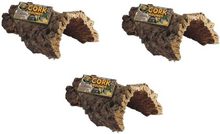
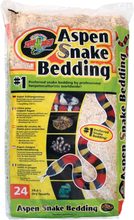
Two hides at opposite ends of the gradient is the starting point, not the finished enclosure.
Space, Which the Clutter Makes Usable
The enclosure-size finding and the cover point are the same recommendation from two directions. Length gives the snake somewhere to go; cover gives it a reason to go there. Either alone produces a disappointing enclosure.
Climbing
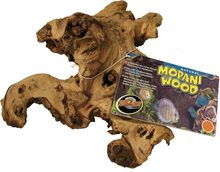
Milk snakes climb more readily than the terrestrial label suggests. A firmly braced branch or stacked cork adds a level. Stability matters more than height, since a structure that shifts is one the snake stops using.
Scent
The free option, and the one that best matches how a colubrid experiences the world. A shed from another enclosure, a scent-marked object, prey dragged across the substrate before it is offered.
Priority Order
- Cover across the entire floor, which is this species' specific need
- An enclosure longer than the snake
- Substrate deep enough to push into
- A stable climbing structure
- Scent novelty
- Rearrangement, last
What Not to Do
Do not use "it hides all the time" as an argument for a smaller enclosure, which is the reasoning this guide exists to challenge. Do not house two together, since Lampropeltis eat other snakes. Do not add floor space without adding clutter. Do not handle a hiding snake to check on it. And do not read corn snake findings as milk snake findings, even though the borrow is a short one.
Sources & Further Reading
4 sources
- Borrowed evidence. No enrichment study exists for this species. The findings below are from corn snakes and ratsnakes, and are covered in full in our Corn Snake enrichment guide.
- Hoehfurtner et al. (2021). Does enclosure size influence the behaviour and welfare of captive snakes (Pantherophis guttatus)?
- Hoehfurtner et al. (2021). Environmental enrichment impacts discrimination between familiar and unfamiliar human odours in snakes
- Almli LM and Burghardt GM (2006). Environmental enrichment alters the behavioral profile of ratsnakes (Elaphe)
- Hutchings (2025). Recent scientific insight into the spatial needs of captive snakes
❓ Frequently Asked Questions
Is there research on milk snake enrichment?
No. Nothing has been published on Lampropeltis triangulum. The nearest evidence is the corn snake enclosure-size and enrichment work, both North American colubrids of similar build.
My milk snake hides all the time. Does it need a smaller enclosure?
That is the conclusion most keepers reach and the colubrid research points elsewhere. Given enclosures longer than their body, corn snakes stretched out fully and preferred the larger option. A snake that hides constantly in a large bare enclosure is short of cover rather than short of walls.
How do I clutter an enclosure properly?
The test is whether the snake can travel from one end to the other without ever being fully exposed. Cork tubes and flats, leaf litter, branches and dense artificial or live planting all count. Two hides at opposite ends is a starting point, not the finished job.
Do milk snakes climb?
Yes. They are more arboreal than kingsnakes generally get credit for, and a stable braced branch or a stack of cork gives them a second usable level.
Can milk snakes be housed together?
No. Like other Lampropeltis they are ophiophagous and will eat other snakes. Cohabitation is a safety problem, not a welfare preference.
Does scent enrichment work for milk snakes?
It is the most plausible free option. Colubrids navigate chemically, and a corn snake study found enrichment altered how well the snakes discriminated familiar from unfamiliar human odor, which at least suggests the channel is worth engaging.
📰 More on the Milk Snake
📘 Milk Snake care guide
🐍 How Much Does a Milk Snake Really Cost?
🐍 How to Handle a Milk Snake (And the Coral Snake Look-Alike Question)
🐍 Common Milk Snake Health Issues
🐍 Milk Snake Tank Setup: Corn Snake Basics, Plus a Few Species-Specific Twists
🐍 Milk Snake Feeding: Prey at 1.5 Times the Body Width, and Why Hatchlings Eat Snakes
🛒 Recommended Gear
As an Amazon Associate, we earn from qualifying purchases through the links above - at no extra cost to you.
Written by Michael Ryan
Mike keeps two rescued bearded dragons, Dex and Cera, and writes the care guides on BeastlyFacts from his own research and mistakes. He is not a veterinarian.
More about Michael Ryan →Comments
No comments yet - be the first!