Lovebird Cage Setup: Size, Bar Spacing and What to Leave Out
On This Page▾

Lovebird housing has a few safety details that matter more than they first seem to, bar spacing above all. Get those right, along with size and material, and the rest of the setup is straightforward. The figures here suit all three pet lovebirds: the peach-faced, Fischer's and the masked lovebird.
Cage Size
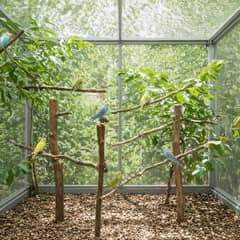
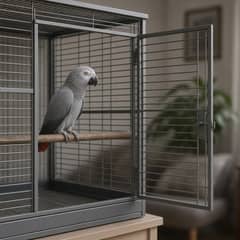
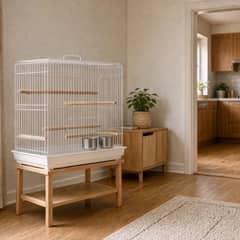
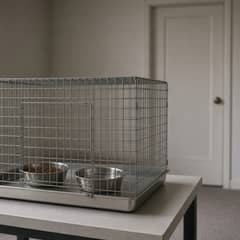
For one bird, the smallest cage is 18 inches long by 18 wide by 24 tall. For a pair, the smallest is 24 by 18 by 24 inches. The size to aim for, for one bird or a pair, is 3 feet long by 2 wide by 2 tall. Bigger is better. Choose a long, rectangular cage that lets the bird open its wings fully in every direction and, better still, fly from end to end. Skip round cages, which give the bird no corner to retreat into. A wide flight-style cage gives more flying room than a tall, narrow one.
Bar Spacing
Aim for bars about 3/8 to 7/16 of an inch apart, and never wider than 5/8. Wider spacing lets a lovebird trap its head between the bars, which can be fatal. The 1/2-inch bars on many flight cages, including the one linked above, are inside that limit but wider than the ideal.
Materials
Buy a cage made of powder-coated or stainless steel. Skip homemade cages, cages with wood parts and galvanized wire: lovebirds chew constantly, and all three risk zinc or other toxic exposure.
Where the Cage Goes
Put the cage in a room the household uses, so the bird is not alone for most of the day. Keep it off the floor, at about eye level, in a well-lit spot out of drafts and away from doors and windows. Keep it out of the kitchen: an overheated nonstick pan can kill a bird with no warning, and the bird household hazards guide sets out the whole list.
Temperature
A normal household range of 65 to 80°F works well, with no special heating or cooling.
Substrate and Lining
A paper cage liner is the simplest, most hygienic option. Line the tray under a removable metal grate, so droppings fall through and the bird never stands in them. Avoid substrates that can grow mold in a humid environment.
Unlike some other pet bird species, lovebirds don't need grit added to their cage. They shell their seeds before eating, so grit has no part in how this species processes its food, and a bird that overeats grit can block its gut.
Lighting
Indoor birds need UV light to make vitamin D3 for calcium absorption, and window glass filters out the wavelengths that matter. Add a UVB lamp made for birds if yours gets no regular safe outdoor time. Run it 10 to 12 hours a day on a plug-in timer, mount it about 12 to 18 inches from where the bird perches, and replace the bulb about every six months. A steady day and night cycle, with real darkness at night, does more than help sleep: it helps prevent chronic egg laying and egg binding.
Furnishings
Provide perches of varied diameter and material. Natural wood branches are better for the feet than uniform dowels. Choose perches about 3/8 to 1/2 inch across, in wood, natural branch, rope or concrete, and do not use sandpaper perch covers. Fit at least two perches at opposite ends, so the bird flies between them, and put the food and water dishes at opposite ends too, never under a perch where droppings land. Replace a rope perch once it frays. Lovebirds are hard chewers, so rotate toys such as shreddable chew toys and simple wood and paper toys. Leave out anything with small detachable parts, loose strings or metal clips.
Bathing
Offer a bath every day, in the morning so the feathers are dry before night. A dish of lukewarm water large enough to bathe in works. For a bird that will not use a dish, a gentle mist from a plant mister works too. Use plain water with no commercial bathing products, and bottled water if the tap water is chlorinated. Bathing keeps the feathers and skin in condition and encourages preening, which matters most in dry indoor air.
Sleep
A lovebird needs 10 to 12 hours of dark, quiet sleep every night. Cover the cage at the same time each evening with a plain, breathable cover, in a room that goes quiet, and uncover it in the morning. A hen that keeps laying may need longer dark hours for a time, which the vet sets.
What to Leave Out
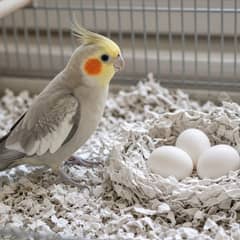
Do not give a pet lovebird a nest box, a happy hut or a mirror unless you are breeding. Nest-like furnishings are one of the most common and most avoidable triggers for hormonal aggression and chronic egg laying in this species. That includes the enclosed, tunnel-shaped bird tents sold for nighttime use.
Cleaning Routine
Daily: take out soiled paper and discarded food, and wash the food and water bowls. A lovebird bathes in any water it can reach. Change the drinking dish whenever it has been used as a bath, often more than once a day. Changing the paper each day also gives a daily look at the droppings.
Weekly, the full clean:
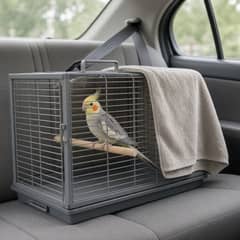
- Move the lovebird to a travel cage in another room, so it breathes separate air while you spray and scrub.
- Strip out the paper, perches and toys.
- Wash and disinfect the cage with a bird habitat cleaner or a 3% bleach solution, which is about 1 part household bleach to 32 parts water, or half a cup per gallon.
- Rinse until no trace or smell of the cleaner is left, and let everything dry completely before the bird goes back in.
A pair soils the cage faster, so change the liner more often than weekly when two birds share it.
As needed: wash perches and toys and dry them completely whenever they are soiled. Check the chew toys at the weekly clean, since a lovebird works through them fast. Take out any toy chewed down to a loose string or an exposed metal clip.
Use only cleaning products made for use around pets near the cage, because a bird's airways react to spray fumes. Ventilate the room, and never mix bleach with other cleaners.
Set It Up Before the Bird Comes Home
The bars, the size and the material are fixed the day the cage is bought, so check all three before paying. Set the cage up a few days ahead, with the perches, dishes and toys in place and nothing nest-like inside, and the lovebird moves into a finished home.
Sources & Further Reading
Last reviewed 24 Sep 2026 · 4 sources
- PetMD: Lovebirds Care Sheet
- VCA Animal Hospitals: the lovebirds general and bathing birds pages
- MSPCA-Angell: Bird Care Guide, Lovebirds
- LafeberVet: Basic Information Sheet for the Lovebird
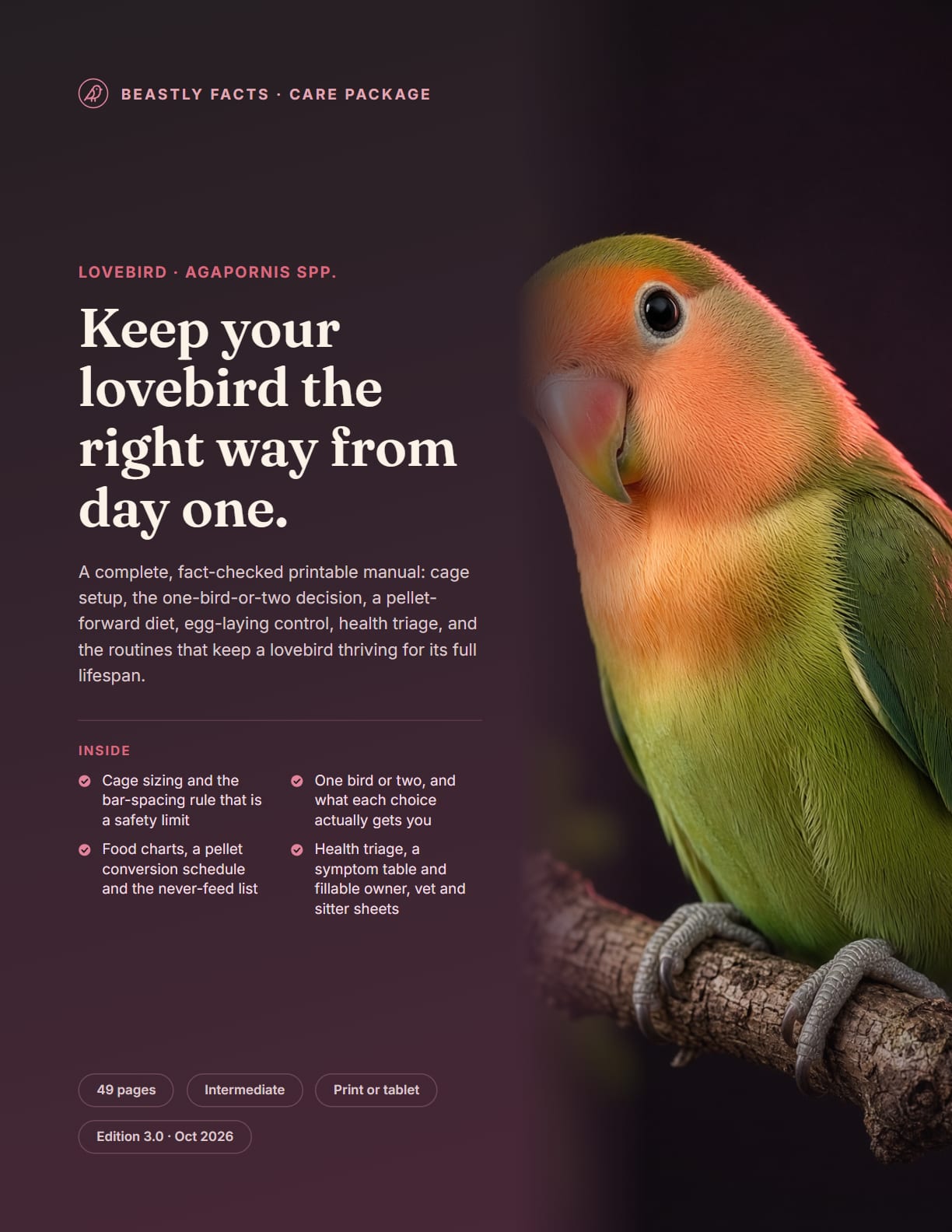
The Lovebird Care Package carries this setup as a checklist with the targets to hit, in a 49-page PDF you can keep by the cage, $8.99. Includes the Universal Pet Kit free: a routine chart and equipment log you can fill in.
Frequently Asked Questions
What size cage does a lovebird need?
At least 18 by 18 by 24 inches, and 3 feet long by 2 by 2 is the size to aim for. Buy a long, rectangular cage the bird can fly in.
How wide can the bar spacing be on a lovebird cage?
Ideally 3/8 to 7/16 of an inch, and never wider than 5/8. A wider gap can trap a lovebird's head.
What cage material is safe for a lovebird?
Powder-coated or stainless steel. A lovebird chews its cage, so galvanized wire and homemade cages risk zinc poisoning.
Does a lovebird's cage need special lighting?
A bird kept indoors does better with a UV lamp made for birds, because window glass blocks the light it needs to make vitamin D3.
Should I put a nest box or happy hut in my lovebird's cage?
No, unless you are breeding. Anything nest-like pushes a lovebird toward hormonal aggression and chronic egg laying.
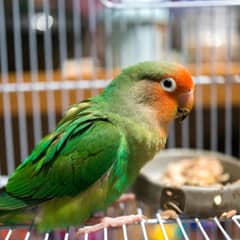
Recommended Gear
As an Amazon Associate I earn from qualifying purchases through the links above, at no extra cost to you.

Written by Michael Ryan
Mike has looked after neighbors’ budgies and lovebirds on and off for years.
Mike keeps two rescued bearded dragons, Dex and Cera, and writes the care guides on BeastlyFacts from his own research and mistakes. He is not a veterinarian.
More about Michael Ryan →You May Also Like

Subscribe - it's free
An occasional email when something new is worth your time. No spam.
Health and More