Lovebird Enrichment: Foraging, Toys, and What Cuts Boredom
On This Page▾

A lovebird in the wild spends most of its waking day foraging, not eating from a bowl. Recreating that search-and-work behavior in a cage is the single biggest lever for preventing the boredom behaviors this species is known for.
Foraging isn't a bonus activity, it's the behavior a food bowl accidentally deletes. Parrots will often choose to work for food over eating from a dish for free, a documented effect called contra-freeloading, which is why hiding food matters more than the food itself.
Foraging Comes First
Wild parrots spend an estimated 60 to 80% of their waking hours foraging, searching, problem-solving, and manipulating objects to get at food. A cage with a single bowl removes nearly all of that. Start by hiding a portion of the daily diet inside a foraging box or puzzle toy instead of putting everything in the dish. Paper cups with pellets wrapped inside, or a foraging box the bird has to open, both work. Rotate the method every few days so it stays a puzzle and never a memorized routine.
Toy Rotation and Novelty
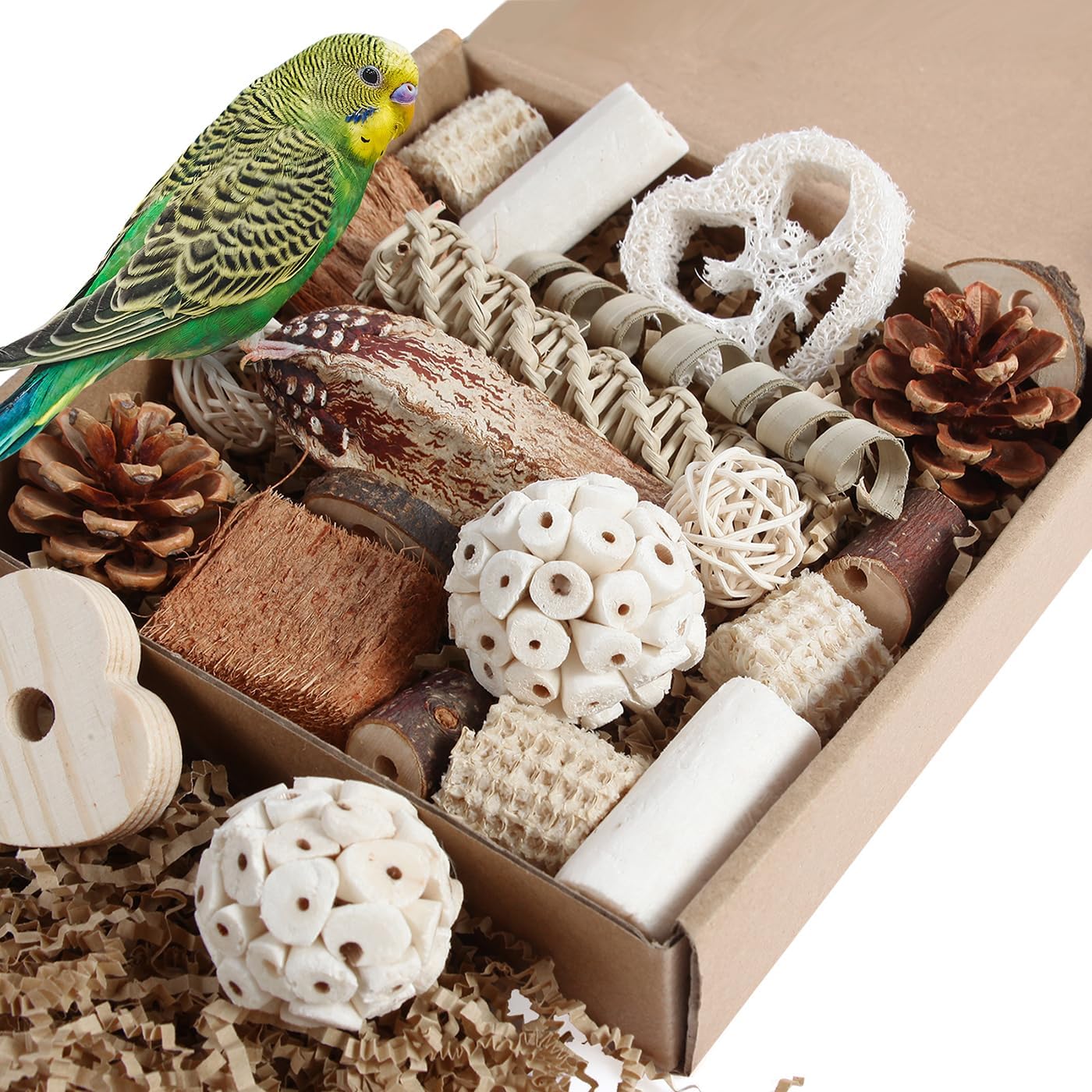
Offering 3 to 5 toys at a time, rotated weekly, keeps novelty without cramming the cage. Mix categories, not duplicates: something to forage in, something to shred, and something to chew. Reintroducing a toy that's been out of rotation for a few weeks often gets treated as new again, which stretches a small toy collection further than buying constantly.
Boredom in captive parrots doesn't just look like inactivity, research links it to feather plucking, repetitive pacing, and screaming that goes beyond normal vocalizing. Some studies report enrichment reducing these behaviors by a wide margin when it's provided consistently rather than occasionally.
Shred and Chew Items
Lovebirds are enthusiastic shredders. Untreated paper, cardboard tubes, and bird-safe wood pieces give an outlet for that behavior that isn't the cage bars or nearby furniture. Balsa and other soft woods disappear fast for this species, so keep a rotating supply on hand instead of a single expensive toy that's gone in a day.
Social and Cognitive Stimulation
A bonded pair reduces loneliness-driven stress, but pairing alone doesn't cover foraging or problem-solving needs, both birds still need their own enrichment. For a single lovebird, daily supervised out-of-cage time and direct interaction substitute for some of what a cage mate would otherwise provide. Talking to the bird, offering a hand or shoulder perch, and short positive reinforcement training sessions all count as real cognitive engagement, not just entertainment.
Reading the Warning Signs
Feather plucking, pacing the same stretch of perch repeatedly, and screaming that's new or louder than usual are the clearest signals that current enrichment isn't enough. Since these same signs can also point to a medical problem, a vet check alongside any enrichment changes is worth doing rather than assuming it's behavioral by default.
Sources & Further Reading
❓ Frequently Asked Questions
Why is enrichment so important for lovebirds specifically?
In the wild, parrots including lovebirds spend an estimated 60 to 80% of their waking hours foraging, searching, and problem-solving for food. A cage with a static food bowl removes almost all of that natural behavior at once, and boredom in lovebirds shows up as feather plucking, repetitive pacing, and excessive screaming.
What is contra-freeloading and why does it matter here?
It's the documented tendency of parrots to choose working for food over eating from a free bowl when both are available. It's a sign that foraging itself is behaviorally rewarding, not just a means to an end, which is why hiding food in toys does more for a lovebird than the same food sitting in a dish.
How many toys should be in a lovebird's cage at once?
Around 3 to 5 at a time is a commonly recommended range, rotated weekly so nothing goes stale from overexposure. Too few leaves the bird under-stimulated, too many crowded together limits flight and movement space inside the cage.
Do lovebirds need toys if they have a cage mate?
Yes. A bonded pair reduces loneliness-driven stress, but it doesn't replace foraging, shredding, and problem-solving needs. Two lovebirds with no toys can still develop boredom behaviors, just directed at each other instead of at nothing.
What are signs a lovebird isn't getting enough enrichment?
Feather plucking, repetitive pacing along the same perch or cage section, and excessive or new screaming patterns are the main ones. These same signs can also indicate a medical issue, so a vet check is worth ruling out alongside any enrichment changes.
📰 More on the Lovebird
🛒 Recommended Gear
As an Amazon Associate, we earn from qualifying purchases through the links above - at no extra cost to you.
Written by Michael Ryan
Mike has looked after neighbors’ budgies and lovebirds on and off for years.
Mike keeps two rescued bearded dragons, Dex and Cera, and writes the care guides on BeastlyFacts from his own research and mistakes. He is not a veterinarian.
More about Michael Ryan →Comments
No comments yet - be the first!