Cockatoo Cage Setup: Size, Bars, the Room and Cleaning
On This Page▾

A cockatoo is a large parrot with a beak strong enough to wreck a light cage, and it spends many hours of every day inside its own. The cage is the biggest purchase in the setup and the first one to get right: big enough to climb in and spread its wings, built from a metal it cannot chew into poison, and set in a room that is safe once the door opens.
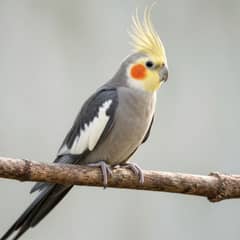
This guide covers five cockatoos and notes where care differs by the size of the bird: the small Goffin's and galah, and the large umbrella, Moluccan and sulphur-crested.
Setup Order
- The cage. Size, bar spacing and metal come first, because everything else is fitted to it.
- Perches, at several heights and thicknesses.
- Dishes, for pellets, fresh food and water.
- Toys the bird can destroy.
- The room. Place the cage, then bird-proof the room around it.
- The bird. It comes home last, to a finished cage, and its first week home starts with a vet visit.
Cage Size
A small cockatoo, the Goffin's or the galah, needs a cage at least 40 inches wide, 30 inches deep and 60 inches tall. A large cockatoo, such as the umbrella, Moluccan or sulphur-crested, needs at least 48 inches wide, 36 inches deep and 66 inches tall. Those are floors, and for a cockatoo a bigger cage is always better. A cage top that opens up to connect with a play stand is an ideal setup, giving your bird more usable space throughout the day.
Bar Spacing and Security
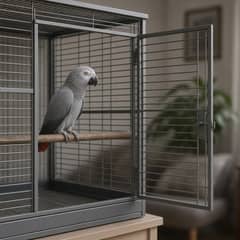
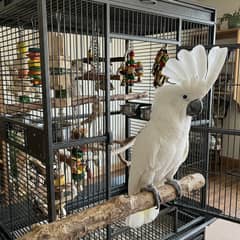
Bar spacing depends on the size of the bird. A Goffin's cockatoo or a galah needs bars 1/2 inch to 3/4 inch apart. The large species, such as the umbrella, Moluccan and sulphur-crested, can have bars up to 1 inch apart on heavy wire, stainless preferred, and that is the spacing cages of the right size come in, like this 49 inch wide stainless cage with 1 inch bars. A cage of the right size for a small cockatoo with bars that tight is hard to find, so measure the width, depth, height and bar spacing before you buy. Secure, escape-proof locks matter more here than with most birds: cockatoos are notorious escape artists with the intelligence and strength to work out standard latches.
Material: Stainless Steel Is Worth the Investment
For a large, destructive cockatoo, stainless steel is the gold standard: rust-proof, non-toxic, and capable of withstanding a beak this powerful for decades. In stainless steel, look for an extra-large cage with heavy-gauge bars, 8-gauge or thicker. A heavy-gauge powder-coated steel cage with the right spacing is an acceptable, more affordable alternative. Avoid galvanized or zinc-coated cages entirely. A cockatoo will chew on the bars, and chewing that coating risks metal toxicity.
Perches, Dishes and Toys
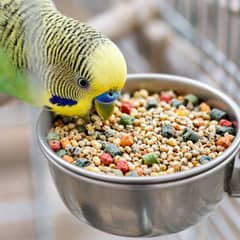
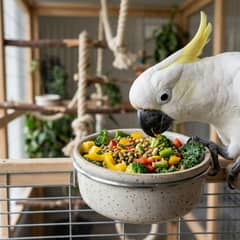
Perches run 3/4 inch to 2 inches across, set at several heights, with the softest perch highest, because that is where most parrots prefer to sleep. Pellets in a coarse size made for large parrots go in one dish and fresh fruit and vegetables in a separate one, and clean water is there at all times.
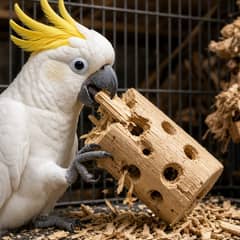
The rest of the space belongs to toys the bird can destroy: wood, cardboard and palm fiber in a steady rotation, like a large-parrot rated foraging toy set, replaced as fast as they are shredded. A cockatoo short on things to destroy is prone to feather-destructive behavior and severe screaming. Toys carry the hours in the cage; the bird also needs time out of it every day, on a play stand in a bird-proofed room.
Where the Cage Goes
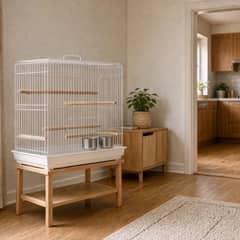
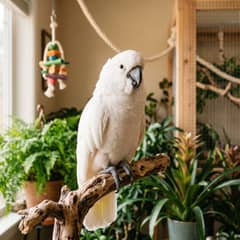
Put the cage in a room the family uses during the day, at a temperature comfortable to people, which suits most birds too. Keep it out of the kitchen, because smoke and cooking fumes can harm a bird. Keep it away from air conditioning and drafty windows or vents, which leave a bird too hot or too cold. Never stand it directly in front of a window: sun through the glass can overheat a parrot.
Bird-Proofing the Room
A cockatoo out of its cage meets the same household hazards as any pet bird. It also chews and swallows wires, paint, bits of furniture and other things that are not food, so its time out is always supervised. Clear these before the door first opens:
- Nonstick and other PTFE coatings. Heated past 536°F, PTFE gives off odorless, colorless fumes that are toxic to birds, and sudden death is often the only sign. It is in nonstick cookware, drip pans, waffle irons, clothing irons, ironing board covers, some self-cleaning ovens and heat lamps.
- Fans. Switch them off whenever the bird is out, ceiling fans above all, because a bird cannot see the moving blades.
- Glass and mirrors. Mark windows and mirrors with curtains, clings or stickers, because a bird will fly straight into them.
- Water. Toilet lids down, sinks and tubs empty.
- Other pets. Cats, dogs, ferrets, snakes and lizards are never left alone with the bird.
- Doors and windows. Keep outer doors and windows shut while the bird is out. An escaped bird is very hard to get back.
Lighting and Sleep
No studies have tested lighting for pet birds, so any advice on it is cautious. If you add a light, the usual advice is a timer that keeps a standard full-spectrum bulb on for no more than 4 hours a day, while a low-dose bird light can run up to 12. Mount it above the cage and not too close, and follow the maker's directions on the conservative side.
Sleep matters just as much: about 12 hours of dark and quiet every night. A sleep cage in a dimly lit, quiet room is one way to get it. Most birds are better left uncovered at night, because a cover can stress them. Lamps and a TV running past sunset stretch the day and can make a bird hormonal, which is how the length of a bird's day shapes its behavior. A cockatoo short on sleep screams more, so the night is not a detail to skip.
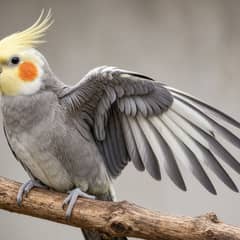
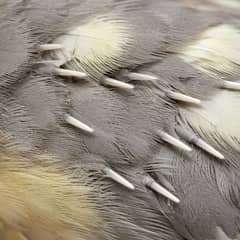
In most parrots, the powder-down feathers that make feather dust are spread thinly through the plumage. White cockatoos carry theirs in patches you can see, including under the wings, and an umbrella cockatoo puts out a lot of the dust.
Source: LafeberVet: Basic Information Sheet, Cockatoo
Cleaning: Daily, Weekly and Monthly
A cockatoo cage gets dirty fast: shredded wood, flung food and a steady fall of powder down. The daily routine:
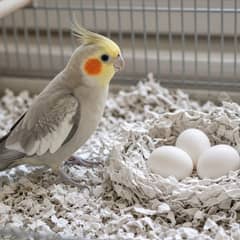
- Change the cage paper. A removable metal grate over paper or paper-based bedding keeps the bird off its droppings, and the paper under it is replaced every day.
- Wash every food and water dish thoroughly with soap and water.
- Take out fresh fruit and vegetables within a couple of hours, sooner in a warm room, before they spoil.
- Check the toys. Pull out anything splintered, frayed, chewed down to a hardware fitting or shedding loose pieces the bird could swallow.
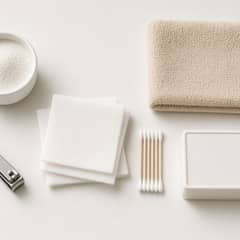
Rope, fabric and rawhide toys get washed weekly, or sooner when soiled. Once or twice a month the whole cage, grate and perches get a full scrub with hot water and a non-toxic disinfectant soap. Household chlorine bleach at 1 cup per gallon of water works against many disease-causing organisms. Most disinfectants need 10 to 15 minutes on the surface before scrubbing, and then the cage is rinsed with fresh water until no residue is left. White vinegar lifts dried urates and droppings from metal and plastic. Bleach and vinegar both give off fumes, so the room stays ventilated, the cockatoo stays out of it, and no cleaner is ever mixed with another.
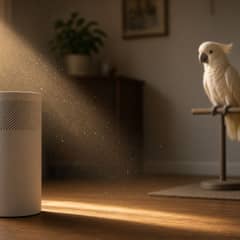
Around the cage, a vacuum with a high-efficiency filter keeps the dust from building up, and a HEPA air purifier in the bird's room is worth having too: cockatoos produce significant feather dust, enough to matter for the people in the room. Keeping birds raises the risk of hypersensitivity pneumonitis, a lung disease that can do permanent damage without treatment, so anyone in the home with a new cough or shortness of breath should see a doctor. Hands get washed after handling the bird.
Bathing
A cockatoo sheds powder down every day. Offer a bath daily, in the morning so the feathers are dry by night: lukewarm water from a plant mister as a gentle rain, or the bird on a suction-cup perch at the back of the shower. That daily mist or shower stops powder from spreading through the house, which matters for the people breathing it as much as for the bird, and the rest of keeping feather dust down builds on it. A cockatoo that will not bathe on its own still gets a gentle misting.
The Cage Is the Easy Part
A stainless steel cage of the right size and spacing is bought once and lasts as long as the bird. What decides how a cockatoo does inside it comes around every day: fresh things to shred, supervised time out with its people, a dark and quiet night, and a clean cage. Plan the room and the week around that daily work before the bird comes home.
Sources & Further Reading
Last reviewed 26 Jul 2026 · 5 sources
- Lafeber Company: LafeberVet: Basic Information Sheet, Cockatoo; UVA and UVB Lighting for Birds; Parrots As Pets; Ask Lafeber: Sleep
- VCA Animal Hospitals: Cage Hygiene in Birds; Household Hazards and Dangers to Birds; Bathing Birds; Cockatoos, General Information; Cockatoos, Feeding
- Merck Veterinary Manual: Minimum and Bar Spacing Recommendations; Providing a Home for a Bird (Bird Owners edition); Toxicoses of Pet Birds
- Chicago Exotics Animal Hospital: Cockatoo Care
- NHLBI, NIH: Hypersensitivity Pneumonitis

The Cockatoo Care Package carries this setup as a checklist with the targets to hit, in a 49-page PDF you can keep by the cage, $8.99. Includes the Universal Pet Kit free: a routine chart and equipment log you can fill in.
Frequently Asked Questions
What size cage does a cockatoo need?
A Goffin's cockatoo or galah needs at least 40 by 30 by 60 inches (wide, deep, tall), and an umbrella, Moluccan, sulphur-crested or other large cockatoo at least 48 by 36 by 66. Those are minimums, and a bigger cage is always better.
What bar spacing is safe for a cockatoo cage?
It depends on the bird's size. Keep a Goffin's or a galah to 1/2 to 3/4 inch. An umbrella, Moluccan, sulphur-crested or other large cockatoo is fine with 1 inch at most, as long as the wire is heavy, stainless preferred. Fit the door with a lock a cockatoo cannot work open, because these birds are clever and strong enough to beat a standard latch.
Should a cockatoo cage be stainless steel or powder-coated?
Stainless steel if the budget allows: it does not rust, carries no coating to chew off, and lasts as long as the bird. Heavy-gauge powder-coated steel is the cheaper option that still works. Galvanized or zinc-coated cages are out, because bar chewing turns the coating into metal poisoning.
Does lighting and sleep matter for cockatoos?
Sleep matters more. Plan the evening so the bird gets roughly 12 hours of darkness and quiet, with the lamps and the TV in its room off. An added light is optional, and a standard full-spectrum bulb stays on no more than 4 hours a day.
Where should a cockatoo cage go in the house?
In a room the family uses, kept at a temperature people find comfortable. Keep it out of the kitchen and away from air conditioning, drafty vents and the direct sun of a window.
How often does a cockatoo cage need a full clean?
Once or twice a month, on top of the daily paper and dish change. Scrub the whole cage, grate and perches, disinfect, then rinse until nothing is left on the bars, with the bird in another room.




Recommended Gear
As an Amazon Associate I earn from qualifying purchases through the links above, at no extra cost to you.

Written by Michael Ryan
Mike has looked after a neighbor’s cockatoo on and off for years.
Mike keeps two rescued bearded dragons, Dex and Cera, and writes the care guides on BeastlyFacts from his own research and mistakes. He is not a veterinarian.
More about Michael Ryan →You May Also Like

Subscribe - it's free
An occasional email when something new is worth your time. No spam.
Health and More