Lovebird Feeding: Calcium, Vitamin A, and the Hen That Keeps Laying
On This Page▾

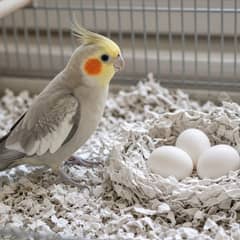
A single female lovebird, with no mate and no encouragement, will often lay clutch after clutch. Each egg costs her calcium twice over, once for the shell and again for the muscle work of passing it, and where that calcium comes from is decided months earlier at the food dish.
The Proportions
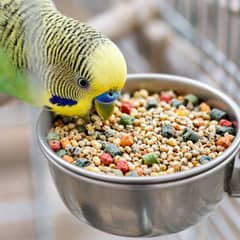
A formulated pellet should be about 75 to 80% of what a lovebird eats, with vegetables and a little fruit filling the remaining 20 to 25%.
A bird eating that much formulated food does not need a general vitamin supplement on top. The pellets are the supplement, and some nutrients cause problems in excess.
Seed fails for the same reasons it fails in any parrot: it is short on vitamins, minerals and protein, and a bird picks out its favorites from the mix instead of eating across it.
How Much a Day
Pellets can stay in the dish all day. Measure the seed and the treats. Seed is no more than 1 to 2 teaspoons a day, and a thumbnail-sized piece of fresh food is a full serving for a bird this small. If your bird eats seed now, switch it to pellets on one of the two schedules in the next section.
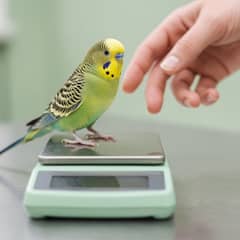
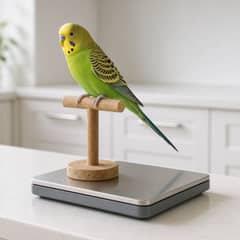
To find what one bird eats, weigh its food on a gram scale when it goes in, weigh what is left 24 hours later, and average the difference over seven days. That is its real daily intake, and the amount to keep offering throughout a diet change. Weigh the bird every morning too. A weight that keeps dropping over several mornings means the change is running too fast.
Getting There From Seed
Moving a bird off seed is its own procedure, because a bird that does not recognize pellets as food can refuse to eat instead of switching. There are two schedules for lovebirds. The gradual one:
- Offer 75% seed and 25% pellets for 3 days.
- Offer half seed and half pellets for the next 3 days.
- Offer 25% seed and 75% pellets until the bird is converted.
The faster one:
- Offer 90% seed and 10% pellets on day one.
- Cut the seed share by 10 points a day, so the bird reaches pellets alone on day 10.
- If the bird refuses to go further, stay at 20% seed and 80% pellets until it converts.
Weigh the bird daily through either one. A small bird should not go more than 12 hours without eating. If its weight drops 10% from the start, or its droppings turn black or nearly stop, stop the change and call an avian vet. The pellet conversion guide has the rest of the daily checks.
Vegetables and Fruit
Bright color is the shortcut: bell peppers, broccoli, carrots and sweet potatoes are the dependable staples, with kale and other dark leafy greens, asparagus, bok choy, spinach, romaine and pea pods alongside them. Fruit is the smaller share. Mango, papaya and cantaloupe are the most useful, and berries, apple, pear, grapes, kiwi, melon and peaches are fine in thumbnail-sized pieces.
Wash everything well, because pesticide residue is a particular risk for birds, and cut it into pieces a small beak can pick up. Fresh or frozen is better than canned, which carries salt and sugar, or freeze-dried, which carries less nutrition. If the bird refuses a new food, keep offering it for 3 to 5 days before giving up on it. Iceberg lettuce and celery are not harmful but are nearly all water, so they fill a small bird up without feeding it.
Vitamin A and Calcium
For lovebirds, the deficiencies that arrive first are vitamin A and calcium.
Vitamin A deficiency is the quieter of the two. It shows up in the breathing passages and the skin of a bird that has eaten too few dark leafy greens and orange vegetables, the foods the body makes vitamin A from. It also raises the odds of a hen becoming egg bound, which links it to the second problem. Calcium is the second. It runs short for one main reason, chronic egg laying.
What Laying Costs a Hen
Lone female lovebirds are among the species that commonly become chronic layers. A hand-raised bird bonded to a person does this readily, so it is a companion bird problem in particular.
Every egg draws down calcium. Some goes into the shell, and some goes to the muscle contractions and nerve signaling needed to move the egg through and out. A hen doing that repeatedly is spending a reserve she has to rebuild between clutches.
On an all-seed diet she cannot rebuild it fast enough. Seed is poor on calcium and heavy on phosphorus, which is the worst combination for the job, and the deficit accumulates instead of resetting.
Taken far enough, the result is a weak, lethargic bird with bones brittle enough to break during ordinary handling. She is prone to egg binding, and in severe cases she is at risk of seizures and death. That is what the diet is for: giving a hen the calcium to survive her own laying.
Dark leafy greens are a dietary calcium source and belong in the daily vegetables for that reason. A hen who is actively laying is one of the few clear cases for supplementing calcium directly, so arrange it with a vet instead of guessing.
Keep a cuttlebone or a mineral block in the cage all the time, for calcium and for the beak. A laying hen uses it most.
Why Dusting Seed Does Nothing
A lovebird hulls a seed and eats the kernel inside, discarding the shell. Powder sprinkled over a seed mix rides out with the husks. The bird eats around it entirely, while the keeper believes the supplement is being taken.
If a powdered supplement is in use, during a pellet conversion for instance, put it on moist food where it will stay put and be eaten.
Grit fails on the same logic. A bird that shells its own seed has no grinding job for grit to do, and eaten in quantity it can cause a serious gastrointestinal obstruction.
Foods to Rule Out
Never offer a bird avocado, onion or garlic. A lovebird that has eaten any avocado goes to the avian vet at once, before signs start. Every part of the avocado plant carries persin, a toxin that harms the heart: respiratory distress usually starts about 12 hours after it is eaten, and death can follow within one to two days.
Beyond those, the ordinary parrot list applies:
- Chocolate, which carries theobromine and caffeine, and caffeine in coffee, tea and soda.
- Alcohol.
- Sugar-free candy, which can contain xylitol.
- Fruit pits and apple seeds, which contain cyanide compounds.
- Salty, fatty or sugary human food, and peanuts, which can carry mold toxins.
- Dairy, because birds cannot digest lactose, and mushrooms, since some are toxic.
- Rhubarb leaves, which carry oxalate crystals, and the leaves and stems of tomato, potato, pepper and eggplant plants. The vegetables themselves are fine.
Water
Keep fresh, clean water in the cage at all times, and wash the dish daily. Lovebirds bathe enthusiastically in whatever water is available, which is good for them and means the drinking dish often needs changing more than once a day.
A Diet Built for the Hen
Feed a lovebird as if it might start laying, because a lone female often does: pellets as the base, dark greens and orange vegetables every day, seed measured by the teaspoon. Weigh the bird through any change, and bring in a vet before adding calcium.
Sources & Further Reading
Last reviewed 16 Sep 2026 · 5 sources
- VCA Animal Hospitals: the lovebirds feeding, chronic egg laying and fruits and vegetables in bird diets pages
- Merck Veterinary Manual: Nutritional Disorders of Pet Birds
- Bird Vet Melbourne: Caring for Lovebirds
- University of Florida Small Animal Hospital: How to Care for Your Pet Bird
- Lafeber: Foods Toxic to Pet Birds
The Lovebird Care Package puts the feeding section, an owner log and a pet-sitter sheet on paper, in a 49-page PDF you can keep by the cage, $8.99. Includes the Universal Pet Kit free: a routine chart and feeding log you can fill in.
Frequently Asked Questions
How much of a lovebird's diet should be pellets?
Most of it, with vegetables and a little fruit making up the rest. A lovebird eating mostly pellets needs no vitamin supplement on top.
Which deficiencies are lovebirds prone to?
Vitamin A and calcium in particular. Both track back to a seed-heavy diet, and both are avoidable with formulated food and dark leafy greens instead of a bottle of something added later.
Does a female lovebird laying eggs need extra calcium?
Often, yes, and it is one of the few clear cases for a supplement. Ask the vet for the product and dose instead of guessing.
Why is dusting seed with vitamin powder pointless?
Because the bird throws the powder away with the husk. A lovebird hulls a seed and eats the kernel, so anything coating the outside never reaches it. If a powdered supplement is being used during a pellet conversion, it belongs on moist food instead.
Recommended Gear
As an Amazon Associate I earn from qualifying purchases through the links above, at no extra cost to you.

Written by Michael Ryan
Mike has looked after neighbors’ budgies and lovebirds on and off for years.
Mike keeps two rescued bearded dragons, Dex and Cera, and writes the care guides on BeastlyFacts from his own research and mistakes. He is not a veterinarian.
More about Michael Ryan →You May Also Like
Subscribe - it's free
An occasional email when something new is worth your time. No spam.
Health and More