Common Lovebird Health Issues and What Causes Them
On This Page▾

Lovebirds hide illness well, so by the time symptoms are obvious, a problem is often further along than it would be in a more expressive pet. A handful of conditions come up often enough to know in advance. If your lovebird looks sick right now, go straight to When a Lovebird Needs the Vet, near the end.
Psittacine Beak and Feather Disease (PBFD)
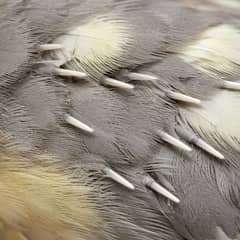
Lovebirds are particularly susceptible to this virus, which attacks feather and beak cells along with the immune system. Watch for feather deformities, feather loss, and abnormalities in the beak. It is often fatal, has no cure, and spreads easily between birds, so test any new bird before it meets the one you have. PCR testing can find the virus in a bird that still looks healthy, and the feather loss guide shows how PBFD differs from plucking and molt.
Chronic Egg Laying and Egg Binding
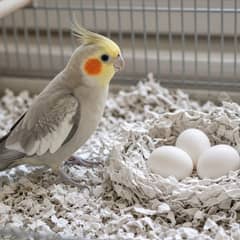
Males and females of these three species look alike, so any lovebird may turn out to be a hen. A hen can lay eggs regularly with no male present. An all-seed diet low in calcium and vitamin D makes it worse and raises the risk of egg binding, the emergency covered in its own section below. Nest boxes, mirrors and enclosed "happy hut" hideaways can trigger chronic laying even in a single, unmated hen.
Prevention matters more than treatment: a pelleted diet with proper calcium, a shortened day length, and no nest boxes or mirrors all cut how often laying becomes a problem.
Why You Don't Remove the Clutch
The instinct when a hen won't stop laying is to scoop up each egg the moment it appears, so she isn't sitting on infertile eggs for weeks. That instinct usually backfires. Removing eggs as soon as they're laid can push a hen to lay even more, because her body reads an incomplete nest as a signal to keep producing. A hen tracks clutch size partly through her brood patch, the bare, warm patch of skin on her abdomen that touches the eggs while she sits. Pulling eggs away keeps that feedback loop from ever closing.
Pulling eggs as your hen lays them tends to make chronic laying worse, not better. Leaving the clutch in place, including with fake eggs, is what lets her body register that the clutch is done.
The fix runs against instinct: leave the eggs where they are.
- Leave every egg in place until she has sat on the full clutch for a complete incubation period, 18 to 24 days for a lovebird.
- Then take the eggs out a few at a time, roughly one every one to two days. Clearing the nest all at once can restart the cycle.
If you are worried about real eggs breaking or spoiling, swap them. Hard-boil or freeze her own eggs and put them back, or use craft-store fake eggs of a matching size and weight. She sits the same way, without a cage full of aging eggs.
Cut the Hormonal Triggers
Managing the clutch correctly is only half of it. The bigger lever is removing the environmental cues that push a hen into laying. Long day length, warm temperatures, and an abundant food supply are the main triggers for companion parrots, and daylight is the one owners have the most direct control over. Cut a chronic layer's exposure to daylight or room light down to about 8 hours a day, 8 to 10 at most, for a period your avian vet helps you set. For that period she gets 14 to 16 hours of covered dark instead of the usual 10 to 12. The standard way to do it is to cover the cage earlier in the evening.
Nest-like spaces matter just as much. Huts, boxes, dark enclosed hideaways, and anything she can shred paper into and burrow inside all read as nesting opportunities, so remove them outright. Cut the rich extras too, meaning seed, nuts and table food, and leave the pellets and vegetables alone. A steady surplus of rich food mimics the conditions that would support raising a clutch in the wild.
Handling matters as well. Stroking a hen along her back, under the wings or around the vent sends a mate-like signal and encourages more laying. Keep contact to the head and neck, and keep sessions shorter during a laying episode.
For a hen that keeps going back to chronic laying despite the changes above, an avian vet has hormone treatments. Leuprolide acetate, given by injection, is the standard first drug; it typically halts laying for only three to four weeks, so it is usually repeated on a schedule your vet sets. For longer suppression, some vets place a deslorelin implant under the skin, which can hold off laying for three to six months or longer. Surgery is the last resort for a hen who keeps cycling despite everything else. Both drugs are prescription decisions that depend on the bird's history and bloodwork, so the choice is the vet's. Neither one replaces fixing the light, diet and handling triggers that started the cycle.
Egg Binding Is a Same-Day Emergency
Egg binding is an egg that fails to pass and lodges in the oviduct, the tube an egg passes down. The signs:
- abdominal straining and a wide-based stance
- over-fluffed feathers, and tail wagging or bobbing
- a bird that stops perching and sits low on the perch or on the cage floor
- a hen that looks ready to lay but has passed no egg in 48 hours
- trouble standing or gripping, if the egg presses on the nerves to her legs
Small birds decline fast once this starts. They can die within a few hours, as the trapped egg compresses circulation and presses on the air sacs. Do not wait it out at home: take her to an avian vet the same day, not to an appointment the next morning.
Low calcium is usually behind it. Producing eggs draws heavily on a hen's calcium stores, since calcium builds the shell and drives the uterine contractions that push each egg through the oviduct. On a calcium-poor, all-seed diet, that calcium does not get replaced. The result is low blood calcium (hypocalcemia). The hen loses condition. Her oviduct becomes too weak to contract normally around a malformed or soft-shelled egg, and her risk of egg binding rises sharply. A hen laying heavily for weeks, thin and slow to bounce back between clutches, needs a vet visit before anything gets stuck.
The vet gives heat, injected fluids, calcium and vitamin D3, and oxytocin to stimulate contractions. If the egg still does not pass, it can be removed under sedation, drawn out with a needle, or taken out surgically. Most birds treated promptly go on to live normal lives. A hen that has been egg bound needs rest from laying triggers for at least 2 to 4 weeks, and preferably a whole breeding season.
Vitamin A Deficiency and Calcium
All-seed diets, and half-seed, half-pellet diets that are not portion controlled, are low in vitamin A. The signs are nasal discharge, sneezing, swelling around the eyes, conjunctivitis, labored breathing, increased thirst and urination, poor feather quality, feather picking and appetite loss. Calcium runs short on a seed diet too, since seed is poor in calcium relative to phosphorus and indoor birds make less vitamin D3. Low calcium shows as weakness, tremors, seizures and fractures with no obvious injury. Both are fixed by formulated pellets and vegetables, which the lovebird feeding guide lays out.
Obesity and Fatty Liver
High-fat food, meaning seed, nuts and table food, plus too much of it and too little exercise, leads to obesity, and fatty liver disease follows. Lameness and breathing trouble are the signs a keeper sees. It is corrected with a pelleted diet, smaller amounts of the rich extras, and exercise through a larger cage, more than one feeding station and climbing perches.
Feather Plucking
Feather plucking is a symptom, not a single disease, and it has both behavioral and medical causes. Boredom, too little sleep, sexual frustration or a too-small cage can all trigger it. A roomy flight cage and a rotating supply of chew and forage toys address the boredom side. Medical causes, including certain infections, mites, or a vitamin A deficiency, need to be ruled out first. See a vet before assuming it is purely behavioral, then work on the environment and enrichment once medical causes are excluded.
Respiratory and Bacterial Infections
Wheezing, trouble breathing, and discharge from the nose or eyes are the signs of a respiratory infection. Psittacosis matters because it is zoonotic, meaning it can spread to people. In the bird, bright lime-green droppings and urates are one sign. The bacterium Chlamydia psittaci causes it, and sick birds and healthy-looking ones shed it in droppings and secretions. People usually catch it by breathing dust from dried droppings or secretions. In people, symptoms typically start 5 to 14 days after exposure: a dry cough, fever and chills, headache and muscle aches. Anyone in the house who gets them after exposure to a bird should tell their doctor about the bird. A confirmed case is treated with a long course of doxycycline. The bird quarantine guide covers the testing that keeps it out of the house.
Polyomavirus
Polyomavirus mainly affects young birds, causing feather abnormalities and other symptoms, and lovebirds are among the species commonly affected when young. Adults generally resist the disease but can shed the virus for up to 90 days, which is why a healthy-looking adult still goes through quarantine. A vaccine exists, so ask an avian vet about it, especially if you are buying a young bird or planning to keep more than one. The studied schedule gave the first dose at 35 days of age and a booster 2 to 3 weeks later, and the avian polyomavirus guide has the detail.
Other Conditions the Species Is Prone To
Beyond the list above, giardiasis, avian gastric yeast, polyfolliculosis (several feathers growing from one follicle), poxvirus and so-called lovebird eye disease all turn up in the species. Lovebird eye disease is marked by discharge from the eyes, depression and weight loss. A bird that keeps eating and still loses weight fits the pattern of avian gastric yeast.
Weight, the Number That Moves First
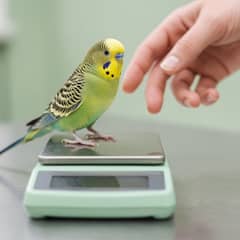
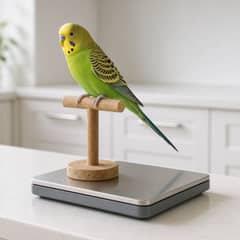
A healthy adult weighs about 40 to 60 g (1.5 to 2 oz) on average, and the range depends on the species: a peach-faced lovebird runs about 48 to 61 g, Fischer's 42 to 58 g, and the masked lovebird 30 to 60 g. The bird's own steady number matters more than any range. Weigh the bird on a gram scale every day before breakfast and write each reading down. That catches a loss days or weeks before the bird looks thin.
When a Lovebird Needs the Vet
Because lovebirds mask symptoms, sort any sign you can see by how fast it needs the avian vet. A subtle change is often all the warning you get.
Same day, as an emergency:
- The bird is huddled, weak or sitting on the cage floor instead of perching.
- It breathes with its beak open or bobs its tail with each breath while resting.
- A hen is straining, has a swollen belly or cannot grip the perch (egg binding, above).
- Bleeding has not stopped.
- It may have chewed or swallowed metal, or breathed fumes from overheated nonstick cookware.
- A cat has bitten or scratched it, or another lovebird has wounded it and there is blood.
Within about a day:
- It eats less, sits fluffed up, or sleeps more than usual in the daytime.
- Droppings stay abnormal for more than 24 hours, or turn bright lime green.
- There is discharge from the eyes or nose, sneezing, or swelling around the eyes.
- Its weight drops 3 days in a row, or falls 10% at any point.
Watch and write it down:
- One odd dropping from a bird that is otherwise eating, calling and acting normally. Check the next few, and move it up a tier if they stay off.
While You Wait for the Vet
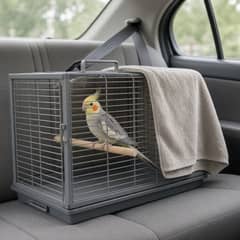
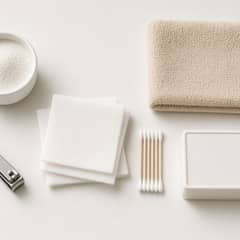
Set the sick bird up in a quiet spot and keep the room at 80 to 90°F until the vet can examine it. For the drive, set half of the carrier on a heating pad on low, or put a warm water bottle beside it, so the bird can move off the warm side. For bleeding from a nail or the beak, press clean gauze on the spot for a few minutes. Anything that keeps bleeding is the emergency above. Once bleeding has stopped, leave the clot alone and have the bird examined anyway. If the bird has to be held, wrap a small towel gently around its back and keep all pressure off its chest.
Act on the Small Change
Most of what goes wrong with a lovebird shows first as a small change: a few grams lost, a quieter day, a hen that will not stop laying. Weigh daily, keep the avian vet's number where you can find it, and act on the change instead of waiting for the bird to look sick.
Sources & Further Reading
Last reviewed 3 Sep 2026 · 6 sources
- VCA Animal Hospitals: the lovebirds general, chronic egg laying and egg binding in birds pages
- LafeberVet: the chronic egg laying client handout (Christal Pollock, DVM, DABVP), the Basic Information Sheet for the Lovebird, and Recognizing Signs of Illness in Birds
- PetMD: Egg Binding in Birds (Maria Zayas, DVM)
- Animal Diversity Web, University of Michigan: Agapornis roseicollis; Agapornis fischeri; Agapornis personatus
- Merck Veterinary Manual: Nutritional Diseases of Pet Birds; Signs of Illness in Pet Birds
- CDC: About Psittacosis
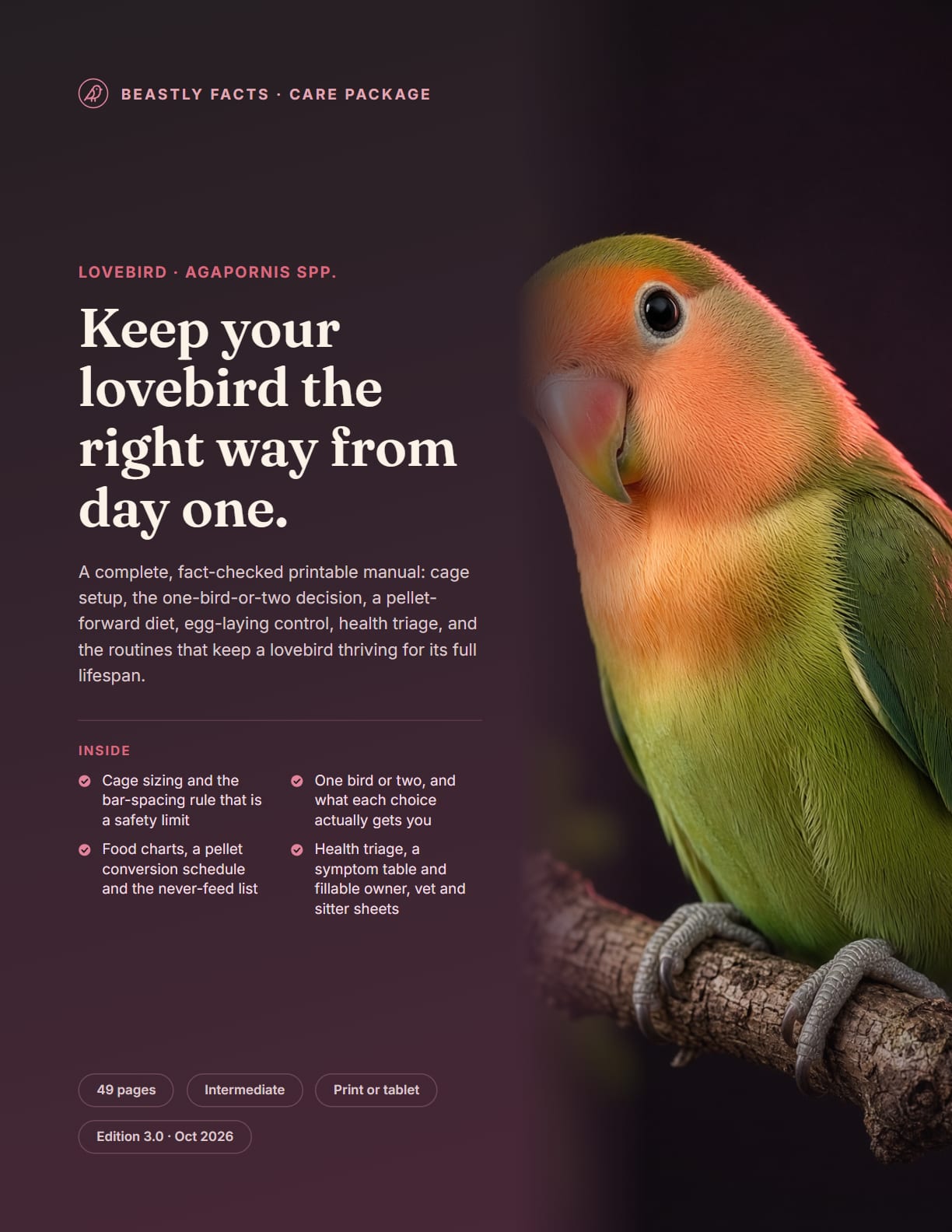
A sick lovebird is no time to be scrolling. The Lovebird Care Package puts these red flags, a symptom quick reference and an emergency card on paper, in a 49-page PDF, $8.99. Includes the Universal Pet Kit free: health and medication logs you can fill in.
Frequently Asked Questions
What is Psittacine Beak and Feather Disease (PBFD) in lovebirds?
A contagious virus that damages feathers, beak and the immune system, and lovebirds catch it easily. There is no cure, so test every new bird before it meets yours.
Why do lovebirds lay eggs even without a male present, and why is that dangerous?
A hen's body can cycle into laying on light, warmth, food and nest-like spaces alone. Each egg drains her calcium, and a depleted hen is the one that gets egg bound.
How can I prevent egg-binding in a pet lovebird?
Feed pellets, cut her day length on your vet's advice, and take out nest boxes, huts and mirrors.
What causes feather plucking in lovebirds?
Boredom, poor sleep and hormones can all cause it, and so can infection, mites and vitamin A deficiency. A vet rules out the medical causes first.
When is a lovebird health issue an emergency?
Straining to lay, trouble breathing, or a bird too weak to perch means the avian vet now. A quieter change, such as eating less or sitting fluffed, means the avian vet within about a day.
More on the Lovebird
Recommended Gear
As an Amazon Associate I earn from qualifying purchases through the links above, at no extra cost to you.

Written by Michael Ryan
Mike has looked after neighbors’ budgies and lovebirds on and off for years.
Mike keeps two rescued bearded dragons, Dex and Cera, and writes the care guides on BeastlyFacts from his own research and mistakes. He is not a veterinarian.
More about Michael Ryan →You May Also Like

Subscribe - it's free
An occasional email when something new is worth your time. No spam.
Health and More