Common African Grey Parrot Health Issues and What Causes Them
On This Page▾

African greys face a mix of nutritional, behavioral and infectious health risks, and two conditions, low blood calcium and feather plucking, are particularly common in this species. Everything here applies to both pet greys, the Congo and the smaller Timneh.
Hypocalcemia (Low Blood Calcium)
This is the signature health issue in this species, and calcium disorders lead the list of medical concerns for greys. Greys get an acute form of it, tied to low vitamin D3 as well as low calcium, and they lean on UVB light to keep their blood calcium up more than many other parrots do. A bird living indoors on a seed diet is the classic case.
Watch for: weakness, wobbling or falling off the perch, muscle tremors, a quiet, dull bird and, in serious cases, seizures. Bones can break with little force, because a long shortage pulls calcium out of the skeleton. A laying hen can produce thin-shelled eggs or become egg bound.
What the vet does: blood work measures calcium, phosphorus and vitamin D, and X-rays show whether the bones have lost density. Tremors or a seizure are an emergency: get the bird to a vet immediately for injectable calcium.
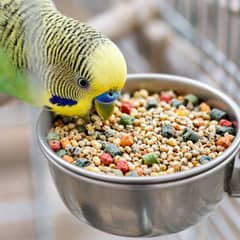
Prevention: feed a pelleted diet as the base, give the bird UVB from unfiltered sunlight or an avian UVB light, and ask for a calcium reading at the yearly exam.
Feather-Destructive Behavior (Plucking)
Greys are among the parrots most prone to pulling, chewing or barbering their own feathers. Boredom and loneliness are the usual triggers in this species, and so is an abrupt change in routine, such as a move, a new person in the house or a schedule that suddenly leaves the bird alone all day. Too little sleep and sexual frustration in a bird with no mate also play a part.
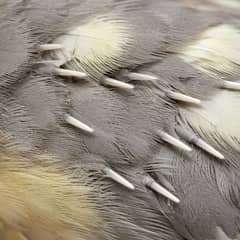
Watch for: bald or thin patches, frayed or chewed feathers, and feathers on the cage floor outside a molt. The head is the one place a bird cannot reach, so a grey that plucks itself keeps a fully feathered head.
What to do:
- See an avian vet first, because infection, skin disease, poor diet and low calcium can all start plucking.
- Look at the bird's day: hours alone, sleep, and how much of its food it has to work for.
- Move part of the food into foraging toys, the intervention with the most research behind it.
- Keep the routine steady and make changes slowly.
Aspergillosis
Aspergillosis is a fungal infection of the airways, and it is commonly seen in greys. The fungus lives everywhere as microscopic spores, in soil, damp nesting material and moldy food, and it does not spread from bird to bird. It takes hold in a bird whose defenses are down: one on a long-term seed diet short of vitamin A, one under heavy stress, one kept in a dirty cage, or one breathing cigarette smoke.
Watch for: tail bobbing, labored breathing and coughing early on, then lethargy, fluffed feathers and weight loss. The infection grows slowly over weeks to months, often with little to see until the lungs or air sacs are badly damaged. Bacterial infections of the airways produce the same signs, so telling the two apart takes a vet and a test.
What the vet does: blood work, X-rays and, for the clearest answer, an endoscope passed into the airways. Treatment with antifungal drugs often starts in the hospital and can take weeks to months, and the infection can be fatal if untreated.
Prevention: clean the cage often, take fresh food out before it spoils, keep the room well ventilated and smoke-free, and feed pellets so the bird gets its vitamin A.
Vitamin A Deficiency
A diet of seed, or even half seed and half pellets without portion control, runs short of vitamin A, and greys are among the parrots that show it. Vitamin A keeps the lining of the mouth, sinuses and airways healthy and supports the immune system, which is why a deficiency so often opens the door to aspergillosis and sinus infections.
Watch for: nasal discharge, sneezing, swelling around the eyes, breathing trouble, poor feather quality, more drinking and urinating, and white spots in or around the mouth.
What to do: see an avian vet, who can give vitamin A and treat any infection that has followed. The lasting fix is a switch to a pelleted diet.
Psittacosis
The bacterium Chlamydia psittaci causes psittacosis. Signs include tail-bobbing, wheezing, nasal discharge, diarrhea, a poor appetite, weight loss and a fluffed-up appearance. Some infected birds show no signs at all and still shed the bacteria. It is zoonotic, meaning it can spread to people in the household, and the bird needs a vet for antibiotic treatment.
PBFD (Psittacine Beak and Feather Disease)
PBFD is a virus that attacks fast-growing cells. In most parrots it shows as deformed feathers and a misshapen beak, but a grey usually shows neither. An infected grey looks generally sick instead, with anemia and a very low white blood cell count, because the virus attacks the bone marrow. It is uncommon in greys today, but in a young bird it can progress to fatal disease.
The virus spreads through droppings, through crop milk from parent to chick, and through feather dust, which can ride on a person's clothes and hair to another bird. A blood test or a swab of the mouth finds it, so have every new grey tested before it meets another bird. There is no treatment. A bird that tests positive stays apart from other parrots for life, never goes to a boarding facility with other birds, and gets supportive care to keep it comfortable.
Proventricular Dilatation Disease (PDD)
Greys are on the list of parrots affected by PDD, a disease first recognized in macaws. It is believed to be an autoimmune disease tied to infection with avian bornavirus.
Watch for: weight loss that keeps getting worse, and regurgitation.
What to do: see an avian vet. The disease is slow and can be fatal, which is one more reason to quarantine every new bird and keep it apart until the vet has cleared it.
The First Exam and the Workup Behind It
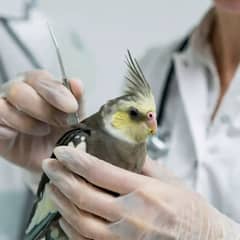
Take a new grey to an avian vet within one to two weeks of bringing it home, and afterward at least once a year. Many avian vets advise twice. Greys hide illness like every prey species, so the exam is how problems get found early. The vet should be a member of the Association of Avian Veterinarians, and that membership list is the place to start looking. If other birds live in the house, that first visit falls inside the new grey's 30 to 45 day quarantine period.
A baseline workup usually includes:
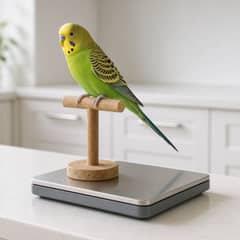
- A physical exam, with the bird's weight recorded as the reference number for the rest of its life, and the droppings checked. Track that number at home on a gram scale.
- Blood work. A complete blood count and a chemistry panel that measures calcium, among other values. For a grey, that calcium reading is the early look at the hypocalcemia at the top of this page.
- Whole-body X-rays, usually under sedation or gas anesthesia, to check organ size and position, lumps of inflamed tissue called granulomas, and swallowed foreign objects.
- Disease screening as indicated: psittacosis, polyomavirus, avian bornavirus, and circovirus, the virus behind PBFD.
- A fecal exam for intestinal parasites, and swabs of the mouth and the vent, the single opening under the tail, for abnormal bacteria or fungus.
Not every vet runs every test at the first visit. The exam findings and any contact with other birds decide which ones are needed.
When a Grey Needs the Vet
Greys hide illness well, so sort any sign by how fast it needs an avian vet.
Same day, as an emergency:
- Trouble breathing, breathing with the beak open at rest, or the tail bobbing with every breath.
- A seizure, tremors, collapse, repeated falling or a bird that cannot perch.
- Bleeding that has not stopped.
- A swollen belly, or a hen straining as if to pass an egg.
- Contact with a cat, dog or other predator, or a suspected toxin, such as fumes from overheated nonstick cookware or chewed metal.
Within about a day:
- A clear drop in appetite, or real weight loss on the scale.
- Repeated vomiting or regurgitation.
- A big change in the droppings.
- A sudden change in behavior alongside any other sign of illness.
Watch and write it down:
- One odd dropping from a grey that is otherwise eating, talking and acting normally. Check the next few, and move it up a tier if they stay off.
While You Wait for the Vet
- Put the bird somewhere quiet and handle it as little as possible.
- Give gentle extra warmth, unless the bird may be overheated.
- Set food and water within easy reach, and give a weak bird low perches or a padded floor.
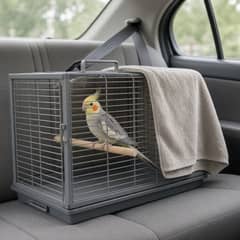
- Take it in a travel carrier with the cover half on, kept out of drafts on the way.
- Never force water or food into the mouth of a weak bird or one struggling to breathe, because inhaled liquid can kill it.
- Give no human medicine or leftover antibiotics, even if the signs look like an old illness.
Calcium, Sleep and a Clean Cage
Most of what goes wrong with a grey starts in its daily care. Feed pellets, give it UVB, protect its sleep and clear out old food before it can grow mold. Book the avian checkup even when the bird looks fine.
Sources & Further Reading
Last reviewed 17 Jul 2026 · 4 sources
- VCA Animal Hospitals: Common Conditions of Pet Birds; Veterinary Care, New Bird Visit; Aspergillosis in Birds; Psittacine Beak and Feather Disease in Pet Birds; Chlamydophilosis in Birds
- Merck Veterinary Manual: Nutritional Diseases of Pet Birds
- LafeberVet: Basic Information Sheet, African Grey Parrot, Christal Pollock, DVM
- Dr. Bob's Pet Health Information: African Grey Parrot Care Guide, Robert Linville, DVM

Log weight, feeding and meds, so your vet has the full picture. The Universal Pet Kit has it, among 19 forms for any pet that you can type into or print.
Frequently Asked Questions
What is the most common health issue in African grey parrots?
Hypocalcemia, low blood calcium. Calcium disorders lead the list of medical concerns for greys, and the signs are muscle tremors, weakness, and seizures in serious cases.
What should I do if my African grey has a seizure?
Treat it as an emergency and get to a vet immediately for injectable calcium. Longer-term, hypocalcemia is managed through proper diet, vitamin D, and UVB exposure.
Why are African greys especially prone to feather plucking?
Greys are among the parrots most prone to feather-destructive behavior. Causes include stress, boredom, loneliness, insufficient sleep, poor diet, or an underlying medical issue, so medical causes should always be ruled out with a vet first.
What is aspergillosis and why is this species prone to it?
A fungal infection of the airways. The spores are everywhere, and they take hold in a bird weakened by a seed diet, stress, a dirty cage or moldy food. Watch for labored breathing, sneezing, lethargy, and weight loss. Treatment can take months, and it can be fatal if untreated.
Is psittacosis dangerous to people, not just birds?
Yes. It can spread from a sick bird to the people in the house, so a grey with breathing signs or a fluffed-up look needs a vet.
What is PBFD?
Psittacine beak and feather disease, a virus. In a grey it usually causes general illness and anemia rather than bad feathers, because it attacks the bone marrow. A blood test or mouth swab finds it, and there is no treatment.
More on the African Grey Parrot
Recommended Gear
As an Amazon Associate I earn from qualifying purchases through the links above, at no extra cost to you.

Written by Michael Ryan
Mike keeps two rescued bearded dragons, Dex and Cera, and writes the care guides on BeastlyFacts from his own research and mistakes. He is not a veterinarian.
More about Michael Ryan →You May Also Like
Subscribe - it's free
An occasional email when something new is worth your time. No spam.
Deep Dive
Health and More