African Grey Parrot Cage Setup: Size, Placement, and Enrichment Done Right
On This Page▾

An African grey's cage needs to support a large, intelligent, long-lived bird, and getting the size and placement right matters as much as anything else in this species' care. The figures here suit both pet greys, the Congo and the smaller Timneh.
Cage Size
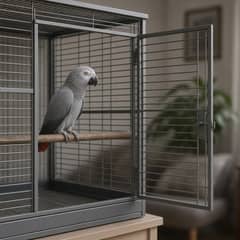
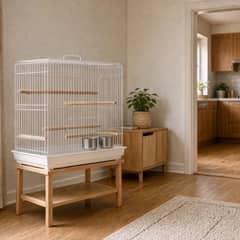
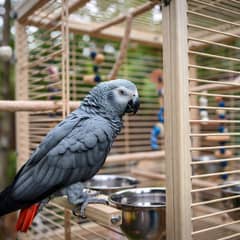
A cage at least 40 inches wide by 30 deep by 60 tall is the commonly quoted minimum for one grey, and bigger is better. Whatever size you land on, your bird needs to be able to fully extend and flap its wings without touching the bars in any direction. Bar spacing runs 3/4 inch to 1 inch, never wider, on stainless steel or powder-coated bars.
The cage is home base, not the whole territory. A grey needs three to four hours of supervised time outside it every day, and a bird-safe play stand gives that time a place to happen.
Temperature
Standard household temperatures, roughly 65 to 80°F, work well. Avoid drafts and cold spots, but no special heating or cooling is needed indoors.
Placement Matters More Than It Might Seem
The cage belongs in a well-lit, draft-free spot near where the family spends its day, away from loud, chaotic rooms. Excellent ventilation without direct drafts is important. Keep the cage well away from the kitchen entirely, since fumes from overheated nonstick cookware are deadly to birds, and keep the bird safely separated from household cats or dogs.
Cage Floor and Hardware
Line the cage bottom with newspaper or paper towels and change it every day. Skip sandpaper liners, wood chips, corncob, clay, cat litter and shredded paper: a bird can eat them and block its gut, the dust irritates the airways, mold grows in them once they are damp, and they hide the droppings you need to read. Avoid galvanized (zinc-coated) hardware such as chains, clips and bells, because chewing on it is a heavy-metal poisoning risk.
Cleaning, Dust and Damp
The daily routine for a grey:
- Wash every food and water dish with soap and hot water, and dry it thoroughly before you refill it.
- Change the paper liner, so droppings and dropped food never sit overnight.
- Take fresh food out of the cage within a couple of hours, before it spoils.
That last point matters more for a grey than for most parrots. Aspergillosis, the fungal respiratory infection this species is prone to, takes hold in warm, damp, dirty conditions, and wet food debris in the bottom of a cage is exactly that. For the deeper scrub of cage, perches and toys, check which products are safe around birds before you pick one.
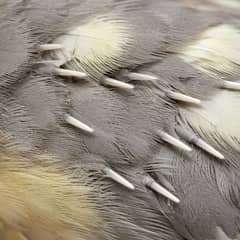
Greys also produce large amounts of powder down, the fine feather dust that settles on the cage, the furniture and every surface near it. Wipe that dust down as part of the cleaning, and keep it under control with air filtration and regular bathing.
Perches
A grey spends nearly all its life standing, so the perches are its floor.
- Shape: natural wood branches of different thicknesses spread the pressure across different parts of the foot. Hardwoods such as manzanita, applewood and dragonwood hold up to a parrot's beak.
- Size: the toes should wrap about three-quarters of the way around the perch. A perch too thick for the foot leaves the bird slipping or falling, especially when it is startled.
- Branches from outside: use only safe trees such as apple, elm, ash, maple or willow, and bake them at 200°F for 30 minutes first to kill bacteria, fungus and insects. Never use cherry, apricot, peach, nectarine, plum, oak, laurel, pitch pine or yew.
- Rope: soft cotton or hemp rope is easy on older or arthritic feet. Check it daily for loose strands that can wrap a toe, and never use synthetic fiber.
- Concrete or grooming perches: they help wear down nails and beak, but never make one the only perch, because they rub the soles of the feet.
Skip sandpaper perch covers, which cause sores on the feet. Skip plastic perches for a bird this size: a grey chews them into sharp splinters. Replace any perch that is chewed or splintered.
Food and Water Dishes
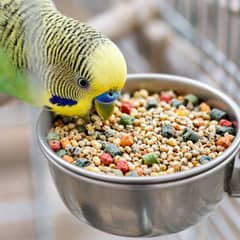
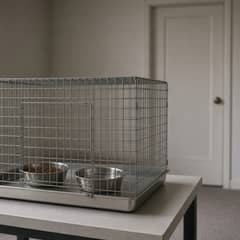
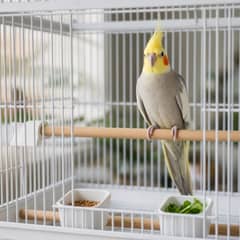
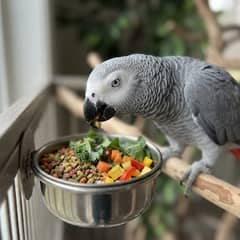
Attach the dishes to the side of the cage, not the floor, so droppings do not fall into them, and keep them shallow enough that the bird can reach the bottom. Stainless steel is the material for a bird this size: a grey cannot destroy it, and it cleans easily. Wash them every day; stainless steel dishes can go in the dishwasher.
Toys and Toy Safety
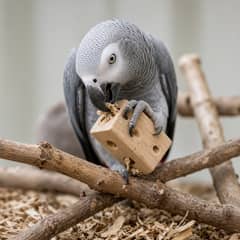
Ladders, swings, rope, wood, leather and cardboard to chew all count as toys, and foraging puzzles that make the bird work out a treat are the best of them. No one regulates bird toy safety, so check each one before it goes in:
- No snaps, clasps, bell clappers or open chain links that can trap a beak, toe or tongue.
- No loose fibers, rubber pieces or parts small enough to swallow.
- No glass. Glass mirrors break too easily for a grey; a polished stainless steel mirror is the safer kind.
Introduce new toys slowly, since some birds are frightened of anything new in their space. Rotate toys every week or month so the bird does not get bored, wash dusty or soiled ones in warm, soapy water, and replace any that are damaged.
The Deep Clean
On top of the daily routine, scrub the whole cage at least once or twice a month:
- Move the bird to another room, and open a window or run a fan.
- Spray the cage with a bird-safe disinfectant or a mild dish soap in hot water, and leave it on for 10 to 15 minutes.
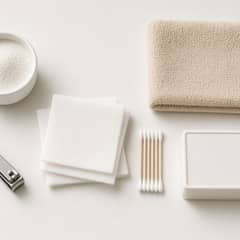
- Scrub every bar, tray and perch, then rinse with fresh water until no residue is left.
- Dry everything before the bird goes back in.
A cup of household bleach in a gallon of water kills many disease-causing germs, and white vinegar lifts dried droppings off metal and plastic. Both give off fumes, so the bird stays out of the room while you use them. Replace wood, wicker and bamboo items, perches included, every 6 to 12 months, because dirt soaks into them. Wash rope and fabric toys weekly and replace them every 2 to 6 months.
Bathing
A grey's powder down makes bathing part of keeping the whole room clean. Indoor air from heating and air conditioning dries out feathers and skin, so offer a bath every day and aim for at least three or four baths a week. A shallow dish of lukewarm water or a fine mist from a spray bottle both work, and many birds have a favorite time of day for it. A grey that will not bathe on its own gets a gentle spritz of fresh water once or twice a week. Give the bath early enough in the day for the feathers to dry before night.
Lighting
UVB light lets a grey make vitamin D3 and absorb calcium, which helps prevent hypocalcemia, dangerously low blood calcium. Unfiltered sunlight is the ideal source, but window glass and screens block it. Indoors, mount an avian UVB light at the distance and for the daily hours its maker gives, and leave the bird a spot to move away from it. Put it on a plug-in timer so it switches on and off at the same times each day. Replace the bulb every 6 to 12 months even while it still lights up, since UV output fades before the light does. Give the grey 10 to 12 hours of true darkness for sleep every night, under a cage cover if the room is not dark.
Powder down feathers never finish growing. Instead of being shed once a year like ordinary plumage, their tips break down all year round into a fine keratin powder, which is why a grey's cage needs dusting as well as scrubbing.
Enrichment Is Part of the Setup
Foraging toys, varied perches, and daily social interaction are welfare essentials for an African grey. A bored, under-slept, under-stimulated grey often starts plucking and screaming.
Setup Order
- Place the cage in a bright, draft-free room the family uses, well away from the kitchen.
- Line the tray with plain paper under the grate.
- Fit perches of varied diameter at different heights, none directly over a food or water dish.
- Bolt on the food and water dishes.
- Hang foraging toys and shredding material around the sides, leaving room to climb and flap.
- Mount the UVB light at the maker's distance, on a timer, with a shaded spot the bird can move to.
- Set up the play stand in the same room for the hours out of the cage.
A Cage Built for Decades
Buy the cage once, at full size, with bars the right width and no zinc anywhere a beak can reach. Then put it where the family spends its day, away from the kitchen, and keep it clean enough that mold never gets a start.
Sources & Further Reading
Last reviewed 17 Jul 2026 · 6 sources
- Dr. Bob's Pet Health Information: African Grey Parrot Care Guide, Robert Linville, DVM
- Tree of Life Exotic Pet Medical Center: African Grey Parrot Care
- Merck Veterinary Manual: Overview of Pet Birds (cage size and bar spacing table); Management of Pet Birds; Toxicoses of Pet Birds
- VCA Animal Hospitals: Housing Large Birds; Perches for Birds; Cage Hygiene in Birds; Bathing Birds
- LafeberVet: Basic Information Sheet, African Grey Parrot, Christal Pollock, DVM
- NASPHV: Compendium of Measures to Control Chlamydophila psittaci Infection Among Humans and Pet Birds (PDF, downloads)

A routine chart and equipment log you can fill in for your own setup. The Universal Pet Kit has it, among 19 forms for any pet that you can type into or print.
Frequently Asked Questions
What size cage does an African grey parrot need?
At least 40 inches wide by 30 deep by 60 tall for one grey, Congo or Timneh, and bigger is better. The test at any size: the bird can fully extend and flap its wings without hitting the bars.
How far apart should the cage bars be?
3/4 inch to 1 inch, and no wider than 1 inch.
What temperature range is safe for an African grey?
Roughly 65 to 80°F, so ordinary room temperature. No special heating or cooling indoors, just keep the cage off drafts and cold spots.
Where should I place the cage?
In a bright, well-ventilated room the family uses, out of drafts, far from the kitchen and its cookware fumes, and out of reach of cats and dogs.
Does an African grey need special lighting?
UVB, from unfiltered sunlight or an avian UVB light set up by the maker's directions for distance and daily hours, with a spot the bird can move away to. It supports vitamin D3 and calcium absorption, which helps prevent hypocalcemia.
Is enrichment necessary, or just nice to have?
It's a welfare essential, not an accessory. A bored, under-slept, under-stimulated grey reliably develops plucking and excessive screaming, so foraging toys, varied perches and daily social interaction all matter.
More on the African Grey Parrot
Recommended Gear
As an Amazon Associate I earn from qualifying purchases through the links above, at no extra cost to you.

Written by Michael Ryan
Mike keeps two rescued bearded dragons, Dex and Cera, and writes the care guides on BeastlyFacts from his own research and mistakes. He is not a veterinarian.
More about Michael Ryan →You May Also Like
Subscribe - it's free
An occasional email when something new is worth your time. No spam.
Deep Dive
Health and More