How to Handle an African Grey Parrot
On This Page▾

African grey parrots are intelligent, sensitive and social. A grey needs roughly 4 to 5 hours of interaction every day, including 3 to 4 hours of supervised time out of the cage, to stay well adjusted, and occasional attention is not enough. This guide covers both pet greys, the Congo and the smaller Timneh, which handle the same way.
The First Days Home
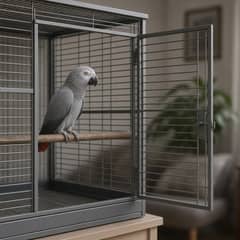
Have the cage set up and stocked before the bird arrives, so it goes straight from the carrier into a finished home. Hold the open carrier against the open cage door and let the grey walk in on its own. For the first few days, keep the room calm, talk softly as you pass, and leave the bird alone apart from food, water and the daily paper change. Check that it eats, drinks and leaves normal droppings, and book the first avian vet visit within one to two weeks.
If other birds live in the house, keep the new grey quarantined in a separate room for 30 to 45 days, with its own bowls, toys and cleaning gear, and wash your hands between birds.
Understanding the Bite
African greys have a reputation for biting, but most bites are not about aggression. Biting is far more often tied to fear, a lack of trust or overstimulation. A grey bite can break skin, and their sharp nails can scratch, but most biting incidents trace back to a specific trigger rather than the bird simply being difficult.
The warning signs come first. Rapid eye flashing, where the pupils shrink and widen quickly, usually means an over-excited bird about to bite. So does leaning forward with the head, leaning away from the hand, or an unhappy sound. Two triggers catch owners out. A grey agitated by another bird or a person it dislikes may take it out on the nearest hand. Most pet birds also defend their cage, so reaching in to lift the bird out or change the dishes draws bites a grey would never give on a perch. Ask for the step-up at the open door or on a perch outside the cage.
Teaching the Step-Up
Step-up is the first command, and it is taught slowly. A good start is one or two sessions a day of five to ten minutes, working up to two 20-minute sessions.
- Hold a perch stick, a short handheld perch, against the bird's lower chest and say "step up".
- Move your hand closer along the stick at each session.
- Offer your hand in place of the stick.
Reward each success with a small food treat, marked by a clicker if you train with one.
A large parrot uses its beak as a third hand for balance and will reach out with it to steady itself while stepping up. Hold still and stay confident when it does. Pulling away suddenly frightens the bird and teaches it that the beak moves the hand, which is how a balance grab turns into a bite.
When a bite does happen, a calm response matters more than anything else. A loud reaction teaches the bird that biting earns attention or control. Set the grey down slowly and walk away, and ask again only once it has settled. Never hit a bird: it destroys trust and makes the bird afraid of hands. If the grey will not step up without biting, go back a stage:
- Offer treats from your hand for several days.
- Ask for the step-up onto the perch stick.
- Ask for the step-up onto your hand again.
The whole process can take weeks.
One Person or the Whole Family
Greys bond readily, often with one member of the family, and sometimes with men or with women in particular. That single bond can turn into aggression toward everyone else unless the family works against it from the start.
- Have two or more people feed, train and handle the bird from the first weeks.
- Let each person run short step-up sessions with the same cue and the same treats.
- Keep the favorite person from being the only one who ever handles the bird, and have everyone ask for the step-up at the open door, not by reaching in.
Getting Used to the World
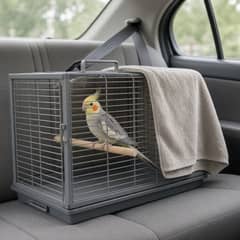
A young grey adapts to new people and places far more easily than an older or poorly socialized one, so give it early, calm exposure once it has settled in: visitors of different ages, other pets at a safe distance, short car trips in the carrier and routine vet visits. Introduce new objects slowly, one at a time, because a grey is easily unsettled by change in its space.
Calls and Screaming
Loud calls are how a parrot keeps in touch with its flock, and to a pet grey the household is the flock. Expect the most noise in the early morning and at dusk, when wild flocks gather, and whenever the house gets loud: a vacuum, music, a phone call or people talking over each other. A frightened, bored, lonely, stressed or sick bird calls more. A frightened, defensive or timid grey also makes a loud growl, and that growl is a warning to back off, not a sound to answer.
What makes it worse is attention for the noise. Yelling back, rushing over, or covering the cage and turning off the light all teach the bird that screaming works.
- Ignore the scream whenever you safely can.
- Reward the quiet: when the bird is calm, give praise, a moment of attention, a small treat such as a piece of walnut, almond, baby carrot or coconut, or a foraging toy.
- Keep the household routine steady, so the bird is not calling for company it expects and does not get.
- Ask the avian vet for a referral to an avian behaviorist if the calling keeps climbing.
A sound you have never heard from the bird before is different: birds often call out during a seizure, so get it seen right away.
First-Timer Mistakes
- Wait for the bird to trust you before you ask for physical contact.
- Never "beak wrestle" or play roughly with the beak, which the bird reads as an invitation.
- Trim the nails lightly, because over-clipped nails can leave a grey feeling insecure and more prone to fear-biting.
- Protect its sleep and enrichment. Greys need 10 to 12 hours of dark, quiet rest nightly, under a cage cover if the room is not dark.
Just How Intelligent Are We Talking?
Landmark peer-reviewed research on a grey named Alex documented the ability to label 50 different objects, 7 colors, and 5 shapes, count quantities up to six, and even grasp the concept of "none."
A second grey, N'kisi, was reported by his owner to use hundreds of words in context. That figure comes from the owner, not a controlled study, so treat it with more caution than the peer-reviewed Alex research.
Stress Shows in the Feathers
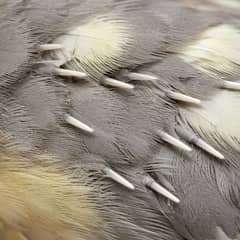
African greys are cognitively demanding and especially prone to stress-driven feather plucking. A grey that starts pulling its feathers needs an avian vet first, then a hard look at its routine, its sleep and how much it has to do.
Trust Comes Before the Step-Up
A grey that trusts its person bites less, learns faster and settles into the household. Keep sessions short and calm, read the warning signs before they turn into a bite, and give the bird its hours of company every day.
Sources & Further Reading
Last reviewed 17 Jul 2026 · 3 sources
- Pepperberg, I.M. (2006). Applied Animal Behaviour Science (research on Alex the African grey parrot).
- Swiftail Exotic Telemedicine Veterinary Services: African Grey Care Sheet
- VCA Animal Hospitals: Biting and Screaming in Birds; Taming, Training and Talking to Birds; African Grey Parrots, General
- LafeberVet: Basic Information Sheet, African Grey Parrot, Christal Pollock, DVM

A pet profile and a sitter sheet you can fill in, so anyone who helps knows the routine. The Universal Pet Kit has it, among 19 forms for any pet that you can type into or print.
Frequently Asked Questions
How much daily interaction does an African grey parrot need?
About 4 to 5 hours a day, most of it out of the cage with you. A grey left alone most of the day turns to plucking and screaming.
How intelligent are African grey parrots?
Very. Alex, the grey at the center of the landmark peer-reviewed work, labeled 50 objects, 7 colors, and 5 shapes, counted quantities to six, and grasped the concept of none.
Is the story about N'kisi knowing hundreds of words true?
That figure comes from N'kisi's owner rather than a controlled study, so treat it with more caution than the peer-reviewed Alex research, even though the claim is widely repeated.
Why do African greys bite?
Usually fear, missing trust, or overstimulation, not aggression. A grey bite can break skin and the nails can scratch, so the bite is worth taking seriously. Most incidents trace back to a specific trigger.
What are common first-timer mistakes with African greys?
The big ones are pushing physical contact before the bird trusts you, beak wrestling, over-clipping nails, and skimping on sleep or enrichment. A grey needs 10 to 12 hours of dark, quiet rest every night.
Why does an African grey pull out its feathers?
Stress is a common cause, and greys are especially prone to stress-driven plucking. Take a plucking grey to an avian vet first, then look at its routine, its sleep and how much it has to do.
More on the African Grey Parrot
Recommended Gear
As an Amazon Associate I earn from qualifying purchases through the links above, at no extra cost to you.

Written by Michael Ryan
Mike keeps two rescued bearded dragons, Dex and Cera, and writes the care guides on BeastlyFacts from his own research and mistakes. He is not a veterinarian.
More about Michael Ryan →You May Also Like

Subscribe - it's free
An occasional email when something new is worth your time. No spam.
Deep Dive
Health and More