Tokay Gecko
Gekko gecko
On This Page▾
🌍 Overview
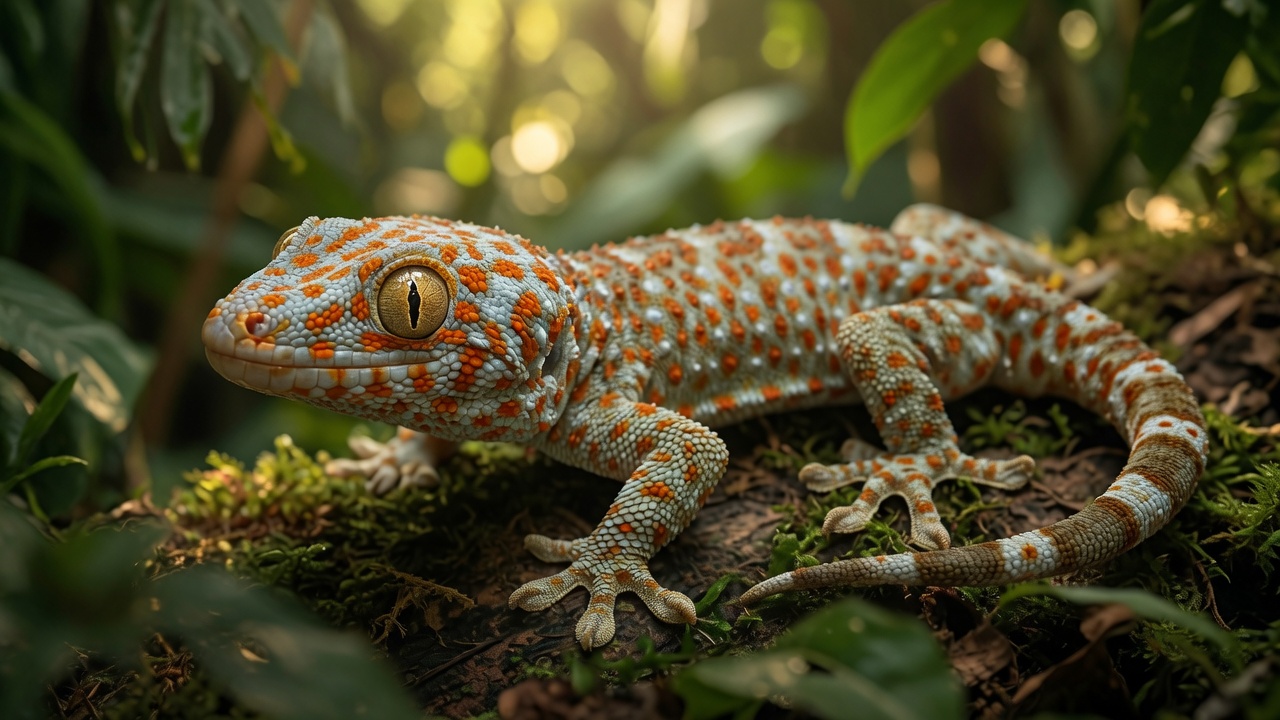
The tokay gecko is one of the largest gecko species, named for its distinctive "to-kay!" mating call audible from considerable distance. Native to Southeast Asia, they are highly territorial and notorious for their powerful bite. In parts of Asia they are considered good luck charms and natural pest controllers, consuming insects and small rodents from the walls of homes and temples.
📋 Quick Facts
Native Range
South and Southeast Asia (India through Indonesia and Philippines)
Natural Habitat
Tropical rainforest, rocky outcrops, and human structures
Adult Size
10-15 inches (25-38 cm)
Wild Diet
Insects, small mammals, birds, lizards, and eggs
Wild Lifespan
10-15 years
Conservation Status
Least Concern (IUCN)
📜 History
The tokay gecko is traded at a scale that has little to do with the pet market. Indonesia is the largest known exporter and reported roughly 5 million individuals in each of 2021 and 2022, about 99 percent of them bound for mainland China and overwhelmingly for traditional medicine rather than as pets. One Indonesian quota split 1.8 million animals into 21,250 for the pet trade and 1,778,750 for consumption. Almost all are taken from the wild, and investigations into the commercial breeding facilities that are supposed to supply them have questioned whether the captive-bred paperwork reflects any captive breeding at all.
⚖️ Compare
Tokay Gecko
Human
Adult Size
10-15 inches (25-38 cm)
5-6 feet (150-185 cm); ~135-200 lbs
Wild Lifespan
10-15 years
~73 years (global average)
Wild Diet
Insects, small mammals, birds, lizards, and eggs
Omnivorous - eats just about anything
Native Range
South and Southeast Asia (India through Indonesia and Philippines)
Global - originated in Africa roughly 300,000 years ago
Natural Habitat
Tropical rainforest, rocky outcrops, and human structures
Everywhere from arctic tundra to tropical megacities
Conservation Status
Least Concern (IUCN)
Least Concern (8+ billion and counting)
🧠 Test Yourself
What's the Tokay Gecko's native range?
🤩 Fun Facts
🦎 Gecko Toe Magic
Geckos can walk on walls and ceilings thanks to millions of tiny hair-like structures on their toes called setae. Each foot has about 500,000 of them, using molecular forces to stick to surfaces!
🦎 Climbing the Walls
Geckos have microscopic hairs on their feet that allow them to stick to surfaces and even run on ceilings! This amazing ability comes from van der Waals forces, making them one of nature's great climbers.
📖 Care Guide
Tokay Gecko Care Guide
The jewel-toned, loud-voiced gecko that's not for the faint of heart!
⚖️ Where it is legal
4 US jurisdictions restrict this species, from outright bans to permits. Every one quotes the rule it comes from.
⚖️ Legal Guide
Subscribe - it's free
New animal facts and care guides straight to your inbox. No spam. 🐾
📰 Deep Dive
🦎 How Much Does a Tokay Gecko Really Cost?
🦎 Should You Handle a Tokay Gecko? Probably Not Often
🦎 Common Tokay Gecko Health Issues and What Causes Them
🦎 Tokay Gecko Enclosure Setup: Warm, Vertical, and Genuinely Humid
🦎 Tokay Gecko Feeding: Five Minutes of Insects, Nothing Wider Than the Head, and Mice as a Rare Treat
🦎 Tokay Gecko Enrichment: A 2024 Study Says Keep Them in Pairs
🩺 Health and More
🔌 Reptile Emergency Plan: Power Outages, Travel, and Pet Sitters
💧 Reading Reptile Stool, Urates, and Hydration: A Daily Health Check
🧼 Salmonella and Reptile Hygiene: The Rules That Actually Matter
🌡️ Reptile Heating and Thermostats: Preventing Burns
🧫 Reptile Quarantine: Why New Snakes and Lizards Need Months, Not Weeks
🦎 Understanding Reptile Shedding (Ecdysis)
🤓 Did You Know?
Tokay geckos are named after their incredibly loud 'TO-KAY!' call. Males use this booming vocalization to defend territory and attract mates. You'll hear them from across a room!
Explore More