Is It Legal to Own a Tokay Gecko? State-by-State Guide
On This Page▾

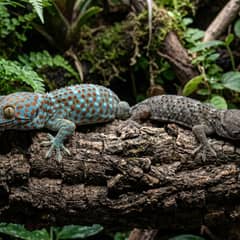
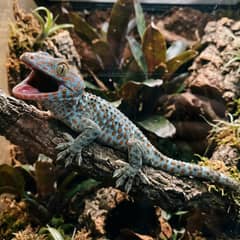
The tokay has a reputation problem. It is loud, it bites hard, and it is notoriously unwilling to let go once it has. Keepers assume an animal with that description must attract regulatory attention, and the opposite is true: it clears 47 of 52 jurisdictions with no permit at all, and in one state it is treated better than every other gecko.
Where Tokay Geckos Stand
| Where | Status | What the rule says |
|---|---|---|
| 46 other jurisdictions | Legal, no permit | No restriction found on private possession |
| Hawaii | Research and exhibition only | Named on Restricted Animal List Part A |
| District of Columbia | Banned | § 8-1808(j)(1) bars all wildlife with seven exceptions, none of which is a lizard |
| Minnesota | Conditional | § 97A.401 subd. 8 makes lizards a protected wild animal as a whole category |
| Maine | Conditional | Every gecko is cleared at infraorder rank, under the unrestricted list's Captive Bred Origin Only heading |
| New Jersey | Legal, and named as the exception | 7:25-4.3(a)3.xiv covers geckos other than the Tokay Gecko |
| West Virginia | Permit required | § 20-2-13 bars possessing live wildlife from without the state without an importation permit from the director |
New Jersey Exempts the One Gecko You Would Expect It to Restrict
New Jersey requires a possession permit for exotic and nongame species, and its reptile list handles geckos in a single entry: Geckos - Family Gekkonidae other than Tokay Gecko.
Read that carefully, because the effect is the reverse of what a keeper would guess. A crested gecko needs a permit in New Jersey. A leopard gecko needs a permit. The tokay, the largest and by some distance the most defensive of the three, does not.
The rule does not say why, and it would be guessing to supply a reason. What can be said is the effect: a regulation that sounds restrictive contains a carve-out benefiting the species with the worst reputation in the group, and a keeper who reads the entry quickly will take away the opposite of what it says.
The Two That Bar It Do So for Reasons That Have Nothing to Do With the Tokay
Hawaii names the species on Part A of its Restricted Animal List, which is headed for research and exhibition. That is a route for a university or a licensed exhibitor and not for a household. Hawaii's concern is establishment rather than temperament, and it applies the same treatment to geckos far more docile than this one.
The District of Columbia bars it by omission. Section 8-1808(j)(1) prohibits possession of wildlife with seven exceptions, and the reptile category covers non-venomous snakes, fish and turtles. No lizard appears anywhere in the seven, so the tokay is barred in the same breath as the bearded dragon and the green iguana, with nothing in the rule addressing any of them individually.
Minnesota's conditional status is likewise not about this species. Section 97A.401 subd. 8 makes snakes, lizards and salamanders protected wild animals as whole categories, regardless of where they come from. Maine's is the same kind of condition from the other direction: its unrestricted list clears every gecko, but only under the heading "Captive Bred Origin Only".
The Listing That Does Matter
The tokay gecko was added to CITES Appendix II at CoP18 in Geneva in August 2019, on a proposal brought jointly by the European Union, India, the Philippines and the United States. The proposal put documented exports above 770,000 animals a year, with actual trade likely past a million once undocumented export is counted. That listing governs international movement rather than domestic keeping, so it does not appear in any of the state answers above.
It is still the most likely paperwork a keeper will meet. Buying a captive-bred animal from a domestic breeder raises no CITES question at all. Importing one does, and the documentation is the seller's to produce.
West Virginia Regulates the Shipment, Not the Species
West Virginia never names the tokay gecko, and no species list reaches it. A tokay gecko is a reptile and a Southeast Asian species, so it is wildlife from without the state on any route into West Virginia. That puts it under W. Va. Code § 20-2-13, which bars bringing live wildlife in from out of state, or keeping it there, without an importation permit from the director. The state's definition of wildlife covers reptiles with no captive-bred exception, so buying from a breeder does not change the answer.
The permit exists on paper only. The Division of Natural Resources publishes no application for it, and no rule puts the section into practice outside aquaculture. If you keep one in West Virginia or are moving there with one, ask the DNR in writing before the animal crosses the state line and keep the reply with its purchase records.
What to Check Before Buying
Wild-caught tokays are still common in the trade and arrive with parasite loads and a temperament shaped by capture, which is a welfare question rather than a legal one but worth the same attention.
The Bite Never Reaches the Rulebook
No state regulates the tokay for its bite, and it is legal with no permit in 47 of 52 jurisdictions, New Jersey included as the one gecko its permit list leaves out. Two places bar it, HI and DC, and ME and MN attach conditions that apply to all lizards or all reptiles alike. West Virginia's importation permit has no published application, so a keeper moving there should get the DNR's answer in writing first. The tokay gecko page of the exotic pet law map shows the rule behind each state.
Sources & Further Reading
Last reviewed 1 Nov 2026 · 5 sources
- N.J.A.C. 7:25-4.3, Exotic and Nongame Species Requiring a Permit for Possession (official PDF, downloads)
- Hawaii Restricted Animal List Part A (official PDF, downloads)
- D.C. Code § 8-1808(j), Prohibited Conduct (official text)
- Minn. Stat. § 97A.401, Special Permits (official text)
- CITES CoP18 Proposal 28, inclusion of Gekko gecko in Appendix II (official PDF, downloads)
Frequently Asked Questions
Are tokay geckos legal in the US?
In 47 of 52 jurisdictions, with no permit. Only HI and DC bar them, West Virginia asks for an importation permit, and ME and MN attach conditions that apply to every lizard or reptile rather than to this species specifically.
Is it true that New Jersey exempts the tokay gecko?
Yes, and it is the only state that singles the species out in its favor. The permit entry at N.J.A.C. 7:25-4.3(a)3.xiv reads Geckos - Family Gekkonidae other than Tokay Gecko, so every other gecko needs a possession permit there and the tokay does not.
Does a tokay gecko bite change its legal status?
No. The tokay is known for a hard bite and a reluctance to let go, but no state on this map regulates it on that basis. The states that restrict venomous or dangerous reptiles draw their lines well above a gecko.
Does CITES affect owning a tokay gecko?
It affects moving one across an international border rather than keeping one. The species was listed on CITES Appendix II in 2019, which means import and export need documentation. Ordinary possession of an animal already in the country is a state matter.
More on the Tokay Gecko




Written by Michael Ryan
Mike keeps two rescued bearded dragons, Dex and Cera, and writes the care guides on BeastlyFacts from his own research and mistakes. He is not a veterinarian.
More about Michael Ryan →You May Also Like


Subscribe - it's free
An occasional email when something new is worth your time. No spam.
Deep Dive
Health and More