Argentine Black and White Tegu
Salvator merianae
On This Page▾
🌍 Overview
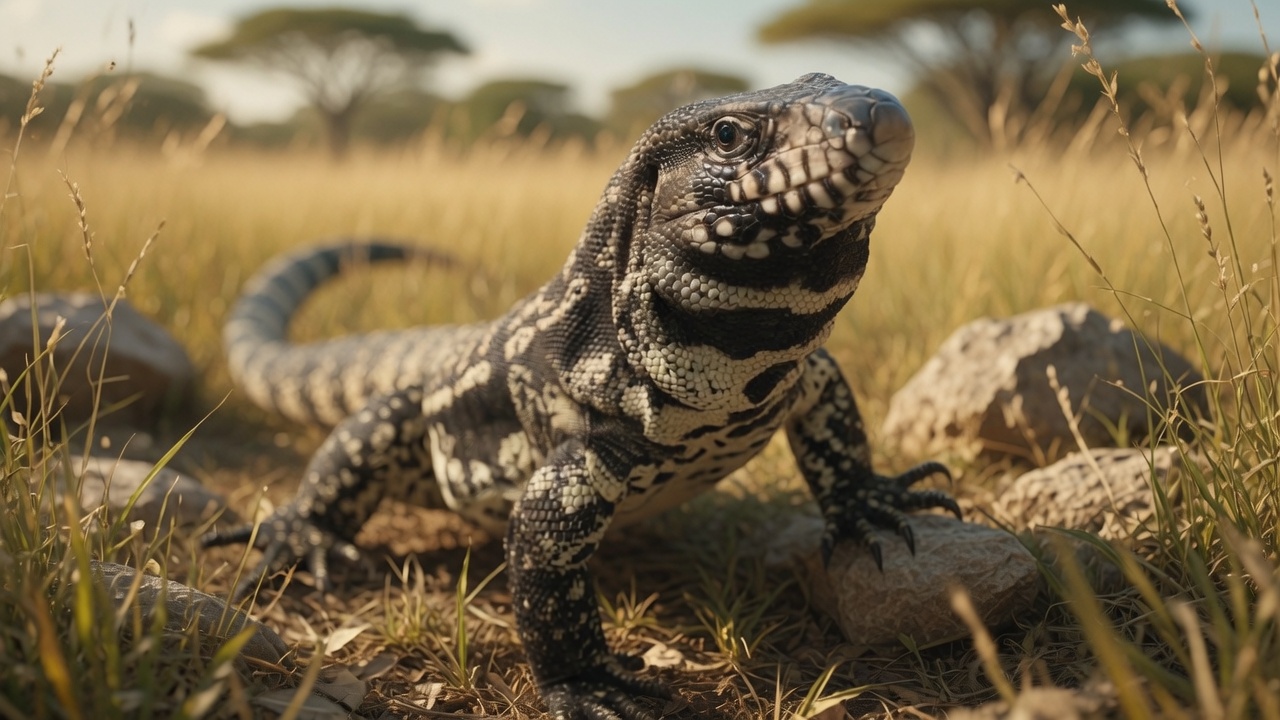
The Argentine black and white tegu is one of the largest lizards in South America, with intelligence rivaling that of monitor lizards. They are notable among reptiles for having near-endothermic (warm-blooded) properties during breeding season - their body temperature rises above ambient temperatures. In the wild they are powerful, opportunistic predators; well-socialized tegus in captivity can become remarkably dog-like companions.
📋 Quick Facts
Native Range
South America (Argentina, Brazil, Paraguay, Uruguay)
Natural Habitat
Tropical and subtropical forest, scrubland, and grassland
Adult Size
3-5 feet (90-150 cm)
Wild Diet
Omnivore - small mammals, eggs, birds, insects, fruits, and carrion
Wild Lifespan
15-20 years
Conservation Status
Least Concern (IUCN)
📜 History
Auguste Duméril and Gabriel Bibron described the species in 1839, and the name merianae honors Maria Sibylla Merian, the German naturalist and illustrator who documented South American insects and reptiles in the early eighteenth century. The pet trade later carried it to Florida, where the first free-living population was found in 2006 in Hillsborough and Polk counties, seeded by escapes and deliberate releases. Nearly 3,300 tegus have since been pulled out of Miami-Dade County alone, and sightings have reached South Carolina. On April 29, 2021 the Florida Fish and Wildlife Conservation Commission added the genera Salvator and Tupinambis to its prohibited list, ending routine sale of the animal in the state that had done most to popularize it.
⚖️ Compare
Argentine Black and White Tegu
Human
Adult Size
3-5 feet (90-150 cm)
5-6 feet (150-185 cm); ~135-200 lbs
Wild Lifespan
15-20 years
~73 years (global average)
Wild Diet
Omnivore - small mammals, eggs, birds, insects, fruits, and carrion
Omnivorous - eats just about anything
Native Range
South America (Argentina, Brazil, Paraguay, Uruguay)
Global - originated in Africa roughly 300,000 years ago
Natural Habitat
Tropical and subtropical forest, scrubland, and grassland
Everywhere from arctic tundra to tropical megacities
Conservation Status
Least Concern (IUCN)
Least Concern (8+ billion and counting)
🧠 Test Yourself
What's the Argentine Black and White Tegu's native range?
⚖️ Where it is legal
11 US jurisdictions restrict this species, from outright bans to permits. Every one quotes the rule it comes from.
Subscribe - it's free
New animal facts and care guides straight to your inbox. No spam. 🐾
📰 Deep Dive
🩺 Health and More
🔌 Reptile Emergency Plan: Power Outages, Travel, and Pet Sitters
💧 Reading Reptile Stool, Urates, and Hydration: A Daily Health Check
🧼 Salmonella and Reptile Hygiene: The Rules That Actually Matter
🌡️ Reptile Heating and Thermostats: Preventing Burns
🧫 Reptile Quarantine: Why New Snakes and Lizards Need Months, Not Weeks
🏡 Outdoor Reptile Housing: Pens, Predators, and What Actually Kills Them
🤓 Did You Know?
Tegus are one of the only reptiles known to have near-endothermic (warm-blooded) properties. During breeding season, their body temperature rises above ambient temperatures!
Explore More