Rosy Boa
Lichanura trivirgata
On This Page▾
🌍 Overview
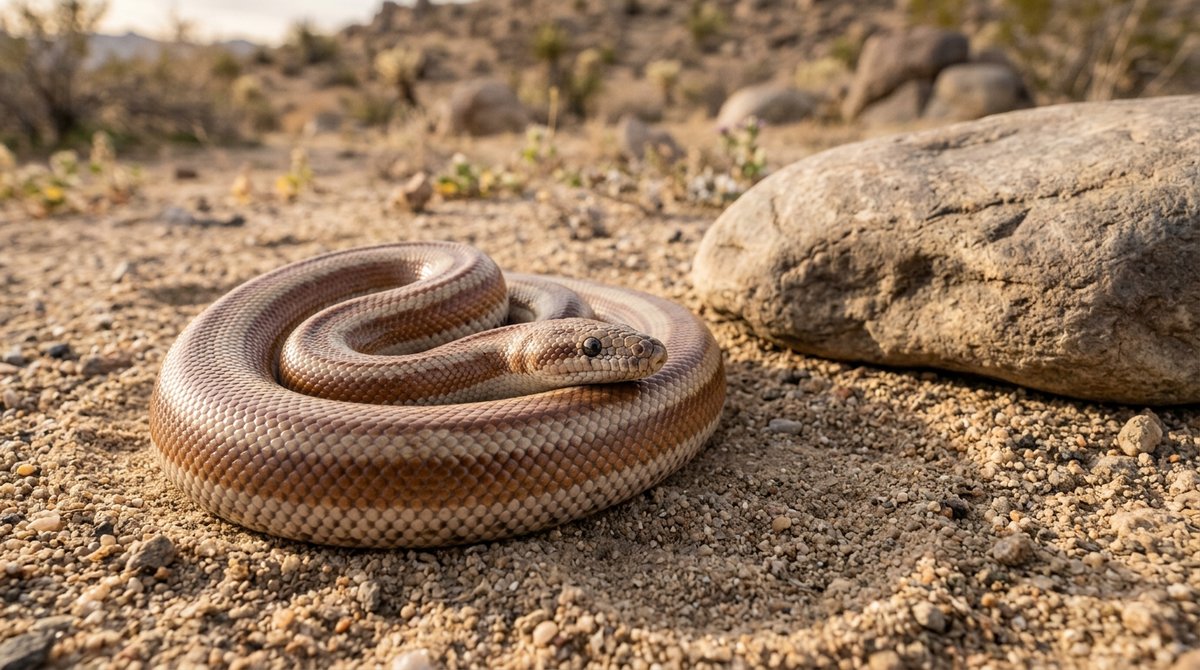
The rosy boa is a small, desert-dwelling boa native to the arid Southwestern United States and Baja California, Mexico - a striking contrast to the Boa constrictor, which can grow six to ten times longer. Typically 2 to 3 feet as adults and rarely over 4, rosy boas are famously docile and slow-moving even by boa standards, rarely bite, and are frequently recommended as one of the calmest snakes in the entire hobby. Their desert origin means lower humidity and simpler climate needs than the tropical boas and pythons it shares a shelf with. With proper care they're also remarkably long-lived, averaging 18 to 22 years in captivity with documented individuals past 30.
📋 Quick Facts
Native Range
Southwestern United States and Baja California, Mexico
Natural Habitat
Rocky desert, chaparral, and arid scrubland
Adult Size
24-36 inches (60-90 cm); rarely over 4 feet (122 cm)
Wild Diet
Small mammals (kangaroo rats, deer mice, wood rats), nestling birds, and lizards
Wild Lifespan
18-22 years average in captivity, past 30 documented (wild lifespan undocumented)
Conservation Status
Least Concern (IUCN)
📜 History
The rosy boa is one of the North American natives that herpetoculture took up early and kept. Small, hardy, undemanding about humidity, and straightforward to breed, it fit what hobbyists could actually maintain in the decades before specialized equipment was widely sold. That long history in captivity is why the animals offered today come from established captive lines rather than from the desert, which matters for a species whose wild populations are slow to replace collected adults.
⚖️ Compare
Rosy Boa
Human
Adult Size
24-36 inches (60-90 cm); rarely over 4 feet (122 cm)
5-6 feet (150-185 cm); ~135-200 lbs
Wild Lifespan
18-22 years average in captivity, past 30 documented (wild lifespan undocumented)
~73 years (global average)
Wild Diet
Small mammals (kangaroo rats, deer mice, wood rats), nestling birds, and lizards
Omnivorous - eats just about anything
Native Range
Southwestern United States and Baja California, Mexico
Global - originated in Africa roughly 300,000 years ago
Natural Habitat
Rocky desert, chaparral, and arid scrubland
Everywhere from arctic tundra to tropical megacities
Conservation Status
Least Concern (IUCN)
Least Concern (8+ billion and counting)
🧠 Test Yourself
What's the Rosy Boa's native range?
🤩 Fun Facts
🐍 The Same Defense, a Very Different Snake
Rosy boas share their signature defensive move, balling up nose-first into a tight coil, with the far larger ball python. It's a strategy built for a wild predator's benefit, not a display of temper, and on a rosy boa it's rarely triggered at all, this species tends to simply try to move away first.
📖 Care Guide
Rosy Boa Care Guide
The pint-sized desert boa that's calmer than snakes twice its size!
⚖️ Where it is legal
9 US jurisdictions restrict this species, from outright bans to permits. Every one quotes the rule it comes from.
⚖️ Legal Guide
Subscribe - it's free
New animal facts and care guides straight to your inbox. No spam. 🐾
📰 Deep Dive
🐍 How Much Does a Rosy Boa Really Cost?
🐍 How to Handle a Rosy Boa: One of the Calmest Snakes You Can Own
🐍 Common Rosy Boa Health Issues (and Why Humidity Is the One to Watch)
🐍 Rosy Boa Enclosure Setup: Small, Dry, and Simple by Design
🐍 Rosy Boa Feeding: Schedule, Prey Size, and Why Adults Eat So Rarely
🐍 Rosy Boa Enrichment: A Slow Snake Is Not a Snake That Needs Less
🩺 Health and More
🔌 Reptile Emergency Plan: Power Outages, Travel, and Pet Sitters
💧 Reading Reptile Stool, Urates, and Hydration: A Daily Health Check
🧼 Salmonella and Reptile Hygiene: The Rules That Actually Matter
🌡️ Reptile Heating and Thermostats: Preventing Burns
🧫 Reptile Quarantine: Why New Snakes and Lizards Need Months, Not Weeks
🐍 Sexing, Growth, and Body Condition in Pet Snakes
🤓 Did You Know?
A rosy boa runs 24 to 36 inches and rarely tops 4 feet, a fraction of a boa constrictor's adult length, yet it can live just as long: documented individuals have reached past 30 years. The lifespan commitment doesn't shrink with the snake, only the space and setup cost do.
Explore More