Jackson's Chameleon
Trioceros jacksonii
On This Page▾
🌍 Overview
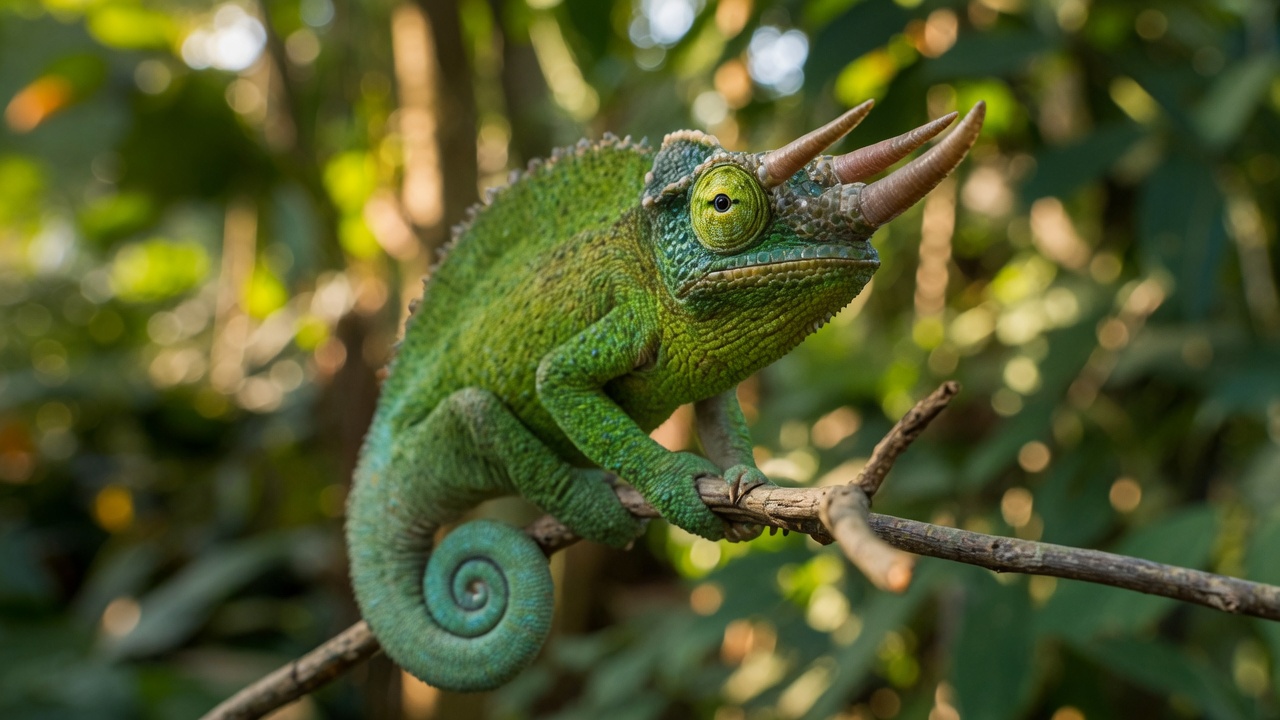
Named for naturalist Frederick John Jackson, Jackson's chameleons are native to the highland forests of Kenya and Tanzania. Males are unmistakable - they sport three prominent horns, resembling a miniature Triceratops. Unlike most reptiles, Jackson's chameleons give birth to live young (viviparous) rather than laying eggs. They were introduced to Hawaii in the 1970s and have established feral populations there.
📋 Quick Facts
Native Range
East Africa (Kenya, Tanzania); introduced to Hawaii
Natural Habitat
Montane rainforest and cool highland forest
Adult Size
9-13 inches (23-33 cm)
Wild Diet
Insects, worms, snails, and small invertebrates
Wild Lifespan
5-10 years
Conservation Status
Least Concern (IUCN)
📜 History
George Albert Boulenger described the species in 1896. The animals in the hobby belong to a single subspecies, Trioceros jacksonii xantholophus, from the Mount Kenya region, and the Hawaiian population dates from one introduction in 1972. For years those Hawaiian animals, rather than imports from East Africa, supplied most of the American pet trade, which turned an ecological problem into a commercial resource. Hawaii eventually made exporting them illegal, partly to stop opportunists from deliberately seeding new colonies they could harvest later.
⚖️ Compare
Jackson's Chameleon
Human
Adult Size
9-13 inches (23-33 cm)
5-6 feet (150-185 cm); ~135-200 lbs
Wild Lifespan
5-10 years
~73 years (global average)
Wild Diet
Insects, worms, snails, and small invertebrates
Omnivorous - eats just about anything
Native Range
East Africa (Kenya, Tanzania); introduced to Hawaii
Global - originated in Africa roughly 300,000 years ago
Natural Habitat
Montane rainforest and cool highland forest
Everywhere from arctic tundra to tropical megacities
Conservation Status
Least Concern (IUCN)
Least Concern (8+ billion and counting)
🧠 Test Yourself
What's the Jackson's Chameleon's native range?
🤩 Fun Facts
🦎 Color Means Communication
Chameleons don't change color primarily for camouflage. They do it to communicate mood and temperature. Color changes signal stress, excitement, readiness to mate, and more.
🦎 Color-Changing Camouflage
Chameleons are famous for their ability to change color, but did you know it's primarily a way to communicate? They alter their hues depending on their mood and social signals, rather than just blending into their surroundings!
🦎 Chameleon Color Change
Chameleons are famous for their color-changing abilities, but it's not just for camouflage! They change colors in response to mood, temperature, and even social signals, making them masters of both disguise and emotion!
📖 Care Guide
Jackson's Chameleon Care Guide
The horned, color-shifting dinosaur of the reptile world!
⚖️ Where it is legal
6 US jurisdictions restrict this species, from outright bans to permits. Every one quotes the rule it comes from.
⚖️ Legal Guide
Subscribe - it's free
New animal facts and care guides straight to your inbox. No spam. 🐾
📰 Deep Dive
🦎 How Much Does a Jackson's Chameleon Really Cost?
🦎 How to Handle a Jackson's Chameleon
🦎 Common Jackson's Chameleon Health Issues
🦎 Jackson's Chameleon Enclosure Setup: Considerably Cooler Than the Veiled Chameleon
🦎 Jackson's Chameleon Feeding: Three Insects Every Other Day, and the Supplement That Causes Edema
🦎 Jackson's Chameleon Enrichment: A Mountain Animal in a Warm House
🩺 Health and More
🦎 Chameleon Hydration: Drippers vs. Misters vs. Foggers Explained
🔌 Reptile Emergency Plan: Power Outages, Travel, and Pet Sitters
💧 Reading Reptile Stool, Urates, and Hydration: A Daily Health Check
🧼 Salmonella and Reptile Hygiene: The Rules That Actually Matter
🌡️ Reptile Heating and Thermostats: Preventing Burns
🧫 Reptile Quarantine: Why New Snakes and Lizards Need Months, Not Weeks
🤓 Did You Know?
Jackson's chameleons are one of the few chameleon species that give live birth rather than laying eggs. A single birth can produce anywhere from 5 to 30 live offspring after a gestation of roughly 5 to 6 months!
Explore More