Garter Snake
Thamnophis sirtalis
On This Page▾
🌍 Overview
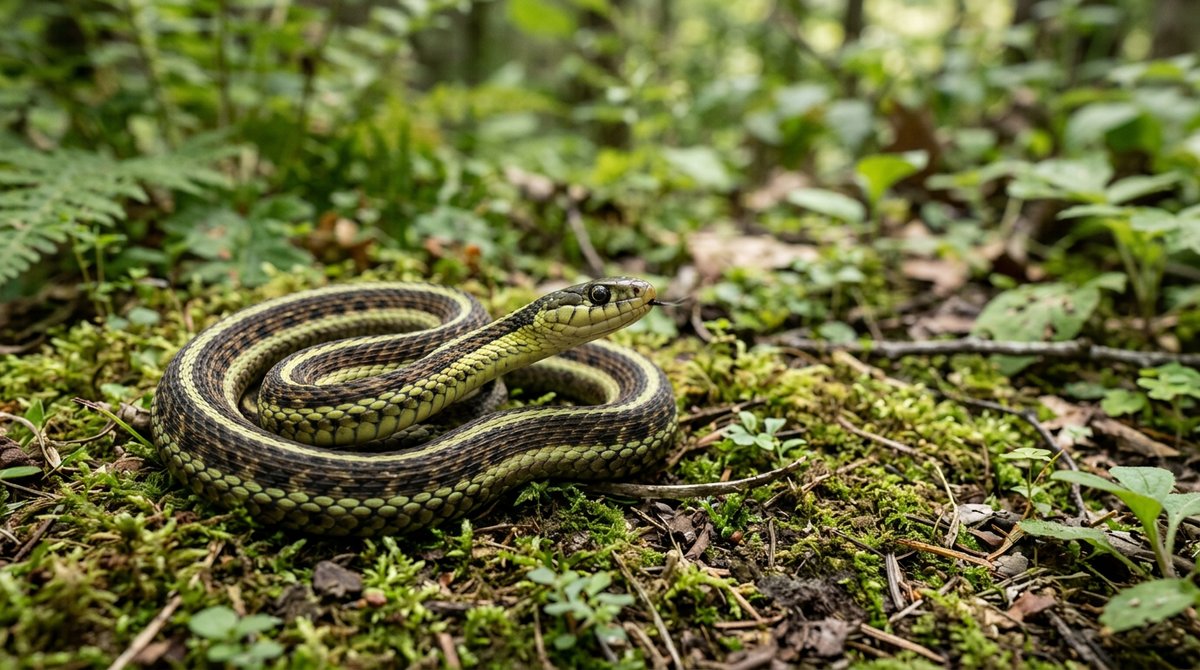
The common garter snake is one of the most widely distributed reptiles in North America, found in gardens, wetlands, and vacant lots from Florida to coastal Quebec and west to British Columbia - genuinely one of the most common "found in the backyard" snakes in the US. Unlike most snakes kept as pets, garter snakes are live-bearing (ovoviviparous) rather than egg-laying, and they're semi-aquatic hunters that key in on fish, earthworms, slugs, and amphibians rather than rodents - many individuals never accept a plain mouse. Like the hognose snake, they carry a mild rear-fanged venom from a Duvernoy's gland that helps subdue small prey but is harmless to people in normal handling. Cheap, hardy, and small, they're an accessible pet as long as a keeper is prepared to source fish and worms instead of relying on frozen mice.
📋 Quick Facts
Native Range
Most of the United States and Canada; largely absent from the arid Southwest
Natural Habitat
Meadows, marshes, woodland edges, hillsides, and suburban gardens near water
Adult Size
18-26 inches (46-66 cm) typical; large females occasionally exceed 3.5 feet (107+ cm)
Wild Diet
Earthworms, fish, amphibians, slugs, and snails; occasionally small rodents
Wild Lifespan
2-4 years in the wild (6-10+ years in captivity, some documented past 20)
Conservation Status
Least Concern (IUCN); the San Francisco garter snake subspecies is federally endangered
📜 History
Garter snakes have a scientific history most pet species never acquire. The genus Thamnophis is one of the major vertebrate models in organismal biology, used for work on speciation, toxin resistance, pheromonal communication, behavior genetics, and reproductive physiology, and the common garter snake's genome has been sequenced. Its resistance to the tetrodotoxin carried by newts it eats is one of the most studied predator and prey arms races in vertebrates. A snake a child can find in a vacant lot is also one of the best understood reptiles in the laboratory.
⚖️ Compare
Garter Snake
Human
Adult Size
18-26 inches (46-66 cm) typical; large females occasionally exceed 3.5 feet (107+ cm)
5-6 feet (150-185 cm); ~135-200 lbs
Wild Lifespan
2-4 years in the wild (6-10+ years in captivity, some documented past 20)
~73 years (global average)
Wild Diet
Earthworms, fish, amphibians, slugs, and snails; occasionally small rodents
Omnivorous - eats just about anything
Native Range
Most of the United States and Canada; largely absent from the arid Southwest
Global - originated in Africa roughly 300,000 years ago
Natural Habitat
Meadows, marshes, woodland edges, hillsides, and suburban gardens near water
Everywhere from arctic tundra to tropical megacities
Conservation Status
Least Concern (IUCN); the San Francisco garter snake subspecies is federally endangered
Least Concern (8+ billion and counting)
🧠 Test Yourself
What's the Garter Snake's native range?
🤩 Fun Facts
🐍 Tongue Sniffers
Snakes smell with their tongues! They flick their forked tongue to collect chemical particles from the air, then press it into the Jacobson's organ on the roof of their mouth to 'read' the smells.
🐍 Musking Takes Real Energy
A garter snake's musky defensive spray isn't just a panic reflex. A 2014 study on wild garter snakes found snakes in better physical condition were actually more likely to musk when picked up than snakes in poorer condition, suggesting it genuinely costs the snake something to mount a proper defensive stink.
📖 Care Guide
Garter Snake Care Guide
The backyard classic that eats fish and worms instead of mice!
⚖️ Where it is legal
26 US jurisdictions restrict this species, from outright bans to permits. Every one quotes the rule it comes from.
⚖️ Legal Guide
Subscribe - it's free
New animal facts and care guides straight to your inbox. No spam. 🐾
📰 Deep Dive
🐍 How Much Does a Common Garter Snake Really Cost?
🐍 How to Handle a Garter Snake (And Why It Might Musk on You First)
🐍 Common Garter Snake Health Issues
🐍 Garter Snake Tank Setup: Why the Water Bowl Isn't Really a Water Bowl
🐍 Garter Snake Feeding: Fish, Earthworms, and Why So Many Refuse Mice
🐍 Garter Snake Enrichment: The One I Had to Correct
🩺 Health and More
🔌 Reptile Emergency Plan: Power Outages, Travel, and Pet Sitters
💧 Reading Reptile Stool, Urates, and Hydration: A Daily Health Check
🧼 Salmonella and Reptile Hygiene: The Rules That Actually Matter
🌡️ Reptile Heating and Thermostats: Preventing Burns
🧫 Reptile Quarantine: Why New Snakes and Lizards Need Months, Not Weeks
🐍 Sexing, Growth, and Body Condition in Pet Snakes
🤓 Did You Know?
Garter snakes give birth to live young instead of laying eggs, and a single litter can range from a handful of babies to as many as 80!
Explore More