Garter Snake Enrichment: The One I Had to Correct
On This Page▾

This guide starts with a correction, because the mistake is common and we made it ourselves before checking.
There is no garter snake enrichment research. The study usually credited to garter snakes is Almli and Burghardt (2006), and it was done on ratsnakes. Elaphe is the old genus name for what is now Pantherophis, so that paper belongs to the corn snakes, not to Thamnophis.
What the Research Says
Nothing, on Thamnophis.
The paper frequently attached to this species is Environmental Enrichment Alters the Behavioral Profile of Ratsnakes (Elaphe), which found enriched-housed ratsnakes showed different behavioral profiles and performed differently on problem solving, feeding and field tasks. A genus rename is what makes it easy to misfile: Elaphe became Pantherophis, and Pantherophis is the corn snakes and ratsnakes.
The nearest usable evidence is therefore the colubrid work done on corn snakes: given enclosures longer than their body, corn snakes stretched out fully and preferred the larger enclosure, added enrichment affected behavior and welfare measures, and enrichment altered odor discrimination performance.
Garter snakes are among the few pet snakes that are genuinely diurnal active foragers rather than ambush predators. That makes them one of the better enrichment candidates in the group and one of the least studied, which is a frustrating combination.
Build an Enclosure They Can Hunt In
This is where garter snakes differ from most other pet snakes. A ball python needs somewhere to wait. A garter snake needs somewhere to search.
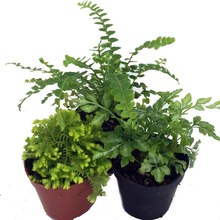
Dense low planting, leaf litter, and varied ground texture give an active forager a landscape to work through. Scatter prey instead of presenting it, and vary where it goes.
Water Big Enough to Swim In
Garter snakes are semi-aquatic, proficient swimmers that hunt fish and amphibians in and around water. A container large enough to swim in rather than merely soak is a genuine enrichment item here in a way it is not for most snakes.
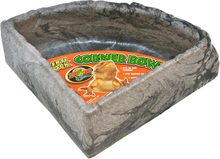
Keep it clean and stable, since a snake that swims in it will also foul it.
Cover Across the Floor
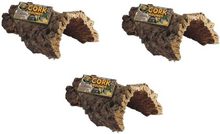
Active does not mean fearless. Cork tubes and flats, leaf litter and planting mean the animal can forage across the whole enclosure without being exposed, which is what makes it actually use the space.
Scent Trails
Chemosensory hunters that follow trails. Dragging prey across the substrate before offering, hiding food in new places, and introducing scent-marked objects all engage the sense this animal leads with, and none of it costs anything.
Priority Order
- Floor space and cover, so an active forager can actually forage
- Scattered and varied prey presentation
- A container large enough to swim in
- Dense planting and varied ground texture
- Scent trails
- Rearrangement, last
What Not to Do
Do not repeat the ratsnake misattribution, which is the reason this guide leads with it. Do not keep a diurnal active forager in a bare tub. Do not feed a group in the same space, since one snake taking another's prey is how garter snakes injure each other. Do not rely on a single prey item type, because dietary variety is unusually important in this species.
Sources & Further Reading
4 sources
- No evidence for this species. Nothing has been published on Thamnophis enrichment. The colubrid findings below are borrowed, and are covered in full in our Corn Snake enrichment guide.
- Almli LM and Burghardt GM (2006). Environmental enrichment alters the behavioral profile of ratsnakes (Elaphe). The study often misattributed to garter snakes
- Hoehfurtner et al. (2021). Does enclosure size influence the behaviour and welfare of captive snakes (Pantherophis guttatus)?
- Hutchings (2025). Recent scientific insight into the spatial needs of captive snakes
- Burghardt GM (2013). Environmental enrichment and cognitive complexity in reptiles and amphibians
❓ Frequently Asked Questions
Is there enrichment research on garter snakes?
No. Nothing has been published on Thamnophis. This matters because a well-known enrichment study is frequently attributed to garter snakes and was done on ratsnakes: Almli and Burghardt (2006), Environmental Enrichment Alters the Behavioral Profile of Ratsnakes. Elaphe is the old genus name for what is now Pantherophis, the corn snakes and ratsnakes.
So what evidence applies to garter snakes?
The colubrid work, borrowed and labeled as such. Corn snakes given enclosures longer than their body stretched out fully and preferred them, and separate papers found enrichment affected behavior, welfare measures and odor discrimination. Garter snakes are colubrids too, so this is a reasonable borrow rather than a good substitute.
What makes garter snakes different from other pet snakes?
They are diurnal, active foragers rather than sit-and-wait ambush predators. That changes the enrichment picture substantially: an animal that spends its day actively hunting needs an enclosure it can hunt in, not just hide in.
Can garter snakes be housed together?
More successfully than most snakes, and it is still not risk-free. They are found in aggregations in the wild and are sometimes kept in groups, but feeding must be separated to avoid one snake taking another's prey and injuring it in the process.
Do garter snakes swim?
Readily, and many populations hunt in water. That makes a water container big enough to swim in worth more here than it is for most snakes. Keep it clean, because a snake that swims in it will foul it.
What is the best free enrichment for a garter snake?
Scent trails and scattered prey. These are chemosensory hunters that follow trails, so dragging prey across the substrate or hiding food in different places engages the behavior they are built around.
📰 More on the Garter Snake
📘 Garter Snake care guide
🐍 How Much Does a Common Garter Snake Really Cost?
🐍 How to Handle a Garter Snake (And Why It Might Musk on You First)
🐍 Common Garter Snake Health Issues
🐍 Garter Snake Tank Setup: Why the Water Bowl Isn't Really a Water Bowl
🐍 Garter Snake Feeding: Fish, Earthworms, and Why So Many Refuse Mice
🛒 Recommended Gear
As an Amazon Associate, we earn from qualifying purchases through the links above - at no extra cost to you.
Written by Michael Ryan
Mike keeps two rescued bearded dragons, Dex and Cera, and writes the care guides on BeastlyFacts from his own research and mistakes. He is not a veterinarian.
More about Michael Ryan →Comments
No comments yet - be the first!