Neon Tetra Enrichment: Someone Counted, and the Number Is Ten
On This Page▾

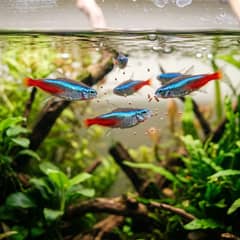
Neon tetras shoal in groups, and the size of the group changes how each fish behaves.
In a 2010 home aquarium study, groups of ten neon tetras showed improved welfare compared with smaller groups. Eight is the least to buy, and ten is the number to aim for. After that come dense cover, dim light and a stable, cycled tank. Tannin-stained water is optional for farmed fish.
Group Size
Saxby, Adams, Snellgrove, Wilson and Sloman measured darting, aggression, shoaling and latency to feed in neon tetras, white cloud mountain minnows, angelfish and tiger barbs, and published the results in Applied Animal Behaviour Science in 2010. A principal components analysis of those measures picked out the group sizes linked to better welfare.
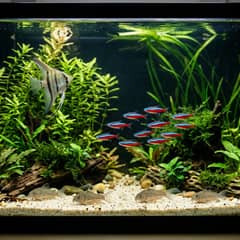
Group sizes of one, two, five and ten were tested. Groups of ten neon tetras and white cloud mountain minnows showed improved welfare compared with smaller groups, and aggression and darting were lowest in the larger groups. Ten was the largest group in the trial, so nothing bigger was tested. The recommended minimum purchase for the species is 8 to 10.
The effect was species-specific. The same study found no group size effect on angelfish welfare, so shoal-size advice does not carry across every fish in the shop.
Latency to feed is the easiest of these measures to check at home. Fish that come out to eat straight away are doing better than fish that hang at the back for a minute first, and in the study that wait shortened as the groups grew.
Source: Saxby et al. 2010, Applied Animal Behaviour Science
Ten Fish of One Species
If the tank supports it, buy ten rather than a smaller group, and prefer one species of ten to two species of five.
Neon tetras shoal with neon tetras, and a mixed group of similar-looking fish does not give an individual the same thing. The study tested single-species groups.
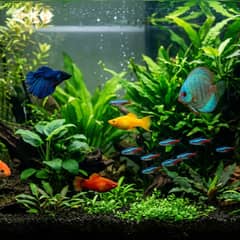
Neons are generally peaceful, and their companions should be too. Similar-sized characins, pencilfish, small catfish such as Corydoras and the smaller plecos, and small cichlids that do not hunt fish all suit a neon shoal.
Planting and Cover
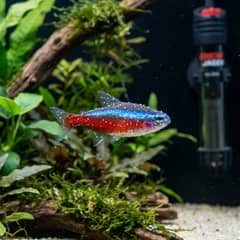
Neon tetras come from shaded forest streams and minor tributaries thick with vegetation and leaf litter, in the Amazon basin of Colombia, Brazil and Peru. They mostly stay out of the muddy main channels. Bright, open, bare tanks are the opposite of that.
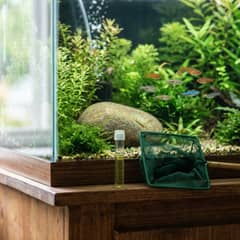
Dense live planting, especially around the sides and back, plus driftwood and leaf litter, gives cover and tints the water the way the stained streams in their range are tinted.
Leave open swimming space through the middle. A shoal needs somewhere to move as a group as well as somewhere to hide, and the combination lets the shoal use the whole tank.
Clear Water or Tannin-Stained?
Wood and leaves turn aquarium water the color of tea, and the wild neon lives on both sides of that choice. Some of its streams are stained brownish by humic substances from rotting leaves and waterlogged wood. The species has also been collected from the same kind of stream running transparent and unstained.
The neon in a shop almost certainly came from neither. Wild-caught neons very rarely reach the trade; most are captive-bred, and millions of farmed neons thrive in community tanks filled with local tap water. Soft, acidic water is the advice for wild imports.
The case for tannins comes from another fish. In zebrafish, dissolved organic carbon from the upper Rio Negro, a blackwater river, gave almost complete protection against the sodium and chloride loss that pH 4.0 causes in very soft water. Zebrafish are not tetras, and an earlier study found that a commercial organic carbon product made the same losses worse. Stained against clear water has never been tested on neons.
Light is where the evidence is clearer, though it too was gathered on a relative. Cardinal tetras, which share the neon's genus, kept their most vivid stripes at 0 to 250 lux, while intense light faded the blue and black stripes within 72 hours of exposure as the red stripe grew stronger. That points the same way as the neon's own preference for dim conditions.
So a farmed neon does not need stained water. A light tint from the wood and leaf litter in the planting suits a fish whose wild streams run both ways.
Dim Light, or Shade It
Neon tetras live in shaded streams, and a bright aquarium light over an open tank is a long way from that. The species seems to do best under fairly dim lighting, and it turns lighter in bright conditions over a pale substrate or background in clear water. Blackwater fish under a bright aquarium light spend their time hiding. Floating plants, a tinted tannin-stained water column from wood and leaves, or simply a less powerful light all give the shoal the cover its home streams would, and the plants and the lamp do it in clear water too.
The likely result is color. A neon tetra that feels covered tends to look brighter than one that feels exposed, which would make this a welfare improvement you can see.
A dull neon at lights-on is not necessarily a stressed one: at night the fish turns duller and the blue stripe looks violet.
Water Stability
An unstable tank kills neon tetras before any of the above matters. They are sold as beginner fish and are sensitive to poor water and sudden changes.
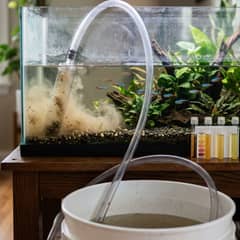
Cycle the tank fully before they go in. Small regular water changes suit them; large occasional ones do not.
Feeding a Shoal
Wild neons are probably omnivores, taking small invertebrates, crustaceans, filamentous algae and fallen fruit. Dried food alone can keep them alive, but they do best on a varied menu.
Their mouths are small and they tend to lose out to faster tankmates, so the staple should be micro pellets sized for the fish.
Spread food across the surface instead of dropping it in one spot, so the whole shoal eats and the boldest three do not take it all. Vary it with frozen and live foods such as bloodworm, mosquito larvae, daphnia and moina, which get a visibly stronger response and are the closest thing to hunting available here.
Priority Order
- Ten fish of one species, in a single group
- A cycled, stable tank before they arrive
- Dense planting and cover with open swimming space through the middle
- Subdued lighting, or shade from floating plants
- Food spread across the surface so the whole shoal eats
- Varied diet including frozen or live foods
- Wood and leaf litter for tannins, optional for farmed fish
What Not to Do
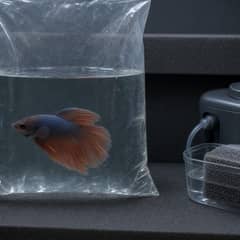
Do not stop at eight. Do not split the budget across two small groups of different species. Do not add them to an uncycled tank. Do not run a bright light over an open bare tank. Do not skip a 30-day quarantine, given neon tetra disease. And net them carefully, since chasing a shoal around a tank undoes a lot of the work above.
Ten neons moving together through plants, in water that stays the same from week to week, is what a settled shoal of this fish looks like.
Sources & Further Reading
Last reviewed 16 Sep 2026 · 4 sources
- Saxby A, Adams L, Snellgrove D, Wilson RW and Sloman KA (2010). The effect of group size on the behaviour and welfare of four fish species commonly kept in home aquaria. Applied Animal Behaviour Science 125(3-4): 195-205. DOI 10.1016/j.applanim.2010.04.008
- Seriously Fish: Paracheirodon innesi (Neon Tetra)
- Duarte RM, Smith DS, Val AL and Wood CM (2016). Dissolved organic carbon from the upper Rio Negro protects zebrafish (Danio rerio) against ionoregulatory disturbances caused by low pH exposure. Scientific Reports 6:20377
- Linhares RM, Pinage CMMF, Duncan WP (2018). Excessive luminosity fades the skin color of cardinal tetra. Boletim do Instituto de Pesca 44(4):e319
Frequently Asked Questions
How can I tell if my neon tetras are doing well?
Watch how they feed. Fish that come out to eat at once are doing better than fish that hang at the back for a minute. Strong color and use of the whole tank are the other signs.
So is six enough?
No. Eight is the least to buy and ten is better, since groups of ten showed less darting and aggression than smaller ones. The right number does differ by species: the same 2010 study found no group size effect on angelfish.
Does planting matter as much as numbers?
It matters a great deal and differently. Neon tetras come from forest streams shaded by dense vegetation, and an open, bright tank is the opposite of that. Planting and cover give a shoal somewhere to feel unexposed.
What is the most common reason neon tetras die?
Being added to an uncycled or unstable tank. They are sold as beginner fish and are quite sensitive to water quality and to sudden parameter changes, which is a poor combination.
Do neon tetras need blackwater?
No. Wild neons live in both tannin-stained and clear streams, and the farmed fish that make up nearly every neon sold thrive in community tanks filled with ordinary tap water. A light tint from wood and leaves is optional.
More on the Neon Tetra
Recommended Gear
As an Amazon Associate I earn from qualifying purchases through the links above, at no extra cost to you.

Written by Michael Ryan
Mike keeps two rescued bearded dragons, Dex and Cera, and writes the care guides on BeastlyFacts from his own research and mistakes. He is not a veterinarian.
More about Michael Ryan →You May Also Like



Subscribe - it's free
An occasional email when something new is worth your time. No spam.
Deep Dive
Health and More