Common Neon Tetra Health Issues (Including the Disease Named After This Fish)
On This Page▾

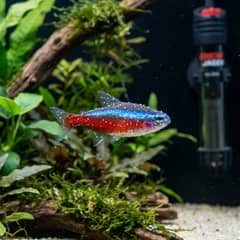
The neon tetra is a fish of about 1.2 inches from the forest streams of the Amazon basin, and most of the ones sold today were bred commercially. Most of its health problems are treatable and trace back to water quality and stability. One is different: it is incurable, and it carries this fish's name.
Signs That Need Action Today
A neon school is checked as a group: a count at feeding time, and a look for the one fish that has drifted away from the rest. These signs cannot wait for tomorrow.
Test ammonia and nitrite first:
- Fast breathing or gasping at the surface.
- Several fish turning lethargic or refusing food at once, the pattern an immature tank produces.
- A fish found dead. The body comes out before anything else, since tankmates that eat it are how neon tetra disease spreads.
Start ich treatment today:
- Small white spots like grains of salt, with flashing against decor and rapid breathing.
Move the fish to a hospital tank today:
- Restless or erratic swimming, often more noticeable at night, or difficulty swimming normally.
- Fading or patchy color, particularly along the back.
- Visible lumps under the skin, or a curved or deformed spine in advanced cases.
- A fish hanging apart from the school.
Watch closely and check again tomorrow:
- Ragged or bloody-edged fins.
- A cotton-like growth on the skin or fins.
- A fish growing thin while it keeps eating.
- A fish floating, sinking or struggling to hold its level.
What a Healthy Neon Looks Like
| Check | Healthy | Worth a closer look |
|---|---|---|
| Skin and scales | Smooth, no blemishes | White patches, lumps, cotton-like tufts |
| Fins | Whole, edges clean | Ragged or bloody-edged |
| Eyes | Bright, not cloudy | Cloudy or bulging |
| Swimming | Steady, inside the school | Restless, erratic, or apart from the group |
| Body | Evenly filled out | Growing thin on a full appetite |
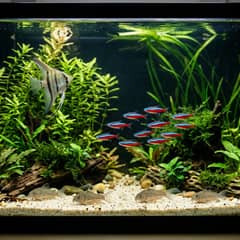
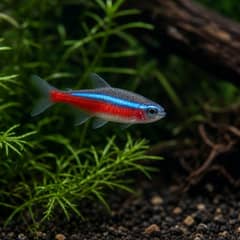
| Color | Bright blue stripe over red by day | Faded through the day, or patchy along the back |
Color is the check most likely to raise a false alarm. A neon turns duller at night, its stripe shifting toward violet, and it lightens over a pale substrate in bright, clear water. A fish that looks washed out first thing in the morning is wearing its night coloring.
Even the neon tetra's wild range is not pinned down. It is recorded from forest streams in Colombia, Brazil and Peru, and it may be more widespread than records show, but how far it actually extends remains unclear.
Source: Seriously Fish
Water Quality Comes First
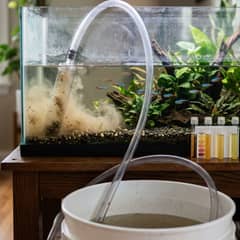
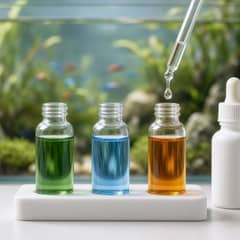
Neons do best in soft, slightly acidic water held steady: 70 to 77°F, pH 6.0 to 7.0 and 1 to 12 dGH. Steadiness is most of the job. In a properly cycled tank, a stable temperature maintained with a reliable aquarium heater and regular partial water changes using a water conditioner prevent far more than any medication does after the fact.
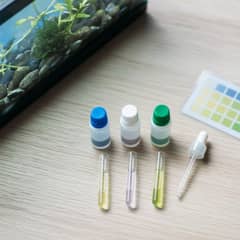
The two riskiest tanks are the newest and the most neglected. Fish in an immature tank can suddenly turn lethargic, stop eating and die, usually from ammonia or nitrite. In an old tank where water changes are rare and evaporation is only topped up, pH can sink gradually or crash, and a rapid fall can kill the fish outright. Soft neon water carries little carbonate hardness to buffer that drop. Testing pH, alkalinity, ammonia, nitrite and nitrate every two weeks catches both problems while they are still numbers.
Food is the other half. Flakes can be too large for a small-mouthed fish to swallow easily, so they get crushed, and feeding a wide variety is the practical way to meet its nutritional needs.
Ich: Warm Only to 77°F, and Skip the Copper
Ich, or white spot disease, shows as small white spots resembling grains of salt, along with flashing against decor and rapid breathing. The cause is the parasite Ichthyophthirius multifiliis; stress and temperature swings open the door.
This one is treatable. Raise the temperature a couple of degrees a day, but only to 77°F, the top of a neon's range, since warmth speeds the parasite's life cycle and brings it into reach of treatment sooner. At 75 to 79°F that cycle takes about three to six days. The 86°F that most ich strains cannot survive sits well outside this fish's range, so one of these does the killing:
- Not aquarium salt. Salt is unproven for this species at the 4 to 5 grams per liter that kills ich; use an ich medication instead.
- A commercial ich medication without copper. Copper products are the ones to pass over in soft neon water, for the reason set out under copper below.
Medication is dosed daily, often for three to seven treatments, and carried on until the deaths stop.
Fin Rot and Fungus: Damage First, Then Infection
Both tend to follow something else going wrong. Fin rot is bacterial: ragged or bloody-edged fins, from poor water quality or an untreated injury. Water molds such as Saprolegnia, which are fungus-like organisms and not true fungi, move into tissue already damaged by an injury, bad water or a chill, and show as grayish-white, cotton-like growths on the skin, gills, eyes or fins. Columnaris, the bacterial lookalike of neon tetra disease, can also leave slimy or cotton-like patches.
Fin rot is treatable with an antibacterial medication alongside correcting water conditions. In clean water, a single potassium permanganate treatment can often control external water mold. When a bacterial infection does not respond, lab testing picks the next drug. Switching quickly between antibiotics, or giving several at once, breeds resistant bacteria.
Internal Parasites
A neon that thins while it keeps eating may be carrying worms or protozoa. Camallanus is the one that shows: blood-red worms protruding from the vent. Cyclops and Daphnia are its intermediate hosts, so live crustaceans can bring it in, and tapeworm larvae reach fish the same way, inside the invertebrates they eat. Capillaria causes weight loss and a pot belly, Spironucleus causes weight loss, a poor appetite and deaths among young fish, and heavy tapeworm loads stunt growth and swell the belly, though many infected fish show nothing at all.
Each one takes a different drug, and a wet mount under a microscope is what tells them apart. That puts the choice with a vet or a diagnostic lab, since a dewormer guessed from the signs may be the wrong one.
Neon Tetra Disease and Its Lookalikes
This condition is named after the species because neon tetras are especially associated with it. The cause is a microsporidian parasite, Pleistophora hyphessobryconis, that invades the fish's skeletal muscle. The neon is its type host, but it infects some 20 species of freshwater fish.
This is highly contagious to other fish in the tank, spreading when fish consume infected tissue, including from a fish that's already died. It can also affect other species sharing the tank, among them guppies, barbs and angelfish. It is not transmissible to humans.
There is no effective cure once the disease reaches an advanced stage. The spores are extremely resistant, and microsporidia are considered untreatable. The fish will not recover, and humane euthanasia for a confirmed case ends its suffering and protects the rest of the tank. Prevention is the only tool available, and quarantine is the single most important step for every fish added, just as a finished cycle is when the tank is first set up: new fish spend at least 30 days in it before joining an established tank. Beyond that, buy from sources with healthy stock, and never feed a tank the remains of a fish that died from an unknown cause.
The Lookalike That Can Be Treated
A neon that turns pale in patches, grows restless or hangs apart from the school is not always a lost fish. Columnaris, a bacterial infection, produces signs close enough to NTD that the two get mixed up, as do other whitish-film conditions, because they can all leave pale patches on the fish. Columnaris responds to antibacterial treatment. That makes the order of events matter. Move the fish to a hospital tank, treat it as bacterial, and watch. A fish that improves had columnaris. A fish that keeps declining through a full course has not been proven to have NTD, because a second untreatable disease fits the same picture. Only a wet mount of the affected skeletal muscle, read under a microscope with good lenses, confirms the NTD spores.
The Lookalike That Cannot: Mycobacteriosis
Tetras belong to one of the fish families more prone to mycobacteriosis, a bacterial disease. Its signs vary from fish to fish: paleness, wasting, a bent spine or other skeletal deformity, bulging eyes, skin ulcers and a swollen belly can all appear, which matches NTD at the pale color and the curved spine. There are no effective treatments that clear mycobacteria from a fish. Low dissolved oxygen, low pH and a heavy organic load favor it, and an infected tank is disinfected before other fish go in. Mycobacteria can infect people as well.
Swim Bladder Disorder
Buoyancy problems from overfeeding or a poor diet. Manageable through proper feeding.
Copper, Soft Water and Shrimp
Copper is a standard ich and parasite treatment, and a neon tank holds about the worst water for it. The lower the total alkalinity, the more toxic copper is to fish, and once alkalinity drops under 50 ppm, about 2.8 dKH, the chance of killing the fish is high enough that copper is not recommended. Wild neons live in water with negligible carbonate hardness, and a soft tank kept to match can sit under that line. So the alkalinity test comes before any copper product is even considered.
Copper is also toxic to invertebrates, snails included. No medication label makes it safe to treat around them: every shrimp and snail is moved out first, and treating in the hospital tank keeps the drug away from the display tank and everything living in it.
Quarantine and Buying Clean
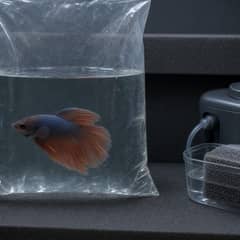
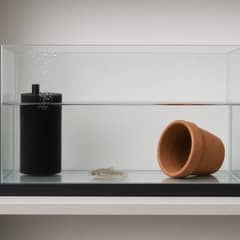
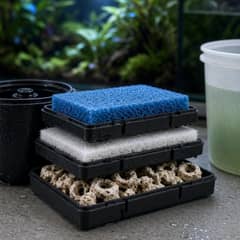
New fish often show active disease one to three weeks after shipping, which is why a new neon spends at least 30 days in quarantine before it meets the school, and longer when anything shows. A neon added later goes through its own 30 days. A modest separate tank with its own gentle sponge filter is worth setting up for this, and it does double duty as a place to isolate a sick fish later.
Buying well prevents more than any medication cures. Years of commercial breeding have left the farmed strain somewhat less robust than wild fish, so the fish that arrive in a shop are not all equally sound. Watch the fish in the shop before choosing: pick a tank of bright, evenly striped fish that school tightly, and pass on any tank holding fish that are pale, lagging or restless, carry white patches on the skin or keep apart from the main school. Where NTD signs show, skip the purchase entirely. The tank itself should be clean, and the other fish in it should look healthy too.
When a Fish Vet Is Worth It, and How to Find One
Nearly every diagnosis above ends at a microscope: the spores in muscle, the parasites in a wet mount, the bacteria behind a course that failed. Fish are often treated with the wrong over-the-counter medicine, and when the first one fails and a second is tried, the cycle usually does more harm than good.
A vet's license covers one state, yet any vet may call in an aquatic vet from any state to consult, which makes the household's own exotic or small-animal vet a workable first call. The American Association of Fish Veterinarians keeps a directory of fish vets by state or country, and the World Aquatic Veterinary Medical Association covers keepers outside North America. An online consultation with no exam is not a legal basis for a treatment plan.
Bring:
- About a quart of tank water in a clean container, drawn as soon as the fish start acting wrong and before any water change, and kept cold. The water the fish travels in does not count: its pH drops and its ammonia rises on the way.
- The sickest fish that is still alive. A dead fish is rarely usable, and a frozen one is not.
- The records: tank size and age, the species and numbers in it, recent additions, when the signs began, what food and how much, the last water change, and any treatment with its dose.
When a Neon Has to Be Put Down
A confirmed NTD case ends in euthanasia, and it should not end in the toilet or the freezer. A fish vet is the first choice. Where none can be reached, a clove oil overdose in a container of the fish's own tank water is the humane method, and for a fish the size of a neon that container can be small.
Sources & Further Reading
Last reviewed 24 Sep 2026 · 7 sources
- Merck Veterinary Manual: Mycotic Diseases of Fish; Parasitic Diseases of Fish; Bacterial Diseases of Fish; Disorders and Diseases of Fish; Nutritional Diseases of Fish; Management of Aquarium Fish; Routine Health Care of Fish; Selection of Fish
- Sanders JL et al. (2010). Pleistophora hyphessobryconis (Microsporidia) infecting zebrafish Danio rerio in research facilities. Diseases of Aquatic Organisms 91(1):47-56
- Seriously Fish: Paracheirodon innesi (Neon Tetra)
- University of Florida IFAS Extension: Francis-Floyd R, Yanong RP, Pouder DB. Ichthyophthirius multifiliis (White Spot) Infections in Fish. UF/IFAS Extension CIR920; Use of Copper in Freshwater Aquaculture and Farm Ponds (Watson and Yanong), UF/IFAS Extension FA-13; Submission of Fish for Diagnostic Evaluation (Klinger and Francis-Floyd), UF/IFAS FA55
- VCA Animal Hospitals: Fish White Spot Disease (Ich)
- Francis-Floyd R (2011). Mycobacterial Infections of Fish. SRAC Publication 4706 (PDF, downloads)
- How To Find A Fish Vet To Help Your Fish (Jessie Sanders, DVM, Fish Practice)

Log weight, feeding and meds, so your vet has the full picture. The Universal Pet Kit has it, among 19 forms for any pet that you can type into or print.
Frequently Asked Questions
What is Neon Tetra Disease (NTD)?
A parasite that gets into the fish's muscle tissue, and the name comes from how strongly neon tetras are associated with it. Signs: restless or erratic swimming, often more obvious at night, color fading or going patchy along the back, lumps under the skin, a curved or deformed spine late on, and trouble swimming normally.
Is NTD contagious, and can it be cured?
Yes, highly so. It moves through a tank when fish eat infected tissue, including from one that has already died, and it can reach other species too, guppies, barbs and angelfish among them. No cure exists. Once symptoms show, the fish will not recover, and humane euthanasia ends its suffering and protects the rest of the tank. Humans can't catch it.
Is every pale, restless neon a case of NTD?
No. NTD is often mistaken for columnaris, since both can leave pale patches on the fish, and only a microscope confirms the spores in the muscle. Treat a suspect fish as bacterial in a hospital tank first: one that improves did not have NTD.
What is ich and how do you treat it in neon tetras?
White spots like grains of salt, plus flashing against decor and fast breathing. It's treatable: raise the temperature gradually to 77°F, the top of a neon's range, to speed the parasite's cycle, then use an ich medication or aquarium salt to kill it. The 86°F that most ich strains cannot survive is well outside a neon's range.
How do I prevent most neon tetra health issues, including NTD?
Water quality and stability cover the treatable ones: a cycled tank, a steady temperature, and regular water changes. NTD, the one that isn't treatable, is prevented mainly by quarantining new fish at least 30 days before they join an established tank, the single habit that matters most here.
Why does my neon tetra look pale?
Often it is normal. Neons go duller at night, when the stripe turns violet, and they look lighter over a pale bed in bright, clear water. A fish that stays faded through the day, or fades in patches while its schoolmates hold their color, is the one to move to a hospital tank.
Can I use a copper ich medication in a neon tetra tank?
It is a poor choice. Copper turns more toxic to fish as total alkalinity drops, and under 50 ppm, about 2.8 dKH, it is not recommended. Soft neon water can sit below that line. Copper is toxic to invertebrates too, so shrimp and snails leave the tank before any medication goes in.
How do I find a vet for a sick neon tetra?
Ask your usual vet first: any vet can bring in an aquatic vet from another state to consult. The American Association of Fish Veterinarians' directory lists fish vets by state or country. Take about a quart of tank water drawn before any water change, plus the tank's history.
More on the Neon Tetra
Recommended Gear
As an Amazon Associate I earn from qualifying purchases through the links above, at no extra cost to you.

Written by Michael Ryan
Mike keeps two rescued bearded dragons, Dex and Cera, and writes the care guides on BeastlyFacts from his own research and mistakes. He is not a veterinarian.
More about Michael Ryan →You May Also Like
Subscribe - it's free
An occasional email when something new is worth your time. No spam.
Deep Dive
Health and More