Stick Insect Enrichment: Fresh Leaves and Room to Hang
On This Page▾

A stick insect's enrichment needs are short, and that is the honest answer rather than a gap.
A stick insect's behavioral repertoire is standing on a plant, eating it, swaying, and periodically molting. Two of those four have hard requirements: fresh live host plant and clear vertical space of at least three times body length to molt in. Get those right and there is very little left to add.
What the Research Says
Nothing on phasmids. The borrow is from the tarantula housing study, covered in full in our Tarantula enrichment guide.
Tarantulas given an enclosure roughly six times larger with six times as much structure used 77 percent larger home ranges, showed 150 percent greater odds of being active in a novel environment afterwards, were no more active overall, and expressed no preference between the two housings.
That is a long way from a leaf-eating insect and it is the only controlled invertebrate housing experiment available. Its most useful contribution here is a warning against overreach: an invertebrate that does very little is not necessarily an invertebrate that needs more to do.
Many stick insects reproduce parthenogenetically, so a single female bought as a pet will quietly produce fertile eggs with no male involved. That is worth knowing before the enclosure fills up, since a group of stick insects becomes a larger group of stick insects without any decision from you, and letting the surplus go outside is not one of your options.
Height, for Molting
The one hard number. A tall nano terrarium or a taller mesh enclosure, with clear vertical drop below the ceiling of at least three times the insect's body length.
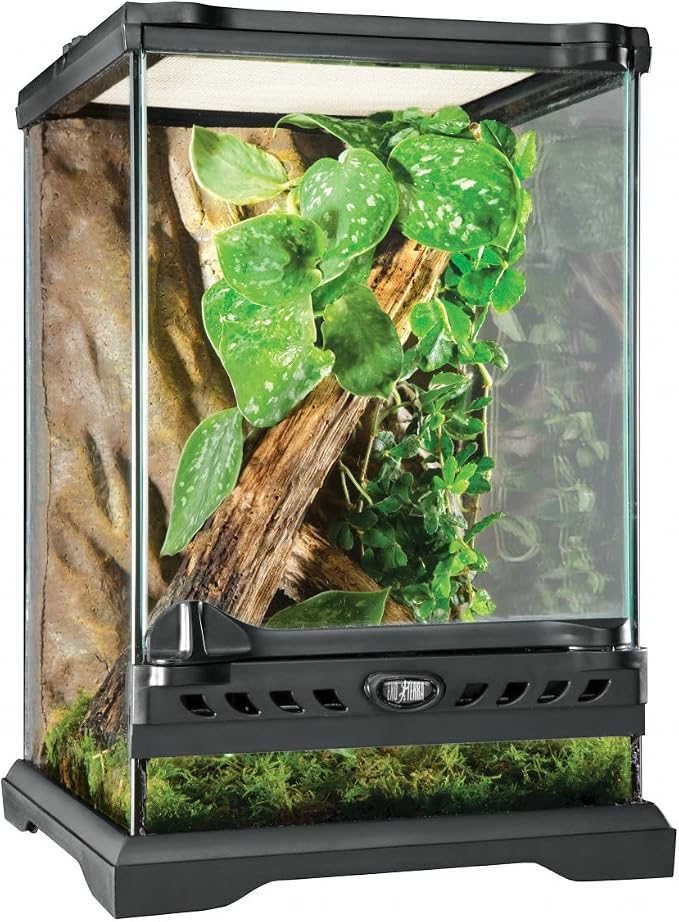
The ceiling has to be grippable. Mesh or screen, not smooth glass. A stick insect that loses its grip mid-molt is usually finished, and the fix costs nothing.
Bear in mind adults of some species are long. The rule scales with the animal, so a large species needs a genuinely tall enclosure. The molting guide covers the process.
Live Host Plant, Fresh
The feeding half and the enrichment half at once. Species vary, and bramble suits most of the commonly kept ones.
Live cut stems standing in water beat picked leaves in a pile, because they stay fresh for days and give the insects something to climb and hang on. Block the opening of the water container with cotton wool or foil, since insects fall in and drown otherwise, and this is a routine avoidable loss.
Replace before the leaves dry. A stick insect will not eat crisped foliage, and this is the commonest reason a group stops thriving.
Humidity and Ventilation
Molting fails in dry air as reliably as it fails in a short enclosure. A fine mist spray bottle once or twice a day, with the enclosure drying between mistings and real airflow.
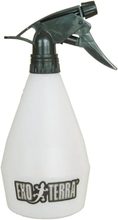
Stagnant damp is the other failure mode and causes mold and disease. Species differ, and every one of them wants ventilation.
Something on the Floor
A layer of coconut fiber substrate holds humidity and gives eggs somewhere to sit.
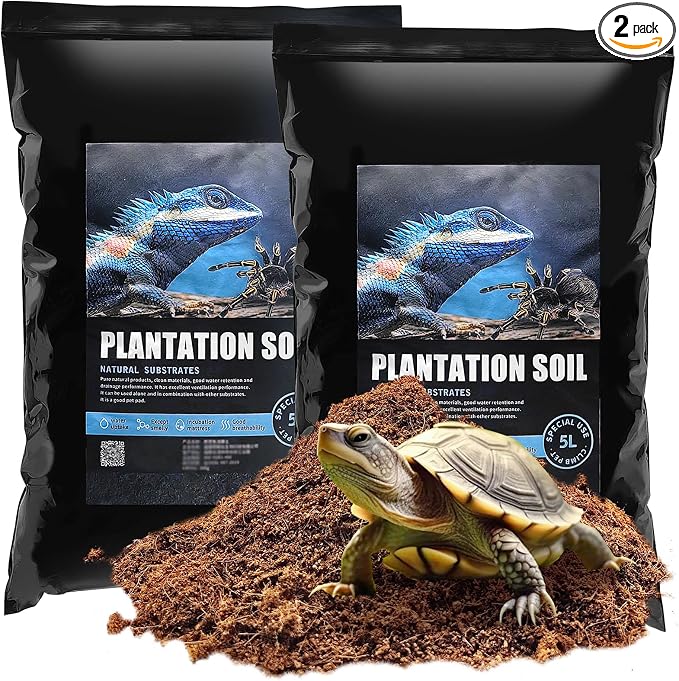
Keep it modest. This is a canopy animal and the floor is where eggs land rather than where the insect lives.
A Group, With Space
They are not predatory or territorial and most species are kept in groups happily. The limits are space and food supply, not temperament.
Overcrowding shows as damaged legs and antennae, and stick insects knock pieces off each other during molts in a crowded enclosure. If limbs are going missing, thin the group or enlarge the enclosure.
Priority Order
- Clear vertical space of at least three times body length
- A grippable mesh ceiling
- Fresh live host plant, replaced before it dries
- Water container openings blocked so nothing drowns
- Humidity with real ventilation
- Enough space that a group is not knocking each other apart
- Nothing else, and that is genuinely the list
What Not to Do
Do not use a short enclosure, which is the mistake that causes deformities and deaths. Do not leave a smooth ceiling. Do not leave an open water container in with them. Do not feed dried or wilted foliage. Do not seal the enclosure to hold humidity. Do not overcrowd. And pick one up by the body rather than a leg, since legs come off far more easily than people expect and do not always grow back.
Sources & Further Reading
2 sources
- Borrowed evidence. No enrichment study exists for stick insects. The housing findings below are from tarantulas and are covered in full in our Tarantula enrichment guide.
- Stalter L et al. (2024). Tarantula welfare may be improved with greater environmental complexity. PLoS ONE 19(12): e0314501
- Tarantulas in captivity: raising and breeding. Springer
❓ Frequently Asked Questions
Is there enrichment research on stick insects?
No. Nothing has been published on phasmid enrichment. The nearest evidence is the 2024 tarantula housing study, where a much larger, more complex enclosure produced larger home ranges and a bolder response to novelty, but no change in overall activity and no housing preference.
How tall does the enclosure need to be?
The standard rule is at least three times the insect's body length in clear vertical space, for the same reason as mantids: a stick insect molts hanging and needs room to pull itself completely free before it touches anything below.
What goes wrong if it is too short?
Failed molts, which are the leading cause of death and deformity in captive stick insects. An animal that touches down before it is out ends up with bent or missing legs, and often does not survive the next molt either.
What should they eat?
Fresh live host plant, species dependent, with bramble the most common all-rounder for the species usually kept. Leaves need replacing before they dry out, and cut stems should stand in water with the opening blocked so nobody drowns in it.
Is a stick insect enrichment guide even necessary?
It is a short one, honestly. This is a herbivore whose behavioral repertoire is standing on a plant, eating it, and occasionally swaying. The useful advice is about getting the plant, the height and the humidity right rather than about stimulation.
Can stick insects be kept together?
Yes, easily, and most species are kept in groups. They are not predatory or territorial. The limit is space and food rather than compatibility, and overcrowding shows up as damaged legs and antennae.
📰 More on the Stick Insect
📘 Stick Insect care guide
🦋 How Much Does a Stick Insect Really Cost? (And a Legal Note to Read First)
🦋 How to Handle a Stick Insect (And Why You Can Keep More Than One)
🦋 Common Stick Insect Health Issues (Molting Is the Biggest Risk)
🦋 Stick Insect Enclosure Setup: Height, Humidity, and the Right Host Plant
🌿 Stick Insect Feeding: Bramble in a Jar, the Right Plant for the Species, and Water That Cannot Drown a Nymph
🛒 Recommended Gear
As an Amazon Associate, we earn from qualifying purchases through the links above - at no extra cost to you.
Written by Michael Ryan
Mike keeps two rescued bearded dragons, Dex and Cera, and writes the care guides on BeastlyFacts from his own research and mistakes. He is not a veterinarian.
More about Michael Ryan →Comments
No comments yet - be the first!