How Much Does Neon Tetra Ownership Cost?
On This Page▾

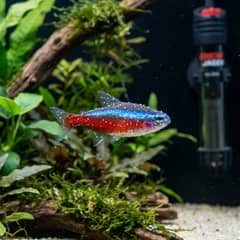
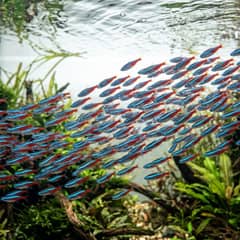
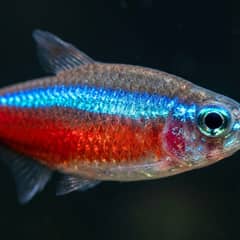
Neon tetras are one of the most affordable fish you can keep, and unlike a solitary species such as the betta, they are never bought one at a time. Each fish is a farmed characin about 1.2 inches (3 cm) long whose wild relatives live in forest streams of the Amazon basin, and it lives in a school. The price of one fish is small. The bill is the tank around the school, the spare tank beside it and, for fish ordered online, the shipping.
The Fish: $1 to $5 Each
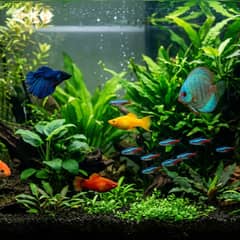
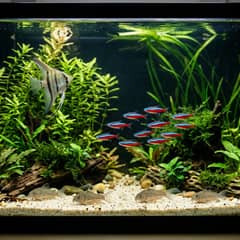
Nearly every neon tetra sold is farm-bred, and most run $1 to $3, occasionally reaching $5 depending on the source. Since this is a schooling species, the purchase is a group: a mixed-sex school of at least 8 to 10. A school of 8 to 12 runs $10 to $40 total, still one of the cheapest ways to stock a community tank.
A neon tetra's colors shift with the hour. At night the fish turns duller and its blue stripe takes on a violet tone. The species does best under fairly dim lighting.
Source: Seriously Fish
Upfront Setup: $165 to $305 for a 20 Gallon Long
| Item | Cost Range |
|---|---|
| 20 gallon long tank, at least 24 inches long, for a school of 10 | $35 - $80 |
| Aquarium heater | $15 - $30 |
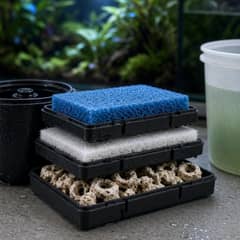
| Gentle filter | $5 - $20 |
| Dense live or silk plants | $15 - $30 |
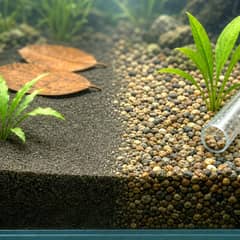
| Two 15.4 lb bags of black sand, or a dark fine gravel, that leaves the pH alone (check the quantity against your tank's floor) | $60 - $80 |
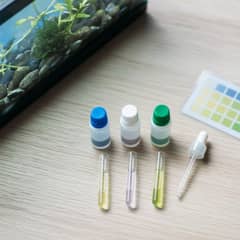
| Liquid water test kit | $25 - $40 |
| Water conditioner that neutralizes chlorine and chloramine | $5 - $15 |
| First supply of micro pellets | $5 - $10 |
| Setup total | $165 - $305 |
Typical price ranges across retailers.
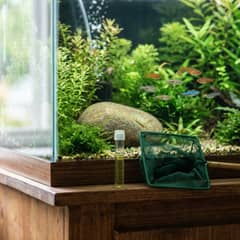
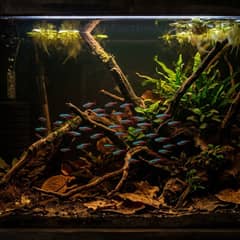
The table is built around a 20 gallon long, which gives a school of 10 the 24 inches of tank length it needs. The recommended base for neons is 24 x 12 inches or larger, and a standard 10 gallon tank is only 20 inches long. Complete starter kits at this size commonly run $50 to $200, with the tank itself, if bought separately, running $20 to $150 depending on size and material.
The sand in the table is black because of what a pale floor does to the fish. Neons lighten over pale substrate in bright, clear water, so a dark bed keeps the stripe at its strongest. The table prices two bags for the floor of a 20 long.
The Extras: A Spare Tank for Quarantine
| Extra | Cost Range |
|---|---|
| Bare 10 gallon tank for quarantine, with no substrate or decor | $15 - $30 |
| Heater for the quarantine tank | $15 - $30 |
| Sponge filter for the quarantine tank | $5 - $20 |
| All the extras together | $35 - $80 |
Typical price ranges across retailers.
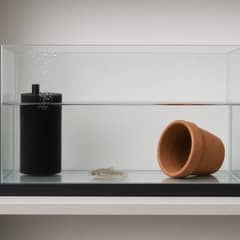
Every new neon spends at least 30 days in a separate tank before it meets the school. At the warm temperatures tropical fish are kept at, disease often becomes visible 1 to 3 weeks after shipping, so a 30-day hold lets it surface in the bare tank first. Setting that tank up and treating in it is laid out step by step in the fish quarantine guide.
The tank's job does not end with the first school. Every new batch, whether two replacements or a second group of ten, starts its own 30 days, and the display school waits until the clock runs out. Buying the whole school in one trip means one wait instead of several.
Buying Checklist: Healthy Neons, Healthy Tank
Time spent watching the shop tank before anything goes into a bag is the cheapest step in the whole budget. Check each fish, then the tank around it.
| Check | Buy | Leave it |
|---|---|---|
| Skin and scales | Smooth and unblemished | White patches, spots or sores |
| Fins | Intact | Bloody or ragged |
| Eyes | Bright | Cloudy |
| Swimming | Steady, moving normally with the rest | Circling, drifting, listless or restless |
| Place in the school | Inside the group | Holding itself apart from the main school |
| The tank | Clean, with other fish that look healthy | Dirty, or holding fish that look sick |
Three of those red flags, restlessness, white patches on the skin and a fish setting itself apart from the school, are the signs of neon tetra disease. When any fish in the tank shows them, the advice is to skip the purchase entirely, not to pick the healthiest-looking fish out of it.
Shipping Fish Online
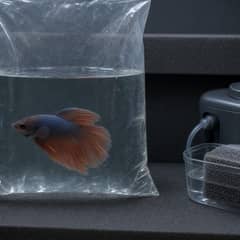
A school ordered online makes the trip in a sealed bag of oxygenated water inside a foam box. The fish keep breathing and excreting the whole way, so oxygen falls while carbon dioxide and ammonia build up, and the pH of the bag water drops as the ammonia rises. Temperature is the other risk: shippers add ice gel packs or heat packs in summer and winter, or on long trips, to hold the water at a temperature the fish can take.
Ongoing Costs: Food, Conditioner, Test Kit Refills and Power
Food and water conditioner are the fixed lines. A micro-pellet or micro-crisp food runs about $15 to $30 a year, and water conditioner $10 to $15 a year. The liquid test kit in the setup table is bought once and then refilled as its reagents run out. The heater, filter and light add to the power bill every month, by an amount that depends on the equipment and the room. Together that is a modest monthly total for a planted community tank of this size.
Vet Costs
Rarely a line item. A single neon's health comes down to water quality and, when needed, over-the-counter treatment. When something is taking out the school, professional directories list the vets who treat fish, and one visit can settle whether the whole group needs treating. Guesswork has its own price: fish are often given one over-the-counter product after another when the first one fails, which wastes time and money and usually does more harm than good.
Lifespan
Around 5 years is achievable with good, stable care, though average conditions often see neon tetras live closer to 2 to 3 years. Water stability matters more for lifespan in this species than in some hardier fish, worth keeping in mind when budgeting for the equipment that maintains it. A guppy is shorter-lived still, with females averaging about 13 months in one lab study, and neon tetras lean more heavily on stable water quality to reach their upper end.
Why This Costs Less Than It Looks Like It Should
Neon tetras are inexpensive individually, but the schooling requirement means you never buy just one or two. Eight or more at once can feel like a bigger upfront expense than a single fish, yet a full school of 10, the number that suits them best, often costs less than a single pair of fancy guppies bred for show fins and color. Budgeting for a proper group from the start is both the more humane approach and the more cost-effective one, since a stressed, understocked school is more prone to health issues, which cost more to correct than simply stocking correctly from day one. It is one of the rare cases in the hobby where doing right by the fish is also the cheaper option.
Where a Cheap Fish Gets Expensive
The fish cost little, so the money gets lost in replacing them. Three habits cause most of it.
Buying from the wrong tank. Years of commercial breeding have left the farmed strain somewhat less robust than wild fish, and a weak batch can die off over the following weeks whatever the keeper does. A shop tank of bright, evenly striped fish schooling tightly is worth a longer drive than a tank with pale or lagging fish at a lower price.
Buying too soon. A tank that finished cycling days ago is still settling. Neons react to shifts in water chemistry more than most community fish. Fish added then are the ones that get replaced first.
Skipping the second tank. Neon tetra disease has no cure once it takes hold, and it spreads through a school when fish eat a dead tankmate. The bare hospital tank in the extras table costs less than restocking a school of twelve.
Sources & Further Reading
Last reviewed 21 Jul 2026 · 4 sources
- Seriously Fish: Paracheirodon innesi (Neon Tetra)
- Sanders JL et al. (2010). Pleistophora hyphessobryconis (Microsporidia) infecting zebrafish Danio rerio in research facilities. Diseases of Aquatic Organisms 91(1):47-56
- University of Florida IFAS Extension: Francis-Floyd R, Yanong RP, Pouder DB. Ichthyophthirius multifiliis (White Spot) Infections in Fish. UF/IFAS Extension CIR920; Crosby TC, Hill JE, Martinez CV, Watson CA, Pouder DB, Yanong RPE. Preparation of Ornamental Fish for Shipping. UF/IFAS Extension FA-120; Klinger R, Francis-Floyd R. Submission of Fish for Diagnostic Evaluation. UF/IFAS Extension FA55
- Francis-Floyd R, Petty BD. Selection of Fish, Merck Veterinary Manual

Put these numbers in a budget you can fill in. The Universal Pet Kit has it, among 19 forms for any pet that you can type into or print.
Frequently Asked Questions
How much does a neon tetra cost?
$1 to $3 each for most, occasionally $5 depending on the source. They school, so the purchase is a group and not a single fish: 8 to 12 of them come to $10 to $40, among the cheapest ways to stock a community tank.
What does a basic neon tetra tank setup cost?
Roughly $165 to $305 for a 20-gallon long tank sized for a school of 10, plus a filter, heater, substrate, plants, water care and the first food. A complete starter kit at this size commonly runs $50 to $200; buying the tank on its own is $20 to $150 by size and material.
What are the ongoing costs of keeping neon tetras?
Low. The monthly total is food, water conditioner, and a little electricity for the heater and filter, modest for a planted community tank this size.
How long do neon tetras live?
About 5 years with good, stable care. In average conditions they often live closer to 2 to 3 years, since lifespan here leans on water stability more than it does in some hardier fish.
What keeps neon tetras going once they are home?
Good water and a varied diet. That is why the budget goes to the filter, heater, test kit and water conditioner more than to the fish themselves.
Why does the schooling requirement matter for budgeting?
Because the least to buy is a group of eight, and ten is better. At $1 to $3 a fish that is a small bill, and an understocked school is the one that develops stress-related illness, which costs more to treat than a full group would have to buy.
Do neon tetras need a quarantine tank?
Yes. New fish spend at least 30 days in a bare tank with its own heater and sponge filter, since disease in newly shipped tropical fish often shows 1 to 3 weeks after they arrive. Every batch added later gets its own 30 days.
What should I look for when buying neon tetras?
Fish swimming steadily inside the school, with smooth skin, intact fins and bright eyes, in a clean tank of healthy-looking fish. Restlessness, white patches on the skin or a fish holding itself apart from the school point to neon tetra disease, and a tank showing them is one to skip.
More on the Neon Tetra
Recommended Gear
As an Amazon Associate I earn from qualifying purchases through the links above, at no extra cost to you.

Written by Michael Ryan
Mike keeps two rescued bearded dragons, Dex and Cera, and writes the care guides on BeastlyFacts from his own research and mistakes. He is not a veterinarian.
More about Michael Ryan →You May Also Like
Subscribe - it's free
An occasional email when something new is worth your time. No spam.
Deep Dive
Health and More