Neon Tetra Feeding: Schedule, Diet, and the Rule That Prevents an Outbreak
On This Page▾

Neon tetra feeding is simple, small food in small amounts, but the rule that protects the school has nothing to do with portions at all.
The Staple Diet
Neon tetras are omnivores. Build the diet around a high-quality tropical flake or micro-pellet designed for small, nano fish, supplemented several times a week with small frozen or live foods: baby brine shrimp, daphnia, cyclops, and finely chopped bloodworms, plus some plant or algae content like spirulina flakes or the occasional blanched vegetable. In the wild their diet runs roughly 20 to 30% plant matter and algae alongside insect larvae and small invertebrates.
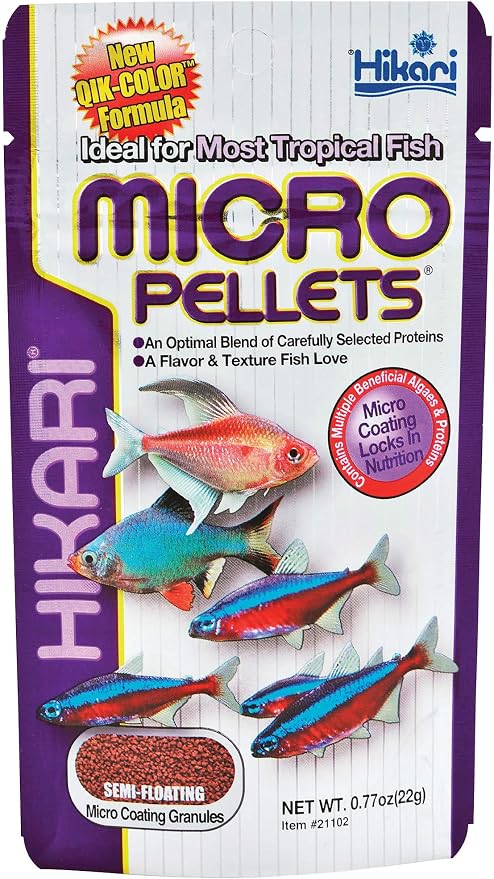
Their mouths are only about 1 to 2mm across. Crush flakes into fine pieces, and stick to "micro" or "nano" sized pellets, food that's too large gets taken and spat back out repeatedly, which functionally starves the fish even while food is visibly going into the tank.
Feeding Frequency and Portions
Feed small amounts twice daily, morning and evening, only as much as the fish finish in about 2 to 3 minutes. Small, frequent feedings suit their tiny stomachs and fast metabolism, and protect water quality far better than one large feeding. Fry and juveniles need 3 to 4 small feedings a day, transitioning from infusoria or baby brine shrimp to crushed flake as they grow, adults from about 6 months do well on twice daily. Keep protein-rich frozen or live foods to 2 to 3 feedings a week to avoid digestive issues.
Foods to Avoid
Oversized flakes or pellets, excessive protein-rich live or frozen food, and any overfeeding are the main risks. Avoid low-quality live foods like tubifex from questionable sources, which can transmit disease, and don't overfeed vegetables or fruit, they cause bloating in this small a fish.
Critically, never leave a dead fish in the tank or let tankmates scavenge a visibly sick fish's body. Neon tetra disease is caused by the microsporidian parasite Pleistophora hyphessobryconis, and if a fish dies of it and its body is eaten by others, those fish contract it too. There is no cure and no effective treatment, prompt removal of dead or sick fish is the only control that actually exists.
Supplementation
None specific is required beyond a varied, vitamin-fortified diet. Dietary variety, color-enhancing and carotenoid foods, plant matter, maintains coloration and immune function on its own, no separate vitamin or mineral supplement is needed for a properly fed community tank.
The Mistakes That Matter
Food too large for their mouths means the fish can't actually eat it, it gets spat out, rots, and pollutes the water while the fish itself goes underfed. Overfeeding or a single large daily feeding lets uneaten food decay and spike ammonia and nitrite, and neons are very sensitive to both. And leaving a dead or sick fish in the tank is how an outbreak of an incurable disease spreads to the whole school.
The Neon Tetra encyclopedia profile has the natural history.
Sources & Further Reading
Last reviewed 13 Aug 2026 · 1 source
- Aquarium Co-Op: What Is Neon Tetra Disease and How Can It Be Prevented?
- Aqulator: Neon Tetra Feeding Guide
- Fishkeeping World: Neon Tetra Care
❓ Frequently Asked Questions
What do neon tetras eat?
A high-quality tropical flake or micro-pellet designed for small fish, supplemented several times a week with small frozen or live foods like baby brine shrimp, daphnia, or finely chopped bloodworms. Because their mouths are only about 1 to 2mm across, flakes should be crushed and pellets should be micro or nano sized, food that's too large just gets taken and spat back out.
How often should I feed neon tetras?
Twice a day for adults, morning and evening, only as much as they finish in about 2 to 3 minutes. Fry and juveniles need 3 to 4 small feedings a day until about 6 months old.
How do I know if I'm overfeeding my neon tetras?
If food is still visible in the tank after 2 to 3 minutes, you're offering too much. Uneaten food decays and spikes ammonia and nitrite, and neons are sensitive to both.
Why do my neon tetras spit out their food?
The food is too large. At 1 to 2mm mouths, anything not crushed fine enough gets taken and rejected repeatedly, which functionally starves the fish even though food is going into the tank.
What is neon tetra disease and how does feeding relate to it?
It's caused by a parasite, Pleistophora hyphessobryconis, and it has no cure. If a fish dies of it and its body is scavenged by tankmates, those fish contract it too. Removing any dead or visibly sick fish immediately, not leaving it for others to eat, is the only real control available.
Do neon tetras need vitamin supplements?
No specific supplement is required beyond a varied diet. Color-enhancing and plant-based foods help maintain coloration and immune function on their own.
📰 More on the Neon Tetra
📘 Neon Tetra care guide
🐠 How Much Does Neon Tetra Ownership Really Cost?
🐠 Neon Tetras Aren't Handled, But the School Size Genuinely Isn't Optional
🐠 Common Neon Tetra Health Issues (Including the Disease Named After This Fish)
🐠 Neon Tetra Tank Setup: Soft Water, Dim Light, and a Blackwater Feel
🐠 Neon Tetra Enrichment: Someone Counted, and the Number Is Ten
🛒 Recommended Gear
As an Amazon Associate, we earn from qualifying purchases through the links above - at no extra cost to you.
Written by Michael Ryan
Mike keeps two rescued bearded dragons, Dex and Cera, and writes the care guides on BeastlyFacts from his own research and mistakes. He is not a veterinarian.
More about Michael Ryan →Comments
No comments yet - be the first!