Betta Enrichment: Room to Swim, Plants for Cover, and Why a Mirror Is Not a Toy
On This Page▾

Enrichment for a betta means rebuilding the plant cover of its wild water in a tank with room to swim, then giving the fish reasons to use all of it. A heater and filter come before everything here, since no amount of enrichment compensates for unstable water.
Wild bettas live in shallow, weedy water and breathe air at the surface. A good betta tank copies that water's cover, gives the fish room to swim through it, and keeps every rival male out of sight, real or reflected.
Warm Shallows Under the Weeds
Picture a rice paddy or a roadside ditch: still water a few inches deep, warm and acidic, short of oxygen and crowded with plants growing up out of it. Wild bettas live in water like that, and in swamps, streams, ponds and even puddles. One population measured in Thailand lived in water about 2 inches deep on average, at about 86°F and a pH near 5.5. A home tank holds a steadier 75 to 86°F at a pH of 6.5 to 7.8, so the part of that water worth copying is the cover.
A betta comes from labyrinth fishes that evolved in low-oxygen water, and it breathes air at the surface as well as through its gills, so it has to be able to reach the top. Males are highly aggressive: when two meet they spread their fins and flare their gill covers, and as the fight goes on they bite at each other's fins and flanks. A breeding male builds a bubble nest in floating plants at the surface, where the eggs can develop in warm, acidic, low-oxygen water.
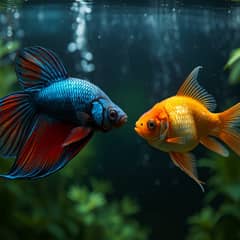
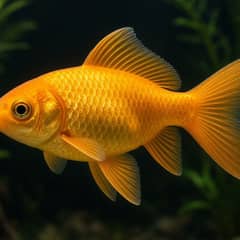
A wild betta is dull brown or green, nothing like the bright fish sold in pet stores.
Source: UF/IFAS Extension FA212
Pick the Tank Before the Plants
Settle the tank size first, then shop for what goes in it, and go well beyond the cup or jar bettas are sold in. A betta in a 17-ounce (half-liter) bowl swims less than one in a larger tank, and a small, bare tank brings on repetitive pacing. In a furnished 5 gallon tank a betta swims and forages the most, and it rests less there than in a jar. A betta sitting still in a small bowl is not a relaxed fish, though it often gets read as one.
Plant It Thick and Cover the Top
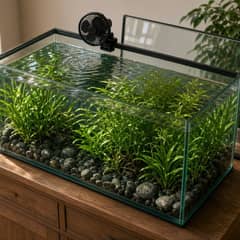
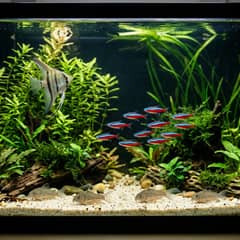
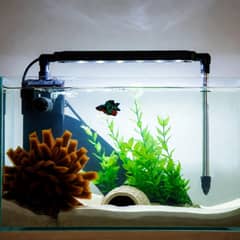
Plant the back and sides densely and leave a stretch of open water through the front, so the betta has cover to move through and room to swim where you can see it. Add floating plants to give the tank cover from above, and keep part of the surface clear of them so the fish can always reach air. A dim, sheltered tank suits this fish. Cover does not give you a fish you never see: a betta with gravel, a live plant and a rock to move among swims in more separate bouts than one in a bare container, though not for longer overall.
Use live plants where you can. In small, unfiltered tanks, plants such as Sagittaria subulata keep ammonia lower, and the betta makes fewer trips to the surface for air. Poor water, and low oxygen above all, is what sends a fish up to breathe, so fewer trips point to better water and a less stressed fish. Live plants also change the tank's microbial community, so they do two jobs at once. If you use artificial plants, choose soft silk ones. Stiff plastic tears betta fins, which is a common injury, and a torn fin can end up infected later.
Resting Spots Low in the Tank
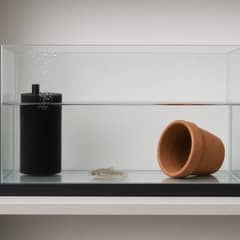
Give a betta several places to rest, and put most of them low: a cave or barrel on the floor, broad-leaved plants in the lower half, and driftwood laid to break the tank into zones, so the fish has somewhere to be that is not simply the middle of a glass box. A betta hammock leaf works too. Nearly all of a betta's resting is on the floor or on furnishings, and only 4% is at the surface. In a furnished 5 gallon tank, 29% of resting was in or on a barrel hideout and 21% on plants, so the cave and the leaves earn their place.
Vary the Food and Where It Lands
Feed a dry pellet as the staple, and work live or frozen foods such as bloodworms, adult brine shrimp, tubifex worms and mosquito larvae into the week. Drop each meal in a different part of the tank, one day by the plants and the next over open water, so the betta has to cruise to find it. A betta forages most in a roomy, furnished tank, and food that lands somewhere new gives it a reason to use all of that space. It is the cheapest change in this guide. In breeding fish, those live and frozen foods may also improve egg and larval quality.
One Male to a Tank, and No Rival in the Glass
Keep one adult male per tank. Males fight and injure each other, and even a very large tank cannot guarantee peace between two of them. Bettas of both sexes raised in a group under enriched conditions are less aggressive as adults than fish isolated earlier, and can be kept in a group in that setting; the age at which a betta is isolated also shapes its later aggression and sexual maturity. That applies only to fish raised together from the start. The aggression a male shows you was shaped before you bought him, and two adult males bought separately stay apart.
Leave the mirror out of his routine. It is sold as exercise, but it triggers the same threat display, and the same cortisol and androgen rise, as a live rival, and a displaying male needs more trips to the surface for air. If a mirror comes out at all, keep it brief so it never becomes a daily session. A male in the next tank is a live rival through the glass, so set two betta tanks apart or stand an opaque card between them.
Brief flaring at the tank's own glass is a normal threat display. A betta that keeps flaring at it is reading its own reflection as a rival, and that raises its stress hormones. Put a background on the glass it flares at, and keep the room lit while the tank light is on, because glass in front of a dark room reflects the most.
Reading a Settled Betta
Watch the fish at times when you are not feeding it. A settled betta swims through open water between the plants, picks over the gravel and leaves, rests on its furnishings and in its cave, and eats when food goes in. Repetitive pacing along the glass and hovering in one spot are what bettas do more often in jars and barren tanks, so give a fish that does them more room and more cover before adding anything else. Trips to the surface that become more frequent point to poor water or low oxygen.
Clamped fins, lethargy and refused food mean something else is wrong, and enrichment will not fix it. Test the water before anything else, since poor water is behind most betta illness.
Small Changes, One at a Time
Once the room, cover and food are in place, small changes are cheap to try: a new live or frozen food, a feeding spot in a part of the tank the fish rarely visits, or one plant moved to open a new route. Leave the cave and the resting leaves where they are, since that is where the fish spends its rest. Change one thing, then watch whether the betta keeps swimming, foraging and resting as before. If it does, keep the change; if it starts pacing or stops eating, undo it.
The Order to Set It Up
The heater, the filter and steady water are in place before anything on this list.
- A tank well beyond the cup it was sold in, chosen before any decor
- Dense planting along the back and sides, floating cover, and part of the surface left open
- Resting spots low in the tank: a cave, broad leaves and driftwood
- Live or frozen food 1 to 3 times a week, dropped in a different spot each time
- One male to a tank, with the mirror out and reflections cut
- Small changes, one at a time, once the rest is in place
A Tank Worth Swimming Through
Every part of this tank answers something a wild betta does: it swims through cover, rests on leaves and breathes at the surface. A fish that cruises the open water, rests low among the leaves and turns up wherever the food lands already has what it needs.
Sources & Further Reading
Last reviewed 8 Sep 2026 · 6 sources
- Oldfield RG, Murphy EK (2024). Life in a fishbowl: Space and environmental enrichment affect behaviour of Betta splendens. Animal Welfare 33:e1
- Clark-Shen N, Tariel-Adam J, Gajanur A, Brown C (2024). Life beyond a jar: Effects of tank size and furnishings on the behaviour and welfare of Siamese fighting fish (Betta splendens). Animal Welfare 33:e62
- Xu Y, Li L, Chen Y, Zhang Y, Niu T, Huang P, Chai L (2026). Effects of Aquatic Plants on Water Quality, Microbial Community, and Fish Behaviors in Newly Established Betta Aquaria. Animals 16(2):247
- Iwata E, Masamoto K, Kuga H, Ogino M (2021). Timing of isolation from an enriched environment determines the level of aggressive behavior and sexual maturity in Siamese fighting fish (Betta splendens). BMC Zoology 6:15
- Ramos A, Alex D, Cardoso SD, Gonçalves D (2021). Androgens and corticosteroids increase in response to mirror images and interacting conspecifics in males of the Siamese fighting fish Betta splendens. Hormones and Behavior 132:104991
- UF/IFAS Extension FA212 (Watson, DiMaggio, Hill, Tuckett and Yanong): Evolution, Culture, and Care for Betta splendens
Frequently Asked Questions
What counts as enrichment for a betta?
Anything that lets it live the way a wild betta does in shallow, weedy water: swimming through cover, resting on leaves and furnishings, and finding food. In a home tank that means room first, then dense planting with floating cover, a cave and broad leaves low down, and live or frozen food on some days.
Where do bettas live in the wild?
In still and sluggish water such as rice paddies, swamps, roadside ditches, ponds and puddles. Wild habitat measured in Thailand averaged about 2 inches deep, warm, acidic and crowded with plants.
How big a tank does a betta need for enrichment?
Bigger than the cup or container it was sold in, and the size comes before any decor. Bettas swim less in small bowls and pace more in small, barren tanks, while a furnished 5 gallon tank gives the most swimming and foraging.
Won't more plants make my betta hide more?
No. A betta given gravel, a live plant and a rock swims in more separate bouts than one kept bare. Plant the back and sides thickly and keep open water at the front, where you can watch it.
Do live plants beat artificial ones?
Where you can keep them, yes. In small unfiltered tanks they hold ammonia down and cut trips to the surface for air, and they change the microbes in the water. Soft silk plants still give cover, but stiff plastic ones tear fins.
Is a mirror good exercise for my betta?
No. A mirror makes a betta flare at a rival that is not there, with the same threat display and cortisol rise a live rival triggers. If you use one at all, keep it brief and never daily.
How do I stop my betta flaring at the glass?
Hang a background on the pane it flares at, and keep the room lit whenever the tank light is on, since glass facing a dark room makes the strongest mirror. A short flare now and then is normal; constant flaring means it sees its reflection as another male.
Can two bettas live together?
Not two adult males: they fight and injure each other, and even very large tanks cannot guarantee peace between them. Bettas raised together in a group under enriched conditions are less aggressive as adults, but that holds only for fish raised together from the start. Adult males bought separately stay apart.
More on the Betta Fish
Recommended Gear
As an Amazon Associate I earn from qualifying purchases through the links above, at no extra cost to you.

Written by Michael Ryan
Mike keeps two rescued bearded dragons, Dex and Cera, and writes the care guides on BeastlyFacts from his own research and mistakes. He is not a veterinarian.
More about Michael Ryan →You May Also Like

Subscribe - it's free
An occasional email when something new is worth your time. No spam.
Health and More