Ferret Feeding: Schedule, Diet, and Why They Stop Eating
On This Page▾

A ferret that has not eaten or drunk for 24 hours needs a vet within the day, and sooner if it is weak, wobbly or drooling. That short clock comes from how ferrets are built: food passes through the gut in three to four hours, so they eat little and often and have small reserves. The same fact shapes the whole feeding plan.
Feeding Schedule
Leave dry food out 24 hours a day and let the ferret graze. A healthy adult takes many small meals, about every 4 to 6 hours, and a bowl that is filled twice a day and empty in between works against that.
Keep the bowl stocked with dry ferret food around the clock, throw out any stale or soiled kibble when you top it up, and keep fresh water out at all times. If your ferret spends much of its waking time at the bowl and is getting heavy, ask your vet to set measured portions.
There is no standard scoop size for a ferret, which is why the bowl is kept stocked and the body is what you watch. A weekly weigh-in on a kitchen scale that reads in grams shows a slow loss or gain long before your eye does. Adult males average 2.2 to 4.4 pounds and females 1.1 to 2.2 pounds.
Kits begin weaning onto solid food around 4 weeks old as their teeth come in, and reach adult body weight by around 4 months. Ferrets with insulinoma are sometimes moved to several small set meals a day, often 4 to 6, to steady their blood sugar. That is a medical plan from a vet and not a schedule for a healthy ferret.
What Ferrets Eat
Ferrets are obligate carnivores. They need a diet high in animal protein and fat, and their short gut handles plant matter poorly.
| On the label | What to look for |
|---|---|
| Made for | Ferrets. A diet made for ferrets is the recommended base. |
| Protein | 32 to 40% |
| Fat | 15 to 20% suits most ferrets. Veterinary references range from 10% to 30%. |
| Form | Dry kibble |
A ferret-specific dry kibble covers all four lines. High-quality kitten food is an acceptable stand-in if ferret food runs out, but adult cat food is not: it runs too high in fiber and too low in protein and fat for a ferret long term. Keep the food dry. Soft or semi-moist food can contribute to gum disease and tooth loss.
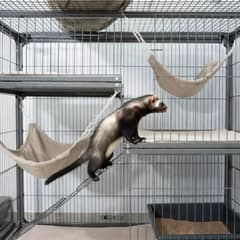
Ferrets do not eat hay, and hay has no place in the diet. Their beds are fabric hammocks and sleep sacks.
Some owners add whole prey or raw meat. Raw meat fed to a ferret has to be human-grade, and it carries a Salmonella and Campylobacter risk for the people handling it, so wash hands and surfaces afterward.
Water. Offer it in a heavy bowl that cannot be tipped or in a bottle with a metal spout. Many ferrets play in and spill a light bowl, so a glass bottle on the cage wall is the tidier choice. Check daily that the spout is flowing.
Safe Treats and Foods to Avoid
Safe in small amounts:
- A piece of cooked meat
- Meat baby food
- Freeze-dried single-ingredient meats such as rabbit, chicken or duck
- Cooked egg
- A fatty-acid supplement such as Ferretone
Never feed:
- Chocolate. It can be fatal to ferrets.
- Sweets, raisins and other sugary treats. They cause diarrhea and erratic swings in blood sugar.
- Fruits and vegetables. A ferret cannot digest them well, and they bring the same diarrhea and blood sugar swings.
- Dairy. Ferrets are lactose intolerant.
- Grains and starches such as bread, pasta or rice.
- Peas and legumes, which are linked to urinary problems.
- Dog food or adult cat food as a long-term diet.
Honey sits on both lists. As a treat it is one of the sugary foods a ferret should never get. Rubbed on the gums of a ferret in a low blood sugar episode, it is first aid on the way to the vet.
Why Ferrets Stop Eating
- Stress. Rehoming, a cage change or a new animal in the house can dull appetite for a short time.
- A new food. Ferrets resist switching kibble. Mix the new food into the old over a couple of weeks instead of swapping overnight.
- Dental pain. A ferret that goes to the bowl and then cannot chew comfortably looks like one refusing food.
- A swallowed object. Ferrets chew and swallow rubber, foam and plastic. A blocked ferret stops eating and stops passing stool, and ferret-proofing the play room is how you prevent it.
- Insulinoma. This pancreatic tumor is very common in ferrets over 2 to 3 years old. It causes weakness and appetite changes, and low blood sugar can develop even when the ferret is eating.
- Stomach ulcers or gut infection. A bacterial stomach infection can cause ulcers and bleeding.
- Illness elsewhere. Adrenal, kidney, liver and heart disease can all suppress appetite as a secondary sign.
When to Worry
Ferrets hide illness until it is advanced, so the "give it a few days" advice used for other pets does not apply.
- Trouble breathing: vet immediately.
- Hunched and quiet, or blood in the urine: vet within 24 hours.
- No food or water for 24 hours: vet within the day.
- Vomiting, diarrhea or loose stools for more than 24 hours: vet within 24 hours.
- Not eating plus no stool, or you know something was swallowed: call the vet promptly.
- Weak, wobbly, glazed, drooling or collapsed: this is a low blood sugar emergency.
For a low blood sugar episode:
- If the ferret is awake, rub a little honey or corn syrup on its gums.
- Go to the vet at once.
- If it is having a seizure, put nothing in its mouth, keep your fingers clear of its teeth, wrap it in a towel and go straight to the vet.
Report these at the next visit: small stools, sneezing, visible difficulty chewing and bald patches.
A Bowl That Never Runs Empty
Feeding a ferret well is mostly a matter of keeping the right dry food and clean water in front of it all day. The work is in the watching. A ferret that walks past a full bowl is telling you something, and with this animal the answer cannot wait for the weekend.
Sources & Further Reading
Last reviewed 16 Nov 2026 · 6 sources
- VCA Animal Hospitals: Feeding Ferrets; Tumors in Ferrets; Gastrointestinal Diseases in Ferrets
- Merck Veterinary Manual: Management of Ferrets; Emergencies of Ferrets; Hormonal Disorders of Ferrets
- LafeberVet: Basic Information Sheet: Ferret
- Wolf TM (2009). Ferrets, in Manual of Exotic Pet Practice
- PetMD: Ferret Care Sheet
- PDSA: The Ideal Home for Your Ferret
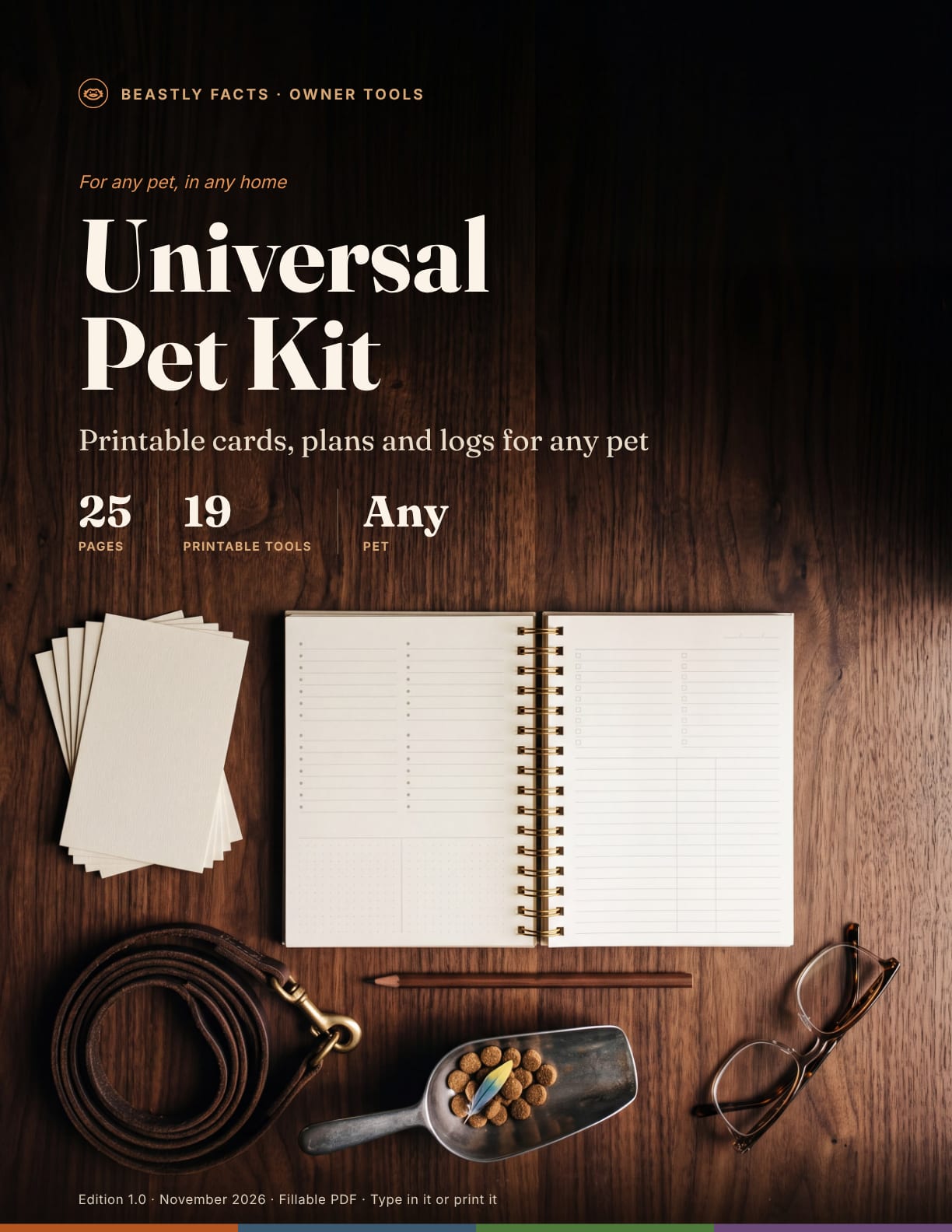
A routine chart and equipment log you can fill in for your own setup. The Universal Pet Kit has it, among 19 forms for any pet that you can type into or print.
Frequently Asked Questions
How often should I feed my ferret?
Keep dry ferret food in the bowl around the clock and let the ferret graze. Food moves through a ferret in three to four hours, so it eats many small meals instead of one or two big ones.
What should a ferret's diet look like?
A dry food made for ferrets, with 32 to 40% protein and fat around 15 to 20%. Ferrets are obligate carnivores, so vegetables and grains cannot stand in for meat.
Can ferrets eat fruits or vegetables?
No. Ferrets digest plant foods poorly, and fruit and vegetables can cause diarrhea and blood sugar swings. Hay is not food for a ferret either.
Why has my ferret stopped eating?
Sometimes it is stress or a new kibble it dislikes. Dental pain, a swallowed object and insulinoma are also on the list, which is why a ferret off its food gets a vet visit sooner than a cat or dog would.
How long can a ferret safely go without eating?
A ferret that has gone 24 hours without food or water should see a vet that day. Go sooner if it is weak, wobbly, drooling or limp, because those are signs of low blood sugar.
Can ferrets have honey or chocolate?
Chocolate can be fatal and is never safe. Honey is not a treat, but a dab on the gums is first aid for a ferret in a low blood sugar episode while you head to the vet.


Recommended Gear
As an Amazon Associate I earn from qualifying purchases through the links above, at no extra cost to you.

Written by Michael Ryan
Mike keeps two rescued bearded dragons, Dex and Cera, and writes the care guides on BeastlyFacts from his own research and mistakes. He is not a veterinarian.
More about Michael Ryan →You May Also Like
Subscribe - it's free
An occasional email when something new is worth your time. No spam.
Health and More