How to Handle a Degu (And Why It Needs a Friend)
On This Page▾

Degus are curious, intelligent, vocal rodents from central Chile. Two facts shape everything about keeping one: it is awake by day, and it cannot live alone.
Never Solo
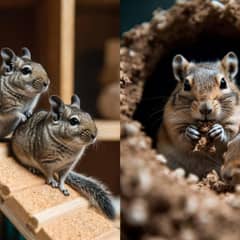
Degus are highly social and need to live in same-sex pairs or small groups, the way wild degus live in small family groups that groom each other, sleep side by side and defend their territory together. A solitary degu does more than miss out on company. It becomes stressed, and that stress shows up over time as neurotic or aggressive behavior. If you are coming from hamster ownership, drop the "one per cage" rule: it is the opposite of what a degu needs. Never house one alone unless a vet or animal behaviorist advises it, since a single degu can develop repetitive behaviors, depression or fur chewing.
Awake When You Are
Degus are diurnal, active during the day instead of at night. A degu is up and available for interaction on roughly the same clock you are, which makes daytime handling sessions easy to fit in. Expect noise with it: degus squeak and chirrup to each other throughout the day, and that chatter is normal.
Getting Handling Right
Degus tame well with regular, gentle handling and are naturally curious and vocal, chirping and squeaking as part of normal communication. They are also fast, wriggly and jumpy, and many do not enjoy being picked up at first. Taming starts before any lifting:
- Sit by the cage and talk quietly every day, so the degus get used to you.
- Offer a treat-sized piece of their normal food from your fingers.
- Once they take food from your hand, let them climb onto your palm to eat it.
- Only then start lifting, and keep every session calm and short.
Never grab a degu suddenly. It causes a lot of stress, and a frightened degu may bite.
Never pick a degu up by the tail. Like several rodents, degus can suffer "tail slip," where the skin and fur of the tail slough off under grasping pressure. The tail does not grow back, and the injured tail usually needs amputation by a vet, so see one the same day.
The pickup that works is a slow one:
- Rest a flat palm in the cage.
- Let the degu climb on.
- Cup the second hand over and around it.
Never swoop in from above. Hands coming down from overhead stress a degu, much as a predator would. A degu that is used to being held can be supported around the chest and shoulders with the other hand under the rest of the body, or simply sat in cupped hands.
Two cautions for the early weeks:
- An unhandled, frightened or sore degu can bite hard, so use a small towel or thick gloves for the first few retrievals from the cage.
- Hold it low, sitting on the floor or close to it, away from shelves and furniture, because a degu will try to jump out of hands and can hurt itself landing. Some degus come to enjoy being held and others never do, preferring to interact by climbing over a lap during playtime. Both are normal.
Telling Males from Females
Sexing a degu is harder than sexing most pet rodents because the testes stay inside the abdomen, so no scrotum is visible. Both sexes have a small cone-shaped projection below the anus. Measure the gap between the cone and the anus. In a male the gap is about double a female's, about a quarter to three eighths of an inch in an adult, and the cone has an obvious penile shape. In a female the two openings sit close together, with a small slit-like vulva just behind the cone. Females also have four pairs of mammary glands. Degus reach sexual maturity at only 3 to 4 months, so sex them early. Confirm the sex yourself, or ask an exotics vet to, before two supposedly same-sex degus share a cage.
Pairs, Groups and Introductions
Same-sex pairs or groups of up to four or five are the simplest arrangement. Males can be neutered from about 3 months old, which prevents breeding and reduces fighting. A neutered male can live with one or more females, but a mixed group should never hold more than one male, since even neutered males may fight with females present. Whatever the mix, give the group a nest box big enough for everyone to sleep in together and enough hides that each degu can shelter alone.
Newly weaned pups, no older than 8 weeks, are accepted by adults of either sex far more readily than another adult is. The pup must be the same sex as the resident, or the male must be neutered. If a lone degu is over a year old, introduce two pups rather than one, so the survivor is not left alone later.
Degus are territorial. Introduced too fast or on home ground, they fight until a hierarchy is settled, and done badly, introductions can turn extremely aggressive. Adults need the slow route:
- Side by side. Keep the new and resident degus in separate cages next to each other for a week or two, so each gets used to the other's smell and sound.
- Neutral meetings. Let them meet for 15 to 30 minutes in a space none of them has marked, such as an empty bathtub or an exercise pen, with plenty of treats and clean toys.
- Repeat daily. Keep up short supervised meetings every day for about a week, lengthening them as they settle.
- Move in together. Once meetings stay calm, clean the cage thoroughly and rearrange it before the move, so neither degu arrives as the owner. Then put them in together.
Mounting, boxing and some chasing are how degus sort out rank, so leave them to it. Chitters, warbles and mutual grooming mean it is working. Grunts, teeth grinding, lunging, or two degus rolling locked together mean separate them at once and start again from side-by-side cages. If meetings keep ending in fights, the degus are probably not compatible, and forcing them together will not change that. Introduce adult males outside the winter-to-spring breeding season if possible, and never put a pregnant female through an introduction, since the stress can cause a miscarriage.
Time Out of the Cage
Half an hour or more a day out of the cage is ideal, in a large exercise pen or a secure room. Get the room ready first:
- Protect or remove every electrical wire, since degus chew them.
- Take out house plants.
- Block gaps behind furniture and close the doors.
- Sit on the floor and let the degus come to you.
Playtime in a pen is also the easiest place to tame a nervous degu, since it can climb over your lap on its own terms.
When a Degu Dies
Degus can become depressed when kept on their own, and one should never be housed alone unless a vet advises it. A survivor can be given a new companion, but the introduction has to be done carefully and with patience, side by side first and then on neutral ground over one to two weeks, as described above.
First-Timer Mistakes
- Buying a single degu and expecting it to do fine alone.
- Grabbing or restraining by the tail.
- Feeding fruit or sugary treats as an occasional "harmless" indulgence. Degus are prone to diabetes, so they get no fruit at all.
A Pair That Is Awake When You Are
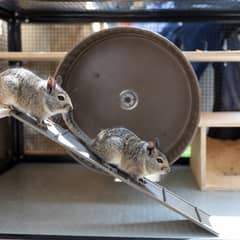
A degu kept with company and handled gently every day tends to become an interactive pet you see during your own waking hours. Plan for two from the start, scoop by the body, never by the tail, and hold them low. Watching a bonded pair at work is a large part of the appeal.
Sources & Further Reading
Last reviewed 15 Nov 2026 · 6 sources
- RSPCA: Degu Company
- PDSA: Getting a Degu; Degus as Pets; The Ideal Environment for Degus
- Wood Green: How Many Degus Should You Keep; Degus Guide
- Vet Times: Benato, Dipping into world of degus (2010); Wissink-Argilaga and Pellett, Guide to husbandry and common diseases in degus and skunks (2014)
- LafeberVet: Basic Information Sheet, Degu
- Smithsonian's National Zoo and Conservation Biology Institute: Degu

A pet profile and a sitter sheet you can fill in, so anyone who helps knows the routine. The Universal Pet Kit has it, among 19 forms for any pet that you can type into or print.
Frequently Asked Questions
Can I keep just one degu?
No. Plan on a same-sex pair or a small group from the first day, because a degu on its own turns stressed and, in time, neurotic or aggressive.
Are degus active during the day or at night?
During the day. Degus are diurnal, so yours is awake and up for interaction on roughly your own schedule.
Can you pick a degu up by the tail?
Never. Grasping pressure on the tail causes tail slip, where the skin and fur come away. It does not grow back, and the tail usually has to be amputated by a vet. Scoop with two hands under the body.
Are degus easy to tame?
Yes, with patient, gentle handling. They are curious and vocal, but many do not enjoy being picked up at first, so let the degu come to your hand before you lift it.
More on the Degu



Recommended Gear
As an Amazon Associate I earn from qualifying purchases through the links above, at no extra cost to you.

Written by Michael Ryan
Mike keeps two rescued bearded dragons, Dex and Cera, and writes the care guides on BeastlyFacts from his own research and mistakes. He is not a veterinarian.
More about Michael Ryan →You May Also Like



Subscribe - it's free
An occasional email when something new is worth your time. No spam.
Deep Dive
Health and More