Ember Tetra Feeding: Diet, Food Size, and How Often to Feed
On This Page▾

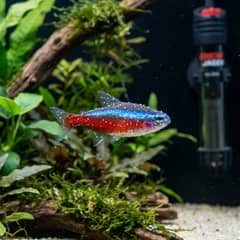
An ember tetra grows to about 0.8 inch (2 cm), and its mouth is built to match. Everything about feeding one follows from that: the food has to be tiny, it has to sink slowly enough to be caught, and each portion has to be small enough for the school to clear.
Feeding Schedule by Life Stage
Fry eat little and often, juveniles step down toward the adult routine, and adults settle at one or two meals a day.
| Stage | What | How often | How much |
|---|---|---|---|
| Fry | Paramecium or a dry fry food of 5 to 50 micron grade first, then baby brine shrimp and microworm once the fry are big enough to take them | Small meals several times a day | Tiny portions, cleared before the next meal |
| Juvenile | The adult foods at a smaller size: the smallest micro-pellets, finely crushed flake, baby brine shrimp | Three to four small meals a day, tapering to the adult schedule | What the group clears; growing fish eat more for their size than adults |
| Adult | A dried staple plus small live or frozen food every day | Once or twice a day | A small pinch the school finishes before it settles on the substrate |
Where the adult routine allows two meals, make one of them live or frozen food. Young fish get the extra meals because they eat more for their size: up to 5% of body weight a day, against about 3% for an adult.
The portion matters more than the count. Each meal is a small pinch sized to the school, and the way to judge it is to watch the fish eat. If food drifts past them and settles on the substrate untouched, the next pinch is smaller. Food that sits uneaten breaks down into ammonia, the same waste the nitrogen cycle in a mature tank has to clear.
Embers scatter their eggs and give no parental care, and adults will eat both eggs and newly hatched fry, so fry are fed in a separate tank.
What Embers Eat, in the Wild and in the Tank
In the backwaters and oxbow lakes of Brazil's Araguaia River basin, the ember tetra is thought to be a micropredator, picking tiny invertebrates and other zooplankton out of the water. The captive diet is built to fit that: small food, with live or frozen prey on the menu every day.
Build the daily diet on a quality dried food sized for very small fish. A slow-sinking micro-pellet works, and so do flake and granules once they are crushed down to a fine crumb. Around that staple go small live and frozen foods: baby brine shrimp (Artemia nauplii), daphnia, cyclops and moina.
Embers have little mouths and feed best on tiny, slow-sinking food. Choose the smallest micro-pellet grade, crush flake fine, and keep live and frozen foods at the size of baby brine shrimp and daphnia.
Live or frozen fare belongs in the routine every day. Baby brine shrimp and daphnia are small enough to swallow whole, and they are the closest match a keeper can buy to the zooplankton a wild ember probably hunts.
Fish cannot make carotenoids from scratch, and carotenoids are the pigments fish farms add to feed to color their fish, drawn from sources such as krill and algae. For a fish whose whole appeal is its orange-red, a staple that lists krill, algae or astaxanthin is the one ingredient check worth making.
The genus name Hyphessobrycon joins Greek words for "a little smaller" and "to bite" or "eat greedily". The scientist who named the genus never explained the "smaller", which probably refers to the size of the fish.
Source: The ETYFish Project
Live food carries a risk the dried staple does not. Cyclops and daphnia are common intermediate hosts of Camallanus, a blood-red intestinal worm, and fish fed those crustaceans can end up heavily infected.
Dried food goes stale: use an opened container kept at room temperature within about 2 months. Dry food stored in the freezer keeps about 6 months, frozen foods such as brine shrimp about a year, and thawed food is never refrozen.
Foods to Avoid
- Live tubifex worms. In a study of tubifex bought from pet shops, 6 of 7 samples held infected worms, and 5 already had parasite spores in the water at the time of purchase. The worms sold under the name turned out to be a mix of three species, true tubifex and two related worms.
- Anything too big to swallow. A pellet or flake an ember cannot get down sinks uneaten and rots.
- Rich, starchy or fatty diets. Fatty liver disease is a common problem in captive fish, and diets high in carbohydrate or fat are among its causes. Poor nutrition in general brings slow growth, deformities and a weaker immune system.
Why Embers Stop Eating
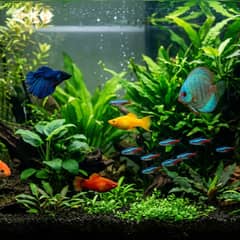
- Faster or bigger tankmates. An ember loses out at feeding time to anything rowdy or much bigger than itself, so in a mixed tank the faster fish can take most of a meal while the embers hang back. Watching feeding time tells you whether the embers are getting fed at all. Choosing companions that pass the checks two species need before sharing a tank, similar size and a calm temperament above all, is what keeps feeding time fair.
- Poor water quality. In a new tank that has not finished cycling, ammonia or nitrite can reach toxic levels, and the fish turn lethargic, stop eating, and often die. Test for both first when appetite drops.
- Internal parasites. Some intestinal parasites cause weight loss and loss of appetite.
- Illness of any kind. A sick fish often has a poor appetite, which is also why medicated food can be hard to get into one.
When to Worry
A well-fed ember school is outgoing, especially in a large group, and adult males show the most intense color, especially in spawning condition. The signs that need action:
- Several fish off their food at once. That points to the water. Test ammonia and nitrite, and keep testing until neither is measurable.
- One fish thinning while the rest eat. Weight loss and refusing food are signs of some internal parasites, which are among the ember tetra health problems that need a diagnosis before any medication goes in.
- A red thread at the vent. Camallanus shows as blood-red worms protruding from the vent, most likely in a tank fed live cyclops or daphnia.
When You Go Away
A trip away needs a person to feed the fish or an automatic feeder, and each has a way to go wrong.
For a sitter, pre-portion every meal before you leave, for example in a labeled pill organizer with one compartment per feeding, so they cannot overfeed. Show them once, and leave your number. A well-meant extra pinch ends up rotting on the substrate like any other leftover.
For an automatic feeder, set it up and run it for several days before you leave, with a food it dispenses well, checking that it is not jamming or overfeeding.
A fish this small lives on what fits in its mouth, and the keeper who sizes every food to that mouth has most of ember tetra feeding solved.
Sources & Further Reading
Last reviewed 1 Nov 2026 · 5 sources
- Hyphessobrycon amandae (Ember Tetra), Seriously Fish
- Merck Veterinary Manual: Nutritional Diseases of Fish; Management of Aquarium Fish; Parasitic Diseases of Fish
- Care Guide for Ember Tetras, Aquarium Co-Op
- Hallett SL, Atkinson SD, Erséus C, El-Matbouli M (2005). Dissemination of triactinomyxons (Myxozoa) via oligochaetes used as live food for aquarium fishes. Diseases of Aquatic Organisms 65(2): 137-152
- Nakano T, Wiegertjes G (2020). Properties of Carotenoids in Fish Fitness: A Review. Marine Drugs 18(11):568
A routine chart and equipment log you can fill in for your own setup. The Universal Pet Kit has it, among 19 forms for any pet that you can type into or print.
Frequently Asked Questions
What do ember tetras eat?
Micro-pellets or flake crushed fine as the staple, plus small live or frozen foods such as baby brine shrimp, daphnia, cyclops and moina. Wild ember tetras are probably micropredators of tiny invertebrates and zooplankton, and at about 0.8 inch (2 cm) long they need tiny, slow-sinking food.
How often should I feed ember tetras?
Once or twice a day, a small pinch each time that the school finishes before it settles on the substrate. Small live or frozen food can be one of those meals every day.
How small should ember tetra food be?
Very small. An adult ember tetra is about 0.8 inch (2 cm) long with a little mouth, so use the smallest micro-pellet grade, flake crushed fine, and live foods the size of baby brine shrimp or daphnia. Slow-sinking food gives the fish time to catch it.
What do you feed ember tetra fry?
Paramecium or a dry fry food of 5 to 50 micron grade as the first food. Ember tetras scatter their eggs and give no parental care, and adults will eat their own eggs and fry, so fry are raised apart from the adults.
Do ember tetras need live food?
Daily small live or frozen food is part of the diet for this species, alongside the dried staple. Baby brine shrimp and daphnia are the right size.
Why are some of my ember tetras paler than others?
Adult males are the more intensely colored sex, and the females are rounder-bodied and less vivid, so a mixed school always shows a range. The difference is at its widest when the males are in spawning condition.
Why is my ember tetra not eating?
The usual causes are bigger or rowdier tankmates reaching the food first, poor water such as ammonia or nitrite in a new tank, internal parasites, or illness. Several fish refusing at once points to the water; one fish thinning while the rest eat points to that fish.
How do I feed ember tetras while I'm on vacation?
Have someone feed them, or use an automatic feeder. Pre-portion a sitter's meals, for example in a labeled pill organizer, so they cannot overfeed, and run an automatic feeder for several days before you leave to check that it does not jam or overfeed.
More on the Ember Tetra
Recommended Gear
As an Amazon Associate I earn from qualifying purchases through the links above, at no extra cost to you.

Written by Michael Ryan
Mike keeps two rescued bearded dragons, Dex and Cera, and writes the care guides on BeastlyFacts from his own research and mistakes. He is not a veterinarian.
More about Michael Ryan →You May Also Like
Subscribe - it's free
An occasional email when something new is worth your time. No spam.
Deep Dive
Health and More