Ember Tetras Are Never Handled, So the Trip Home Is the Part to Get Right
On This Page▾

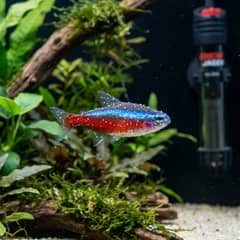
An ember tetra is a small South American characin from the Araguaia River basin in central Brazil, and a full-grown one measures about 0.8 inch (2 cm) from snout to the base of the tail. Nobody picks one up. The handling this fish gets comes down to a net, a bag and the hour it takes to move from shop water into tank water, and at this size each of those steps has its own way to go wrong. The keeper's hands go into that water too, and they carry a small risk of their own.
Netting a Fish This Small
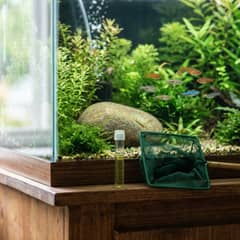
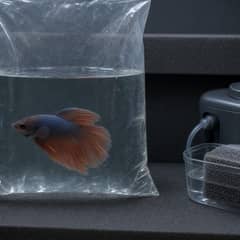
A net is the one tool that touches an ember tetra, and the common way to use it is the clumsy one: a helper holds a half-filled bag open in the air while the fish get tipped into it from the net. The better method keeps the bag in the water. Float a partly filled bag on the surface of the tank, open it there, and net the fish straight across into it, so the whole transfer happens at the waterline.
Size is the other problem. A fish 0.8 inch long can stay stuck in a net or jump out along the way without anyone seeing it go. The routine that catches it is simple:
- Count the school before the net goes in. Ten fish going into the bag should be ten fish coming out of it.
- Bag at the waterline. Float the open bag and net the fish straight across into it.
- Count again, then check. Look over the net, the bag and the floor for a fish that got stuck or jumped before anything is rinsed or thrown away.
Bagging and the Drive Home
| At the counter | What to ask for | Why |
|---|---|---|
| Water to air | One part water, three parts air | It looks underfilled, but the air holds the oxygen the fish breathe, and a bag filled most of the way with water leaves them less |
| Cover | A dark container, or the bags wrapped in a towel or a few sheets of newspaper | The fish ride in the dark |
| Trip length | As short as the route allows | Bag water gets worse the longer it travels |
On the way, ammonia builds up from the fishes' waste, and pH drops as carbon dioxide accumulates. Both are reasons the bag water never ends up in the tank, and anything longer than a short local drive calls for the oxygen, insulation and container choices that go into moving fish on a longer trip.
Acclimation, Step by Step: Mixing or Dripping
This is the standard routine for small fish, and with a species this small the last step matters as much as the first.
- Switch the tank lights off. New arrivals should be kept fairly dark, never blinded by the tank lighting.
- Mix the water slowly. Add a little tank water to the bag every few minutes, and keep going until the bag holds more aquarium water than shop water. The whole process takes 30 to 60 minutes.
- Net the fish out. Lift them from the bag and release them into the tank. Never pour the bag in: its water carries the waste from the trip and can carry pest snail eggs from the shop.
- Count the school. Ten fish went into the bag, so ten come out. Before the bag goes in the trash, look through it, the net and the floor for a fish that got stuck or jumped.
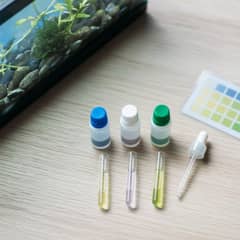
Ember tetras are soft-water fish, kept at 1 to 10 dGH and a pH of 5.0 to 7.0. When the shop's water and the home tank sit far apart on either figure, drip acclimation changes the chemistry more gradually. It is aimed at sensitive animals such as Caridina shrimp, and a big chemistry gap is the case where it earns those two hours. Testing the tank's pH and hardness before the trip, and asking the shop for its figures, settles which method the day needs.
| Method | How long | When it fits |
|---|---|---|
| Mixing in the bag | 30 to 60 minutes | The standard routine for small fish, with shop and tank water close |
| Drip acclimation | About two hours | Shop and tank water far apart on pH or hardness |
The same routine applies when the bag goes into a quarantine tank first, which is advisable wherever the fish were bought. New fish spend at least 30 days in quarantine before they join an established tank.
How Many to Bring Home
Ten. A minimum of 8 to 10 is the recommended purchase, and 10 is the number to plan around. Embers are relatively outgoing, especially in large groups, and a bigger school is where that shows.
In the group-size study on neon tetras, groups of 10 had the greatest tendency to shoal.
A school of 10 needs a 10-gallon tank with an 18 x 12 inch (45 x 30 cm) footprint. Ten fish arriving in one trip is a sudden jump in waste, so they go into a tank that has finished its nitrogen cycle and has been running for a while since.
Telling Males From Females
| Trait | Male | Female |
|---|---|---|
| Color | More intense, strongest in spawning condition | Less intense |
| Body | Slender in profile | Rounder through the body |
| Best view | From the side | From above |
A mixed school needs no sexing at all. The difference matters only to a keeper setting up a breeding group.
The Araguaia River, whose basin the ember tetra comes from, is home to over 800 species of fish.
Source: Practical Fishkeeping
Fish Tank Granuloma: Gloves Over Cuts
Netting, acclimation and every bit of tank work put a keeper's hands in aquarium water, and that water can carry Mycobacterium marinum, the bacterium behind fish tank granuloma. It lives in fresh and salt water, unchlorinated pools and aquarium tanks, and it gets into a person through a break in the skin such as a cut.
The first sign is a reddish to purple bump that slowly becomes a painful nodule, most often on the elbows, the fingers or the backs of the hands. It usually shows about 2 to 3 weeks after exposure, and sometimes takes a month or longer. Treatment often runs several months and may combine antibiotics.
Two 2013 case reports of aquarists show how a small wound turns into a long one. One aquarist cleaned an injured knee with a brush normally used on the aquarium; the other was hurt while clearing out a tank. One was first misdiagnosed and treated with steroids for three months, and the other needed eight months of treatment. The authors name delayed diagnosis as the main cause of the patients' serious complications, and they ask labs to consider M. marinum whenever an injury started at an aquarium.
Prevention is three habits:
- Gloves over cuts. Wear rubber gloves for tank work, and never put a hand with a cut or scrape into the water bare.
- Wash afterward. Wash hands and arms thoroughly when the job is done.
- Name the tank. If a slow, painful bump appears on a hand or elbow, tell the doctor about the aquarium at the first visit.
First-Timer Mistakes
Each of these undoes a step above.
- Pouring the bag into the tank. The fish cross by net; the water goes down the drain.
- Bagging with too much water. One part water to three parts air.
- Leaving the lights on. New arrivals stay fairly dark.
- Rushing the mix. 30 to 60 minutes, a little at a time.
- Throwing the bag away uncounted. Count the school and check the bag, net and floor first.
- Buying a handful. Ten is the number to plan around.
- Skipping quarantine because the shop seems good. Quarantine wherever the fish came from.
- Adding a rowdy or much bigger tankmate. Embers lose out to boisterous or much larger fish.
- Working bare-handed over a cut. Gloves first.
An ember school that arrives whole, counted at both ends and moved by net into water it was eased into, is a school of ten from the first day, which is the size where this outgoing little fish shows it.
Sources & Further Reading
Last reviewed 1 Nov 2026 · 4 sources
- Hyphessobrycon amandae (Ember Tetra), Seriously Fish
- What you need to know about bagging fish, Nathan Hill, Practical Fishkeeping
- Fish tank granuloma, MedlinePlus, US National Library of Medicine
- Fish Tank Granuloma Caused by Mycobacterium marinum in Two Aquarists: Two Case Reports, Slany, Jezek and Bodnarova, BioMed Research International (2013)

A pet profile and a sitter sheet you can fill in, so anyone who helps knows the routine. The Universal Pet Kit has it, among 19 forms for any pet that you can type into or print.
Frequently Asked Questions
How do you acclimate ember tetras to a new tank?
Turn off the tank lights and mix tank water into the bag a little at a time over 30 to 60 minutes, until tank water outweighs shop water. Then net the fish across, discard the bag water, and look over the bag, net and floor for a missing fish.
How many ember tetras should you keep together?
Ten is the target, with 8 to 10 as the least to buy. Housing that group takes a 10-gallon tank whose base measures 18 by 12 inches.
Can ember tetras live with shrimp?
With adult dwarf shrimp, yes: embers ignore grown shrimp. Baby shrimp are a different story, since embers, like nearly every fish, will pick off shrimplets whenever they get the chance.
How should ember tetras be bagged for the trip home?
Use a ratio of one part water to three parts air, since the oxygen sits in the air. For the ride, put the bag inside a dark box or cover it with a towel or newspaper.
Can ember tetras live with a betta?
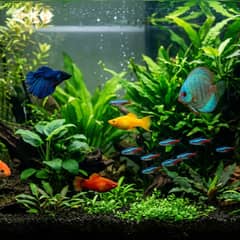
Think twice. Bettas and dwarf gouramis may turn territorial, and an ember loses out to any tankmate that is rowdy or much bigger, so a peaceful fish of similar size is the safer companion. A calm one can still work as a centerpiece, so it comes down to the individual fish.
How do you tell male and female ember tetras apart?
Males carry stronger color and a slender profile; females are rounder, clearest from above.
Can you catch anything from an ember tetra tank?
Aquarium water can carry Mycobacterium marinum, which causes fish tank granuloma when it gets into a cut. Wear rubber gloves for tank work, wash your hands and arms afterward, and tell a doctor about the aquarium if a slow, painful bump appears on a hand or elbow.
More on the Ember Tetra

Written by Michael Ryan
Mike keeps two rescued bearded dragons, Dex and Cera, and writes the care guides on BeastlyFacts from his own research and mistakes. He is not a veterinarian.
More about Michael Ryan →You May Also Like
Subscribe - it's free
An occasional email when something new is worth your time. No spam.
Deep Dive
Health and More