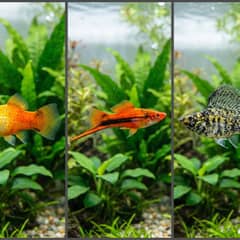
Common Platy Health Issues (And the Truth About 'Platy Tumors')
On This Page▾

Ich, fin rot, dropsy, and shimmy are the everyday risks worth watching for. Platies are also one of the most famous fish in cancer genetics, and it's worth knowing exactly what that fact does and doesn't mean for the fish in your own tank.
Ich (White Spot Disease)
Small white spots resembling grains of salt across the body and fins, caused by the protozoan parasite Ichthyophthirius multifiliis. The parasite burrows into skin and gills before dropping off to reproduce, and a single organism can produce hundreds of new ones, which is what makes an outbreak escalate quickly. Heat speeds the parasite's life cycle so medication can reach it, but the 86°F that stops most ich strains is above the platy's range, so the ich treatment guide has them warmed only to the top of their range, 77°F, with strong aeration, then treated with aquarium salt or a malachite green or formalin product, alongside correcting whatever water quality issue let it take hold. Copper sulfate is the last pick, since its dose rests on an alkalinity test.
How fast a female platy matures is largely a matter of genotype, steered by a sex-linked gene. A female can be ready as early as 11 weeks once she reaches 29 mm, but females of the slowest-maturing genotype do not mature until somewhere between 34 and 73 weeks of age, well over a year at the far end.
Fin and Tail Rot
Fin edges that turn white, ragged, or frayed, working inward from the tips toward the base. It's a bacterial infection, commonly Flavobacterium columnare, Aeromonas, or Pseudomonas species, and while bacteria cause it directly, the root trigger is usually environmental: poor water quality, overcrowding, stress from handling or relocation, or fin damage from an aggressive tankmate. Fixing the water, the diet and the setup is the main treatment. Antibiotics are rarely needed, because the drug struggles to reach the edges of the fins, so a fish vet handles a stubborn case. Once the infection clears, the fin starts to regrow.
Dropsy
Fluid buildup in the abdomen that makes the scales stand out in a raised, pinecone-like pattern. It's a sign with several possible causes, including systemic bacterial infection, rather than a single disease. Some causes respond to treatment, but the outlook is often poor once the scales have lifted.
Swim Bladder Disorder
Buoyancy problems, floating, sinking, or swimming at an odd angle. Keepers commonly blame overfeeding or constipation, though low water temperature and internal parasites can contribute too. For a mild case, keepers commonly fast the fish for a day or two, and a blanched, shelled pea is a common keeper remedy; a case that persists is worth ruling other causes out for.
Shimmy
A distinctive side-to-side, almost snake-like rocking motion as the fish swims, seen across livebearers generally, mollies, platies, swordtails, and guppies alike. It isn't a disease in itself so much as a sign of stress, and the triggers reported for livebearers are soft or acidic water, ammonia, and sudden shifts in water chemistry. Treatment starts with correcting the environment rather than medicating the fish: test for ammonia, check and correct pH toward 7.0 to 8.2, address mineral hardness with a supplement like crushed coral if your water runs very soft, and keep the temperature steady in the mid-to-upper 70s°F.
The Truth About Platy Melanoma
This is worth covering honestly rather than either ignoring it or overstating it, because it's a genuinely real phenomenon that gets misunderstood in both directions. Since the 1920s, scientists have used platy and swordtail crosses to study melanoma, malignant skin cancer, making Xiphophorus one of the longest-running animal models in cancer research, still active today.
Xiphophorus fish have been used in melanoma research for almost a century, making them one of the oldest continuously studied animal models for any cancer, human or otherwise. Yet despite that fame, an ordinary pet-store platy has a very low risk of developing it under normal aquarium conditions.
The mechanism is interesting: certain platy lines carry a pigment-cell gene that promotes melanoma, kept in check by a separate tumor-suppressor gene. In a purebred platy, both genes are present and the suppressor does its job. The melanoma breaks through most readily when platies are deliberately crossed with swordtails in a lab setting, hybridization that can separate the two genes so the suppressor is lost while the pigment-promoting gene remains, unmasking the tumor. A 2024 review in the journal Disease Models & Mechanisms notes that melanoma can also develop in purebred species and is not restricted to hybrids, but that spontaneous melanoma in purebred fish is rare, occurring almost exclusively in mature males of advanced age.
The practical takeaway: if you find a dark lump or growth on your platy, it's far more likely to be an injury, a cyst, or an unrelated growth than the specific research-famous melanoma, which simply isn't a realistic home-tank risk. There's no home treatment for a genuine tumor of any kind, but ruling out more common and more treatable causes first is worth doing before assuming the worst.
The Husbandry Pattern Worth Remembering
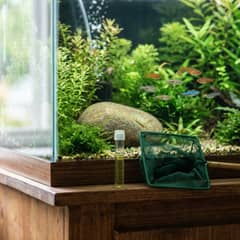
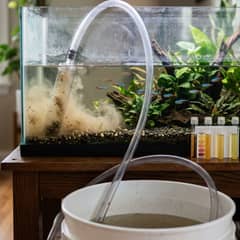
Stress, poor or unstable water quality, overcrowding, and skipping quarantine are the common thread behind most conditions on this list, shimmy and the bacterial issues especially. A properly cycled tank, a stable temperature held with a reliable aquarium heater, and regular partial water changes using a water conditioner prevent far more than any medication does after the fact. A water test kit that lets you catch an ammonia or pH problem before it becomes a visible symptom is one of the more useful things a new platy owner can own.
Quarantining new fish for at least 30 days before adding them to an established tank catches most problems, shimmy included, before they spread. A modest separate tank with its own gentle sponge filter is worth setting up for this, and it doubles as a place to isolate a sick fish or a female about to give birth.
Ich and similar issues aren't unique to platies either, our Molly health issues guide covers how the same water-quality-driven pattern, shimmy included, plays out in that closely related livebearer.
Uneaten food is a common and avoidable driver of the water-quality decline behind most of these conditions.
Check the Platy encyclopedia profile for more.
Sources & Further Reading
Last reviewed 15 Sep 2026 · 5 sources
- Merck Veterinary Manual: Disorders and Diseases of Fish; Bacterial Diseases of Fish; Parasitic Diseases of Fish
- UF/IFAS Extension: Ichthyophthirius multifiliis (White Spot) Infections in Fish
- Schartl & Lu (2024): Validity of Xiphophorus Fish as Models for Human Disease, Disease Models & Mechanisms
- Kallman & Borkoski (1978): A Sex-Linked Gene Controlling the Onset of Sexual Maturity in Female and Male Platyfish, Genetics
- Jessie Sanders, DVM, Aquatic Veterinary Services: Fin Rot in Pet Fish

Log weight, feeding and meds, so your vet has the full picture. The Universal Pet Kit has it, among 19 forms for any pet that you can type into or print.
Frequently Asked Questions
What is ich and how do you treat it in platies?
White spots like grains of salt over the body and fins, from the protozoan parasite Ichthyophthirius multifiliis. Warm the tank slowly to 77°F, the top of a platy's range, run an air stone, then treat with aquarium salt or an ich medication such as malachite green or formalin, and fix the water quality that let it in.
What is dropsy and can it be treated?
Fluid buildup in the abdomen that makes the scales stand out in a pinecone-like pattern, a sign with several possible causes, a systemic bacterial infection among them. Some causes respond to treatment, but the outlook is often poor once the scales lift.
Do platies get 'shimmy' like mollies?
Yes. Shimmy is a side-to-side, snake-like rocking motion linked to soft or acidic water, ammonia, and sudden changes in water chemistry, and it shows up across livebearers, mollies, platies, swordtails, and guppies alike. Correcting pH, hardness, and water quality toward the platy's preferred range is the first step, and medication is rarely the answer.
Is it true that platies can get tumors?
Yes, and it's one of the most studied facts in the species, but keep it in perspective. Certain platy and swordtail genetic lines develop melanoma through a well-studied mechanism, and Xiphophorus fish have been used as a cancer research model for almost a century. Importantly, in a purebred pet-store platy it is rare, appearing almost exclusively in mature males of advanced age, and it is unmasked far more readily by deliberate cross-breeding between platies and swordtails in a lab setting. If you find a lump or dark growth on your own platy, it's far more likely to be an injury, a cyst, or an unrelated growth than that specific research-famous condition, a vet or fish-health specialist can help rule out the more common, more treatable causes.
How do I prevent most platy health issues in the first place?
A cycled tank, a steady temperature, and regular partial water changes prevent far more than medication does after the fact. Quarantine new fish at least 30 days before they join an established tank, which catches most problems before they spread.
More on the Platy

Recommended Gear
As an Amazon Associate I earn from qualifying purchases through the links above, at no extra cost to you.

Written by Michael Ryan
Mike keeps two rescued bearded dragons, Dex and Cera, and writes the care guides on BeastlyFacts from his own research and mistakes. He is not a veterinarian.
More about Michael Ryan →You May Also Like

Subscribe - it's free
An occasional email when something new is worth your time. No spam.
Deep Dive
Health and More