Degu
Octodon degus
On This Page▾
🌍 Overview
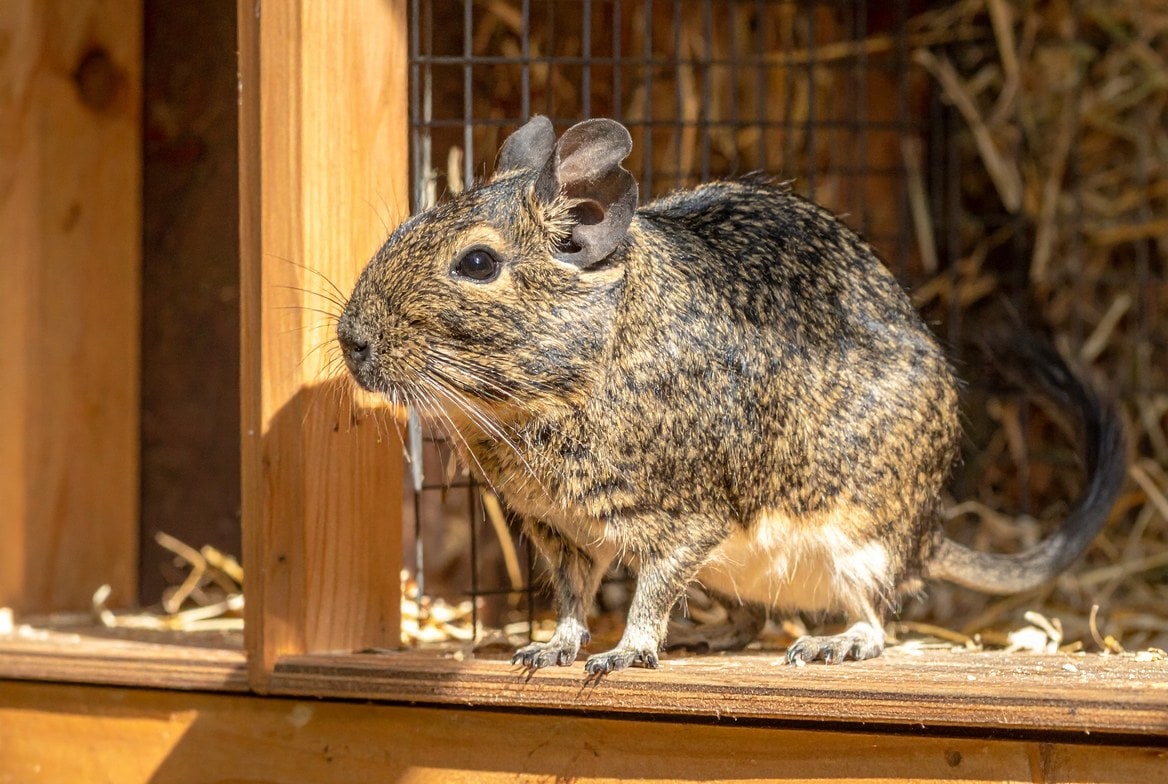
Degus are diurnal rodents from central Chile, and almost everything unusual about them follows from that. They are awake when their owners are, which is rare in a small pet, and they are intensely social, living in wild burrow colonies of up to a hundred animals with cooperative digging and sentry behavior. They are also one of the very few mammals that cannot process dietary sugar properly: degus lack a functional insulin response and develop diabetes and cataracts on fruit, so a diet that would be a treat for a hamster is genuinely dangerous here. Their teeth are open-rooted and grow for life, and the enamel turns orange with age in a healthy animal.
📋 Quick Facts
Native Range
Northern and central Chile, on the western slopes of the Andes
Natural Habitat
Semi-arid scrubland and rocky matorral, in communal burrow systems
Adult Size
5-8 inches (12-20 cm) body, plus a 4-5 inch tufted tail; 6-11 oz
Wild Diet
Grasses, seeds, bark, leaves, and tubers
Wild Lifespan
Seldom longer than 2 years in the wild, where it is prey; 5 to 8 years in captivity
Conservation Status
Least Concern (IUCN)
📜 History
Juan Ignacio Molina described the animal in 1782 and filed it as a squirrel, Sciurus degus; Waterhouse moved it into Octodon in 1848. Laboratory and pet degus in North America trace to one collection in 1964, when a farmer trapped 20 of them about 20 miles outside Santiago for a scientist at MIT. That colony reached 87 animals before MIT handed it to David Boraker at the University of Vermont in 1970, where it grew to some 900 head, funded partly by the National Eye Institute for cataract work, and by 1978 Vermont had supplied more than 30 US research institutions. In 2022 Patricia Cogram and colleagues showed how far separate colonies had drifted through inbreeding, which explained years of contradictory findings.
⚖️ Compare
Degu
Human
Adult Size
5-8 inches (12-20 cm) body, plus a 4-5 inch tufted tail; 6-11 oz
5-6 feet (150-185 cm); ~135-200 lbs
Wild Lifespan
Seldom longer than 2 years in the wild, where it is prey; 5 to 8 years in captivity
~73 years (global average)
Wild Diet
Grasses, seeds, bark, leaves, and tubers
Omnivorous - eats just about anything
Native Range
Northern and central Chile, on the western slopes of the Andes
Global - originated in Africa roughly 300,000 years ago
Natural Habitat
Semi-arid scrubland and rocky matorral, in communal burrow systems
Everywhere from arctic tundra to tropical megacities
Conservation Status
Least Concern (IUCN)
Least Concern (8+ billion and counting)
🧠 Test Yourself
What's the Degu's native range?
📖 Care Guide
Degu Care Guide
The daytime rodent that cannot eat sugar and will not live alone!
⚖️ Where it is legal
18 US jurisdictions restrict this species, from outright bans to permits. Every one quotes the rule it comes from.
⚖️ Legal Guide
Subscribe - it's free
New animal facts and care guides straight to your inbox. No spam. 🐾
📰 Deep Dive
🐿️ How Much Does Degu Ownership Really Cost?
🐿️ How to Handle a Degu (And Why It Needs a Friend)
🐿️ Common Degu Health Issues (Diabetes Is the One to Really Understand)
🐿️ Degu Enclosure Setup: Tall, Solid, and Genuinely Cool
🐿️ Degu Feeding: Schedule, Diet, and Why They Stop Eating
🐹 Degu Enrichment: The Dust Bath Is a Message Board
🩺 Health and More
🐿️ Two Pets Where You're Really Buying a Pair
💊 Antibiotic-Associated Enterotoxemia: The Small Mammal Danger Most Vets Don't Warn You About
🌡️ Heat Stress and Cold in Small Mammals: Temperature Ranges and Emergency Signs
🩺 Getting a Small Mammal to the Vet: Carriers, Car Travel, and Anesthesia
✂️ Grooming, Nails, and Molting in Small Mammals
🐹 Degu vs. Chinchilla: Which Long-Lived Rodent Fits Your Schedule
🤓 Did You Know?
Degus are one of the few mammals that cannot metabolize dietary sugar properly. They have an unusual insulin structure and develop diabetes and cataracts on a diet most other rodents handle fine, which is why a single grape can matter here in a way it never would for a hamster.
Explore More