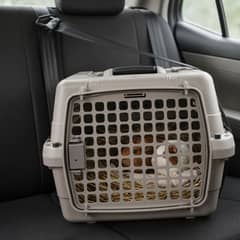
Is It Legal to Own a Degu? State-by-State Guide
On This Page▾

The degu is a Chilean rodent that looks, to anyone who has not kept one, like a slightly long-tailed guinea pig. Regulators do not see it that way. It is banned, permit-only, restricted or unsettled in eighteen jurisdictions, eight of them outright bans, which makes it the most heavily regulated of the small rodents ordinarily sold as pets, and the reason repeats almost word for word as you move from state to state.
Where Degus Stand
| Where | Status | What the rule says |
|---|---|---|
| 34 jurisdictions | Legal, no permit | No restriction found on private possession |
| California | Banned | § 671 restricts order Rodentia and names five exceptions; the degu is not one |
| Colorado | Banned | Regulated wildlife by absence from both lists, and there is no pet license to issue |
| Connecticut | Banned | Whole order Rodentia in Category Two, with nine species excepted |
| Georgia | Banned | License rule works by taxonomic order; DNR names the degu specifically |
| Alaska, New Mexico, Hawaii, DC | Banned | Absent from the cleared list in each, which is the operative rule |
| Florida, Idaho, Wyoming, Oklahoma, Arkansas, Nevada, New Jersey | Permit required | Falls into a residual or closed-list category rather than a named ban |
| Alabama, Pennsylvania | Unclear | A rule that could reach it, with no definition that settles whether it does |
| Utah | Restricted | Unlisted mammals are presumed prohibited pending a division assessment |
The Same Six Names, Over and Over
Read enough of these rules and one sentence starts to repeat. Alaska clears the guinea pig, the cavy, the chinchilla and two gerbils. Wyoming's domesticated list clears the chinchilla, guinea pig, gerbil, hamster, mouse and rat. Oklahoma clears chinchillas, gerbils, guinea pigs, hamsters, mice and rats. Connecticut puts the entire order Rodentia in Category Two and then excepts nine species, the guinea pig among them.
The degu is missing from all of them.
This is not a series of states deciding the degu is dangerous. It is a series of states writing down the rodents that were common in the pet trade when the list was drafted, and the degu arriving later. Arkansas is the clearest case: its cleared list names the chinchilla, guinea pig and hamsters individually, and the degu's absence from that company looks deliberate rather than accidental.
California makes the contrast sharpest. It restricts the whole order and names five exceptions, and the chinchilla, a close relative and also a South American caviomorph, is among them while the degu is not. The same reasoning bars the gerbil there, from the same subsection.
Banned, Permitted and Merely Unwritten
The eight bans do not all work the same way, and the difference matters if you are trying to get an answer from a state office.
Georgia and Connecticut ban by rule, working through taxonomic groups and excepting what they mean to allow. Georgia's DNR names the degu specifically. Those are decisions.
Colorado, Alaska, New Mexico, Hawaii and DC ban by absence. Colorado files the degu as regulated wildlife because it is on neither list, and the state has no pet license it could issue even if it wanted to. New Mexico's default clause designates an unlisted non-domesticated animal Group IV until the director says otherwise. Hawaii's Octodon entry does not exist, while the chinchilla and guinea pig are both conditionally approved, which is a clean illustration that Hawaii works species by species rather than by group.
The seven permit states are a softer version of the same thing. Florida's Class III is explicitly residual, covering all other wildlife not listed, and the degu lands there by not being anywhere else. New Jersey bars possession of any exotic or nongame species without a permit and then names the handful that may be kept without one.
Unclear Is Not the Same as Allowed
Two states resist a clean answer, and both are worth understanding rather than guessing at.
Alabama's rule turns on the phrase wild rodent, which the rule never defines. A pet degu is captive bred, but Octodon degus is a wild species with no domesticated lineage behind it, unlike the hamster or the guinea pig. Which of those facts the phrase is reaching for is not something the text settles.
Pennsylvania names the degu nowhere at all. What arguably catches it is a catch-all barring possession of wildlife captive bred in another state, read together with the definition of wildlife. That is a chain of inference rather than a rule about degus.
In both, the honest answer is that the state has not said. That is a reason to ask before buying, not a reason to assume.
Missing From the List of Six
In most of the eighteen jurisdictions that restrict the degu or leave it unsettled, the problem is an omission: a cleared-rodent list written before degus were common in the trade. That makes the state's cleared list the first thing to check, and an unclear answer a question to put to the wildlife agency in writing. Degus live in pairs or groups, so a restriction or a move reaches every animal at once, and the degu page of the exotic pet law map quotes the rule behind each jurisdiction.
Sources & Further Reading
Last reviewed 1 Nov 2026 · 7 sources
- California Code of Regulations Title 14 § 671, via the CDFW Restricted Species Laws and Regulations Manual (official PDF, downloads)
- Colorado Parks and Wildlife, Wildlife Are Not Pets (official page)
- Connecticut Agencies Regs. § 26-55-6, Importation and Possession of Wild Birds and Quadrupeds (official text) (PDF, downloads)
- Georgia Rules 391-4-8, Wild Animal Licenses and Permits (official text)
- Alaska Administrative Code 5 AAC 92.029, Permit for Possessing Live Game (official text)
- New Mexico Director's Species Importation List (official PDF)
- Florida Administrative Code Chapter 68A-6, Captive Wildlife (official index)
Frequently Asked Questions
Where are degus illegal?
Eight jurisdictions bar them outright: AK, CA, CO, CT, GA, HI, NM and DC. Seven more require a permit: AR, FL, ID, NJ, NV, OK and WY. AL and PA are unclear, UT presumes an unlisted mammal prohibited pending review, and the other 34 allow a degu with no permit.
Why is the degu restricted when chinchillas and guinea pigs are not?
Because most of these rules work from a list of cleared rodents rather than a list of banned ones. AK, AR, CT, OK and WY all clear the chinchilla or the guinea pig by name, and the degu is absent from every one of those lists. In Arkansas the omission looks deliberate, since its close relatives are all listed.
Is a captive-bred degu treated differently?
Rarely. The District of Columbia limits its rodent exception to domesticated species, and a degu is a wild species bred in captivity rather than a domesticated one, which puts it outside. Alabama's rule turns on the undefined phrase wild rodent and has the same problem: captive breeding does not create a domesticated lineage.
What does an unclear status mean here?
That the rule could reach the animal but never says so. AL and PA both fall here. Pennsylvania names the degu nowhere, and what arguably catches it is a catch-all about wildlife captive bred in another state. Treat unclear as a reason to ask the state directly, not as permission.
More on the Degu


Written by Michael Ryan
Mike keeps two rescued bearded dragons, Dex and Cera, and writes the care guides on BeastlyFacts from his own research and mistakes. He is not a veterinarian.
More about Michael Ryan →You May Also Like

Subscribe - it's free
An occasional email when something new is worth your time. No spam.
Deep Dive
Health and More