Cockatoo Enrichment: What the Research Actually Supports
On This Page▾

Feather damaging behavior is the problem most cockatoo enrichment advice is trying to prevent, and the honest starting point is that the research on it is thinner than the confident advice suggests. What the literature does support is covered below.
Van Zeeland and colleagues describe feather damaging behavior as "a multifactorial disease that may be influenced by a number of medical, genetic, neurobiologic and/or socio-environmental factors", and list environmental enrichment, foraging enrichment and reinforcement-based training together as behavioral interventions, without ranking them. They are also blunt that "research on FDB in parrots is currently in its infancy" and rests largely on clinical experience. Do all three, and treat any source that names a single winner with suspicion.
What the Research Says
The evidence base is thinner than it sounds. Van Zeeland and colleagues, in their review in Applied Animal Behaviour Science, say plainly that "research on FDB in parrots is currently in its infancy" and that "the available knowledge is primarily based on clinical experience," calling for more experimental work. A 2014 paper in the Journal of Animal and Veterinary Advances did run an assessment and treatment program in sulphur-crested cockatoos using haloperidol, socialization, training and feeding enrichment, checked against behavioral observation, feather condition scoring and corticosterone. Its full text is not openly available, and the claim that training outperformed the other treatments circulates widely without a readable source behind it, so this guide does not make it.
Foraging time is the structural gap. A wild parrot spends a large share of its waking day searching for, selecting and manipulating food, and a captive bird with a full bowl is finished in minutes. We are not attaching a specific number of hours to that, because the figures that circulate for it do not trace to a source worth citing. The shape of the gap is the point, and it is a big one.
Enrichment is where the experimental work is. Van Zeeland and colleagues single out the experimental studies of Meehan and co-workers as the model the field needs more of, and their own summary table lists environmental enrichment and foraging enrichment alongside positive and negative reinforcement among the behavioral interventions for feather damaging behavior. Meehan, Millam and Mench's work on young Amazon parrots is the same foundation the African grey foraging evidence rests on.
The uncomfortable part of this literature is not which intervention wins, it is that van Zeeland and colleagues trace feather damaging behavior partly to inadequate environmental stimuli, early weaning and social isolation. Two of those three are decided before the bird ever reaches its owner.
Training, as the Primary Item
Not a party trick. Short, daily, positive-reinforcement sessions with a clicker and target stick: target training, step-up, recall, station work, and simple problem solving.
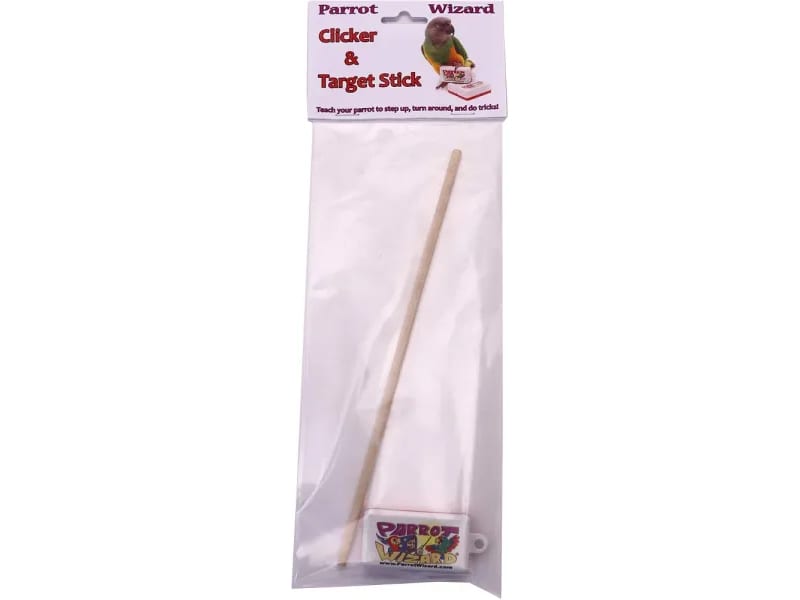
Short daily sessions are a realistic schedule, and reinforcement-based training sits alongside environmental and foraging enrichment in van Zeeland's list of behavioral interventions rather than above them. Keep sessions short and end while the bird is still interested.
The behaviors themselves are close to beside the point. What a session delivers is attention and mental work, which is the part a toy left in a cage cannot supply.
Foraging, to Fill the Gap a Bowl Leaves
The second item and the one that scales. Nothing in a bowl. Everything wrapped, hidden, buried, or requiring work.
Large foraging toys built for a beak this strong, plus a foraging box, plus improvised versions: food inside paper parcels, in cardboard, threaded on skewers, hidden across multiple sites.
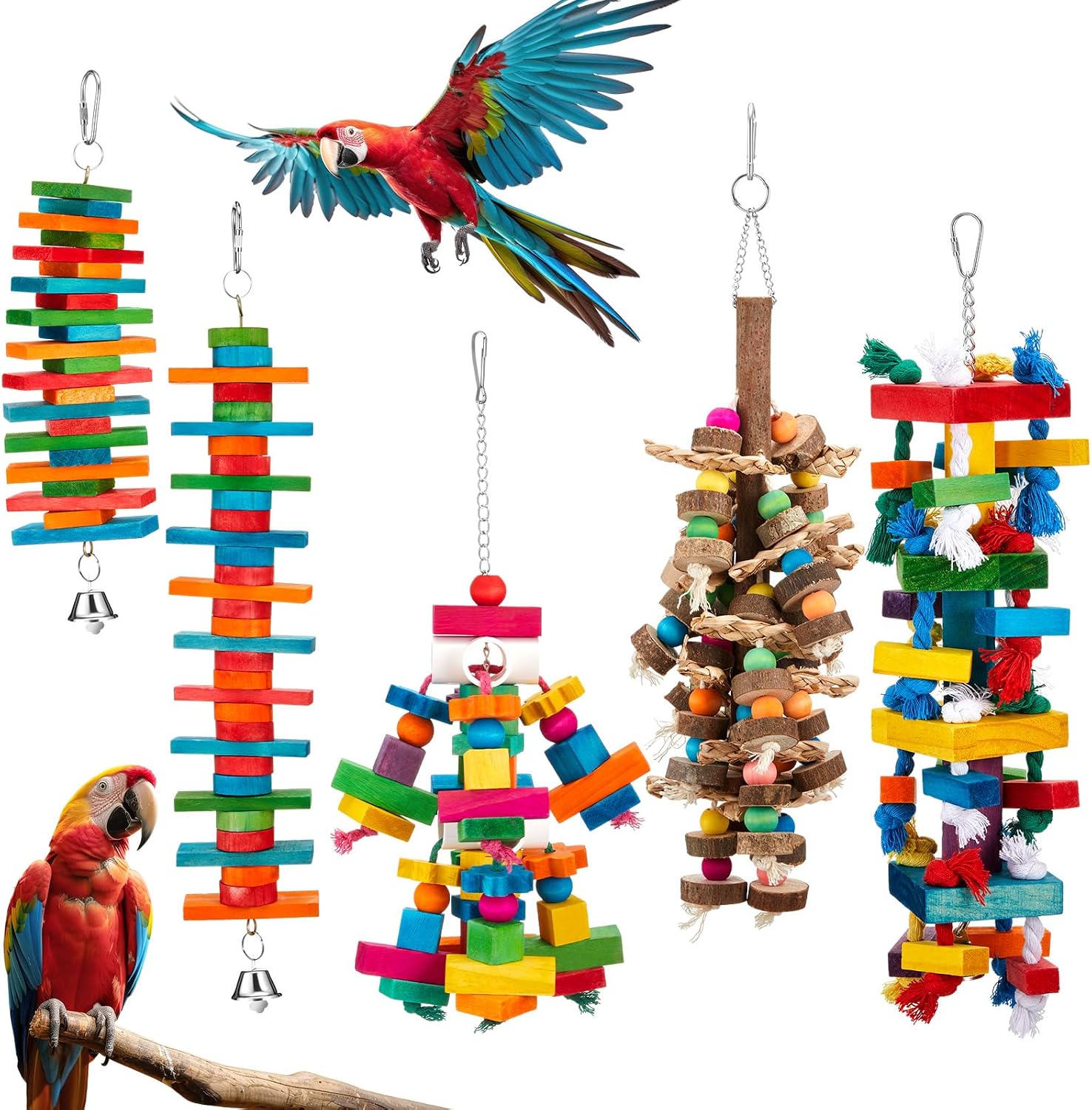
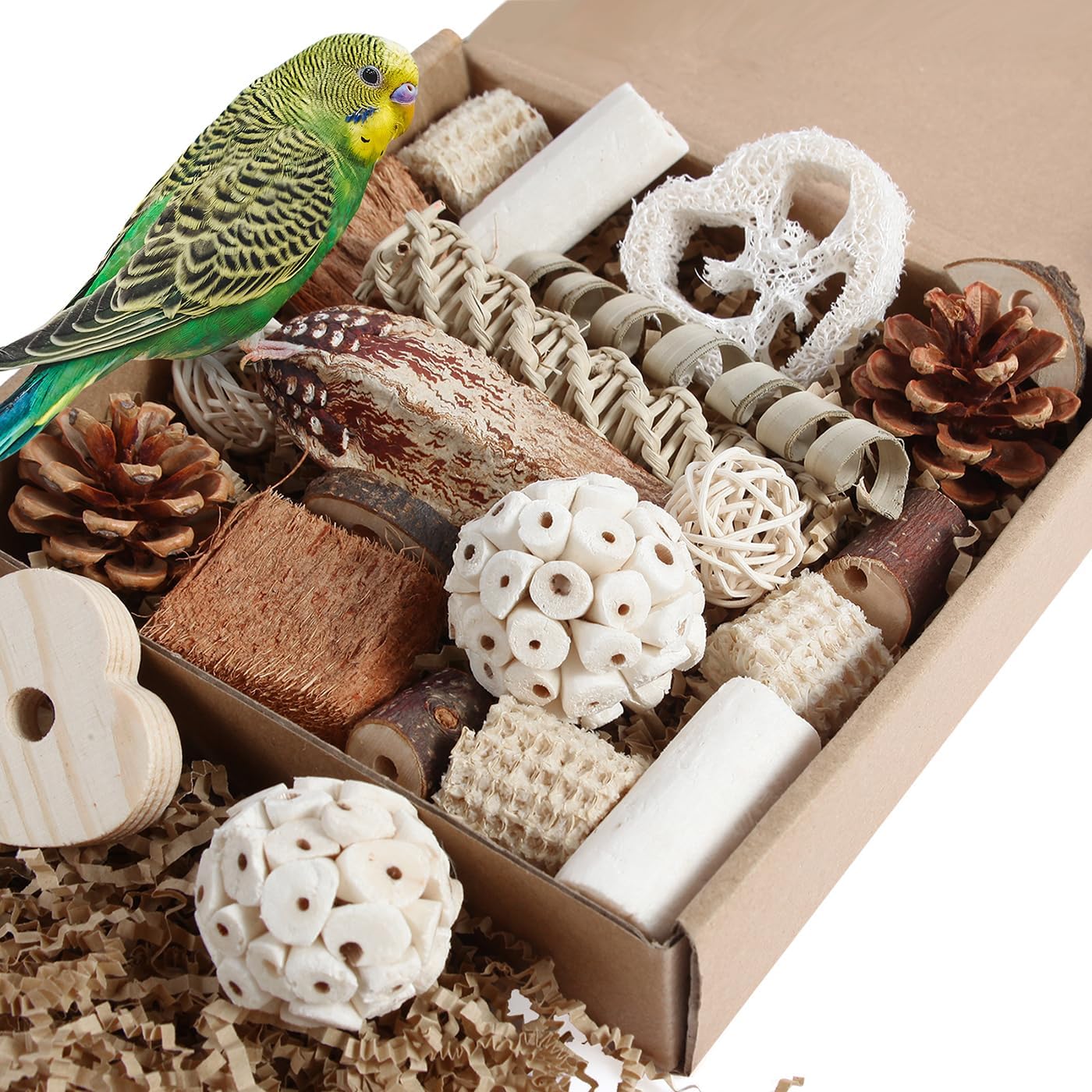
Rotate presentation constantly. A cockatoo solves a puzzle once and then it is a container.
Destruction, Deliberately Provided
Cockatoos destroy things. That is normal behavior, not damage, and a bird with nothing sanctioned to destroy will pick your furniture, the cage, or itself.
Untreated soft wood, cardboard, palm and yucca, paper, and cheap consumable toys in constant supply. Budget for it as an ongoing cost. A one-off purchase will not cover it, because the good outcome is that everything you provide gets wrecked.
Space, and Out-of-Cage Time
A large cage is a baseline. It is not the answer. A cockatoo needs hours out of it daily, on a stand, in a proofed room, with things to climb and chew.
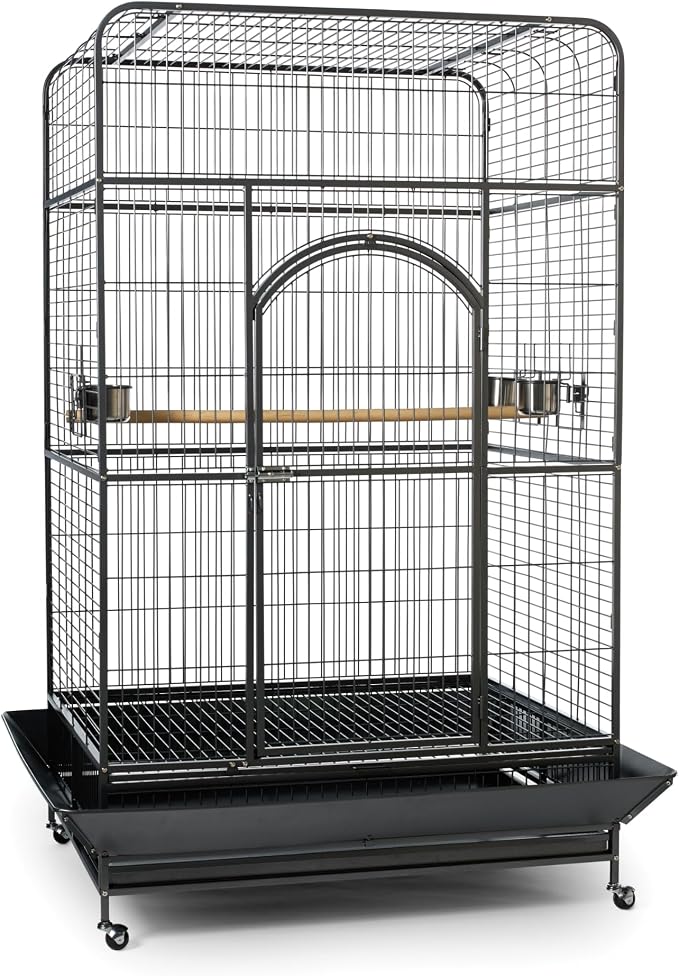
Flight matters where it is possible.
Company, and the Trap in It
Intensely social birds that in the wild are never alone. In a house, the flock is you, and that is where the difficulty starts: a cockatoo bonded hard to one person often screams when that person leaves the room and develops separation-related behavior that no toy fixes.
Build independence deliberately. Reward calm, self-directed activity, do not reinforce screaming with attention, and avoid making yourself the only source of stimulation. Screaming and feather plucking is the pattern this heads off, and it is far easier to prevent than to reverse.
Sleep and Noise
Ten to twelve hours of dark, quiet sleep. Sleep deprivation shows up as irritability, screaming and plucking, and it is one of the more common invisible causes of behavioral problems in pet parrots.
Accept the noise the rest of the time. Cockatoos are loud by design and quieting one is not an achievable enrichment goal.
Priority Order
- Daily short training sessions, one of the three supported behavioral interventions
- All food delivered through foraging, across multiple sites
- Constant destructible material
- Hours of out-of-cage time in a proofed space
- Ten to twelve hours of dark, quiet sleep
- Deliberate independence training
- Novel objects and rotation, ongoing and never occasional
What Not to Do
Do not expect toys alone to solve plucking; structured one-to-one time and environmental enrichment both belong in the plan. Do not feed from a bowl. Do not reinforce screaming with attention, since that is how a loud bird becomes an unmanageable one. Do not skimp on sleep. Do not buy a cockatoo without a plan for a bird that may live 60 years.
Sources & Further Reading
4 sources
- Assessment and treatment of feather plucking in sulphur-crested cockatoos (Cacatua galerita). Journal of Animal and Veterinary Advances (2014) 13(1):51-61. Full text is not openly available, this is the only locator we found
- Meehan CL, Millam JR and Mench JA (2003). Foraging opportunity and increased physical complexity both prevent and reduce psychogenic feather picking by young Amazon parrots. Applied Animal Behaviour Science
- van Zeeland YRA, Spruit BM, Rodenburg TB, Riedstra B, van Hierden YM, Buitenhuis B, Korte SM and Lumeij JT (2009). Feather damaging behaviour in parrots: a review with consideration of comparative aspects. Applied Animal Behaviour Science 121:75-95
- Feather picking in pet parrots: sensitive species, risk factor and ethological evidence. Italian Journal of Animal Science
❓ Frequently Asked Questions
Is there research on cockatoo feather plucking?
Partly, and less definitively than is often claimed. Van Zeeland and colleagues, reviewing the field in Applied Animal Behaviour Science, list environmental enrichment, foraging enrichment and positive and negative reinforcement together among the behavioral interventions for feather damaging behavior. They do not rank one above the others. A 2014 study on sulphur-crested cockatoos did compare medication, socialization, training and feeding enrichment, but its full text is not openly available, so this guide does not repeat the claim that training outperformed the rest.
Does training work better than other enrichment for plucking?
The evidence doesn't clearly say so. A widely repeated 2014 study reportedly found training more effective than medication, socialization, or feeding enrichment, but its full text isn't openly available to verify that claim, so treat it as unconfirmed rather than settled. What the accessible research agrees on is that environmental enrichment, foraging enrichment, and reinforcement-based training are all legitimate interventions, without one proven best.
How long do wild parrots spend feeding?
Long enough that a captive bird with a full bowl, finished in minutes, is left with a very large hole in the day. The specific hour figures that circulate for wild foraging time don't trace to a source worth citing, so this guide isn't putting a number on it, but the shape of the gap between a wild day and a bowl-fed one is real and well documented.
Does foraging enrichment improve feathers?
Increased foraging opportunity has repeatedly been found to improve feather condition in parrots. In young Amazon parrots, foraging opportunity and increased physical complexity both prevented and reduced psychogenic feather picking, which is one of the stronger results in bird welfare.
Are cockatoos harder than other parrots?
Generally yes. They are extremely social, extremely loud, extremely destructive and extremely long lived, and the combination produces more behavioral problems than in most species. Plucking, screaming and separation-related behavior are common enough to be characteristic.
How long do they live?
Decades, commonly into the 40s and 50s and sometimes beyond 60 for larger species. That is a bird that may outlive you, and it is a genuine reason to think about who takes it on afterwards.
📰 More on the Cockatoo
📘 Cockatoo care guide
🦜 How Much Does a Cockatoo Really Cost?
🦜 How to Handle a Cockatoo (And Why They're So Often Surrendered)
🦜 Common Cockatoo Health Issues and What Causes Them
🦜 Cockatoo Cage Setup: Size, Material, and Daily Enrichment That Actually Matters
🦜 Cockatoo Feeding: Schedule, Diet, and the Ratio Worth Memorizing
🛒 Recommended Gear
As an Amazon Associate, we earn from qualifying purchases through the links above - at no extra cost to you.
Written by Michael Ryan
Mike has looked after a neighbor’s cockatoo on and off for years.
Mike keeps two rescued bearded dragons, Dex and Cera, and writes the care guides on BeastlyFacts from his own research and mistakes. He is not a veterinarian.
More about Michael Ryan →Comments
No comments yet - be the first!