10 Surprising Cockatoo Facts

Cockatoos are famous for being loud, affectionate, and difficult to keep - but the biology behind that reputation is more interesting than the reputation itself.
For the full picture on their care and behavior, see our Cockatoo care guide and our deep-dive on cockatoo screaming and feather plucking.
-
They're nicknamed "water dogs." Cockatoos bond with individual keepers unusually strongly for a bird, recognizing specific people, begging at the glass, and behaving very differently toward a familiar person than a stranger.
-
One cockatoo demonstrated real rhythm to a beat. A sulphur-crested cockatoo named Snowball became a genuine subject of cognitive science research after demonstrating the ability to synchronize movement to a musical beat - a rare, scientifically documented example of rhythmic entrainment outside humans.
-
Their contact calls can carry over a mile through dense forest. In the wild, loud vocalizations serve a real function: keeping scattered flock members aware of each other's location across thick canopy, not just noise for its own sake. Placing a bird by ear before you ever see it is one of the harder skills to build in the field, and our beginner birdwatching guide covers how to start learning calls.
-
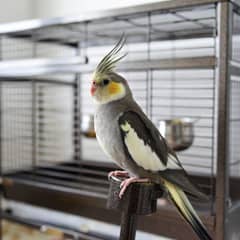
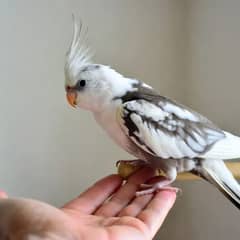
They have a retractable crest used for communication. The crest goes up when a cockatoo is excited, alarmed, or displaying, and lies flat during calm, relaxed moments - a visible mood indicator keepers learn to read quickly.
-
Their beaks are strong enough to bend metal. Cockatoos can crack extremely hard nuts in the wild, and in captivity that same bite force is capable of bending or working open standard cage latches, which is why dedicated cage locks are often necessary.
-
Some wild cockatoos use tools. Goffin's cockatoos have been observed making and using tools to extract seeds from fruit, a level of tool use that's rare among birds and was documented relatively recently in scientific literature. Crows are the other headline case of birds crafting their own tools, our crow intelligence deep dive covers just how far they take it.
-
They're found naturally only in Australia and nearby islands. Unlike many other parrot families with a broad tropical range, cockatoos (family Cacatuidae) are native only to Australia, New Guinea, and surrounding Indonesian and Pacific islands.
-
They can live 40 to 60 years or more. Cockatoos are among the longest-lived commonly kept birds, meaning many owners need a real plan for the bird's care well into the future.
-
Wild cockatoos typically mate for life. Paired cockatoos share nesting and parenting duties over years of partnership, a long-term bond that mirrors the intensity of the attachments they form with human keepers in captivity.
-
Jealousy toward other pets or family members is a documented behavior. Because cockatoos bond so intensely with a primary person, many show clear jealousy-like behavior when that person's attention goes to another pet or person.
Snowball the dancing cockatoo wasn't trained to dance for the study that made him famous - researchers first noticed the behavior from home videos, which is what prompted the formal cognitive research into rhythmic entrainment in the first place.
Snowball the dancing cockatoo is the one I bring up in conversation more than I probably should. What surprised you most? Let me know below.
📰 More on the Cockatoo
📘 Cockatoo care guide
🦜 How Much Does a Cockatoo Really Cost?
🦜 How to Handle a Cockatoo (And Why They're So Often Surrendered)
🦜 Common Cockatoo Health Issues and What Causes Them
🦜 Cockatoo Cage Setup: Size, Material, and Daily Enrichment That Actually Matters
🦜 Why Cockatoos Scream and Pluck: The Behavior Behind the Headlines
Written by Michael Ryan
Mike has looked after a neighbor’s cockatoo on and off for years.
Mike keeps two rescued bearded dragons, Dex and Cera, and writes the care guides on BeastlyFacts from his own research and mistakes. He is not a veterinarian.
More about Michael Ryan →Comments
No comments yet - be the first!