Budgie Feeding: The Squeak That Means Iodine
On This Page▾

Put a seed mix in front of a budgie and watch what it does. It works the bowl over for the millet, leaves most of the rest, and by the end of the week the dish looks full while the bird has eaten one thing. The tidy-looking, barely touched seed dish is the most misleading sight in the cage.
What the Diet Should Be
A formulated pellet does most of the work, at 75 to 80% of daily intake. Vegetables with a little fruit make up the remaining 20 to 25%.
Seed does not have to disappear entirely, but it stops being the diet. The trouble with a seed mix is not one missing nutrient. It runs high in fat and carbohydrate, low in protein, and short on vitamins and minerals generally, and then selective eating makes the real intake narrower than the label suggests.
How Much a Day
Keep pellets in the dish all day, and measure the seed. A budgie on pellets also gets a pinch of seed a day, up to 1 level teaspoon per bird. A budgie still on an all-seed diet, before it has moved to pellets, gets 1.5 to 2 level teaspoons a day in a shallow dish. With more than one bird in the cage, each gets its own dish, so the bird at the bottom of the pecking order still eats. At the end of the day, blow the husks off the dish. Whole seed still left means too much went in, and leftover seed is what lets a budgie eat its millet and skip everything else.
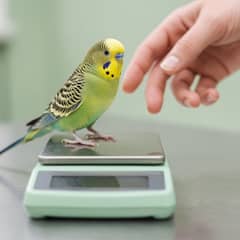
Pellets are not rationed by the spoon. The bird takes what it needs, and a gram scale shows what that is: weigh the food going in, weigh what is left 24 hours later, and average the difference over seven days. That average is the bird's real daily intake. While you move a seed bird onto pellets, keep offering that amount, split between seed and pellets. Weigh the bird every morning through any change of diet as well. A weight that keeps dropping over several mornings means the change is running too fast.
A day's food for one budgie, then:
- Pellets: in the dish all day, topped up each morning.
- Seed: a pinch, up to 1 level teaspoon, in its own shallow dish.
- Vegetables: a thumbnail-sized portion of dark leafy greens and red or yellow vegetables every day, out again after a couple of hours. Sprouted grass seed counts here too.
- Cuttlebone: in the cage all the time, for calcium and for the beak.
- Water: fresh every day, in a washed dish or bottle.
Iodine, and Why This Species in Particular
Many seeds are low in iodine. The thyroid needs iodine to make its hormone, so a bird eating mostly seed runs short of the raw material for it. Budgies are more prone to thyroid trouble than other pet birds, which makes this a budgie problem in particular.
What follows is goiter, a swollen thyroid. The glands sit right where the windpipe branches toward each lung, so the swelling presses on the airway and the voicebox.
That produces a sound: a click, a wheeze or a persistent squeak. It comes on both the in-breath and the out-breath, and that is the detail that matters. Take a budgie making that noise to an avian vet within about a day for a thyroid check. Other signs that can come with it are vomiting and a visibly engorged jugular vein, and in a bad case a bird will hold its head up to keep the airway open.
It builds slowly: the noise gets a little louder over months, and a keeper hearing it daily stops noticing. Iodine deficiency can also produce a degree of hypothyroidism on its own: weight gain, fat deposits, lethargy and poor feather quality.
A mild case corrects with an iodine supplement in the drinking water, given on the vet's direction until the bird is eating pellets; a severe one needs hospitalization and injections. Pellets prevent it, because formulated diets carry enough iodine. A bird kept on seed needs a vitamin and mineral supplement chosen by the vet instead.
Leave the diagnosis to the vet, because a thyroid tumor can look exactly like goiter. The difference is that goiter resolves quickly once iodine arrives and a tumor does not.
Skip the Grit
Grit is sold beside budgie seed, and it is one product to leave on the shelf.
The logic behind grit applies to species that swallow seed whole and need help grinding it. A budgie does not do that: it shells the seed and eats the kernel, leaving the husk behind. So the grit has no job to do, and a bird that eats it in quantity can end up with a gastrointestinal obstruction.
Fresh Food and Water
Vegetables are the part that gets treated as optional and should not be. They carry what the seed does not, and a budgie introduced to them early takes them far more readily than one meeting them at three years old.
Take fresh food out after a couple of hours, and sooner in a warm room, before it spoils.
Water needs to be there, clean, all the time. Wash the dishes and bottles daily with soap and water, and rinse them well. A dish that has held vegetables and droppings for a day is not somewhere you want a bird drinking.
What Goes in the Fresh Share
The 20 to 25% is mostly vegetables, and the safe list is long.
- Vegetables: asparagus, beet, broccoli, Brussels sprouts, cabbage, carrot, corn, cucumber, dandelion leaves, endive, kale, peppers, pumpkin, romaine, spinach, squash, sweet potato, tomato (the fruit only, never the leaves or stems) and zucchini.
- Fruit: apple and apricot with the seeds and pits out, banana, blueberry, cantaloupe, cherries with the pit out, dates, figs, grapes, kiwi, mango, melon, orange, papaya, pear, pineapple, raspberry and strawberry.
Fruit is the smaller part of the share, because it is sugar with vitamins attached.
The bright yellow, red and orange foods carry the most vitamin A: bell peppers, broccoli, carrots, sweet potatoes, squash, mango, papaya and cantaloupe. Iceberg lettuce is mostly water with little nutrition, and celery is mostly water too, so neither earns a regular place. Wash everything well and buy organic where you can, because birds are very sensitive to pesticides and sprays.
A budgie that refuses a new vegetable has not decided anything yet. Offer the same food every day for 3 to 5 days before giving up on it.
What Never Goes in the Dish
Avocado is the serious one: every part of the plant is toxic to birds, and a budgie that has eaten any goes to the vet at once, before signs start. Small birds like budgies are among the most sensitive, and breathing trouble usually starts about 12 hours after it is eaten. Onion and garlic can harm a bird's blood cells. Chocolate, caffeine and alcohol never go to a bird in any amount. Anything very salty, anything processed, and anything cooked with butter or oil is off the list too. The household hazards guide covers the rest of the house.
Millet spray is the treat that gets overfed, because every budgie prefers it to everything else. As a taming reward, give a few millet seeds at a time and count them as part of the day's seed. Hang a whole spray in the cage only once or twice a month. Skip honey sticks, which most avian vets advise against.
A bird eating 75 to 80% of its diet as pellets does not need vitamin supplements. Give supplements only on a vet's advice.
Moving a Seed Bird Onto Pellets
Do not do it by taking the seed away. A budgie that does not register pellets as food can starve with a full dish in front of it. The pellet conversion guide covers the stepped schedules, the daily weight check, and what to do when a bird stalls partway.
Two things help with this species: offer pellets first thing in the morning, when the bird is hungriest, and scatter them on a flat surface instead of a bowl, since foraging across a surface is closer to how a budgie eats. Expect it to take a while. Days, weeks or months are all normal.
Read the Dish, Then the Bird
A full-looking seed dish tells you little, so empty it daily and see what was really eaten. The scale and the breathing sound tell you the rest: a steady weight and a quiet breath mean the diet is doing its job.
Sources & Further Reading
Last reviewed 16 Sep 2026 · 6 sources
- VCA Animal Hospitals: the budgie feeding page and the fruits and vegetables in bird diets page
- Sakas PS, Niles Animal Hospital and Bird Medical Center: Iodine Deficiency and Goiter in Birds (PDF, downloads)
- Bird Vet Melbourne: Caring for Budgerigars
- New Plymouth Vet Group: Feeding a Budgerigar
- University of Florida Small Animal Hospital: How to Care for Your Pet Bird
- Lafeber: Foods Toxic to Pet Birds
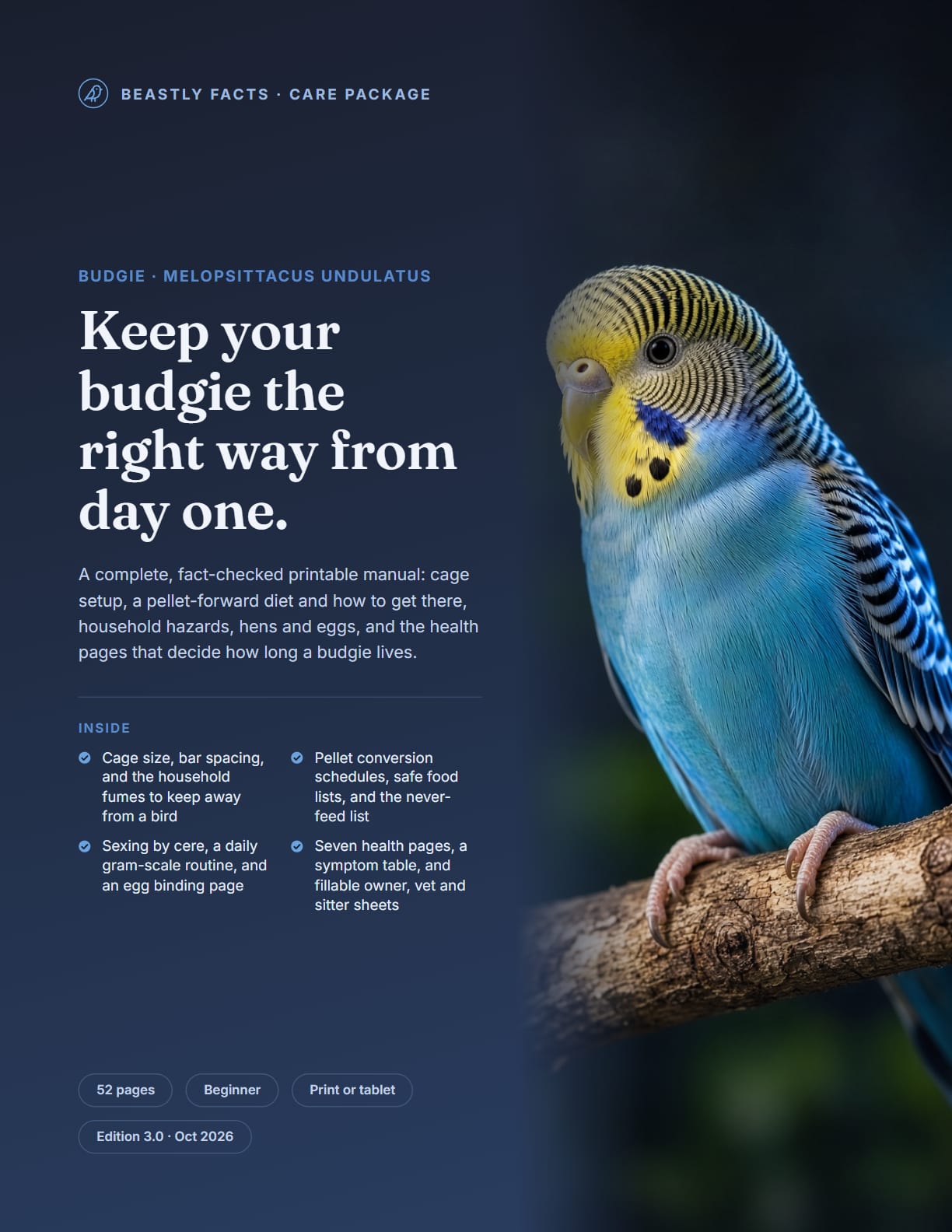
The Budgie Care Package puts the feeding section, an owner log and a pet-sitter sheet on paper, in a 52-page PDF you can keep by the cage, $8.99. Includes the Universal Pet Kit free: a routine chart and feeding log you can fill in.
Frequently Asked Questions
How much of a budgie's diet should be pellets?
Most of it, about 75 to 80%, with vegetables and a little fruit making up the rest. Seed becomes a small measured extra.
Why do budgies get goiter?
Seed is low in iodine, the thyroid needs it, and budgies are more prone to thyroid trouble than most pet birds. A pellet diet carries enough iodine to prevent it.
What does budgie goiter sound like?
A click or squeak that comes with every breath, in and out, and slowly gets louder over months. Book a vet visit for any budgie that makes it.
Do budgies need grit?
No. A budgie shells a seed and swallows only the kernel, so it has no use for grit in the way a bird that swallows seed whole does. Offered freely, grit can be eaten in quantity and cause a dangerous gastrointestinal obstruction.
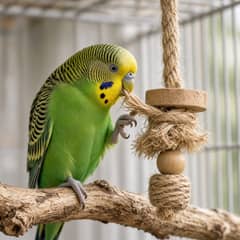
Recommended Gear
As an Amazon Associate I earn from qualifying purchases through the links above, at no extra cost to you.

Written by Michael Ryan
Mike has looked after neighbors’ budgies and lovebirds on and off for years.
Mike keeps two rescued bearded dragons, Dex and Cera, and writes the care guides on BeastlyFacts from his own research and mistakes. He is not a veterinarian.
More about Michael Ryan →You May Also Like
Subscribe - it's free
An occasional email when something new is worth your time. No spam.
Health and More