Budgie Enrichment: Foraging, Toys, and Cutting Cage Boredom
On This Page▾

Budgies get sold as a starter bird and treated accordingly, minimal setup, minimal thought. That gap is exactly where boredom-driven feather plucking and pacing come from.
A budgie with a cage and a food dish is missing the single behavior it's built to spend the most time on: foraging. Reintroducing that, even in a simple form, does more for a bored budgie than any single toy purchase.
Foraging First
Parrots, budgies included, are wired to spend a large share of their day searching for food rather than eating from an open dish. Replicate that by hiding part of the daily seed or pellet ration inside a puzzle feeder or a simple hanging forage toy. The bowl doesn't need to hold all of it. Wrapping a small amount of food in paper works as a free version of the same idea. Change the hiding method every few days so it stays a puzzle instead of a memorized shortcut.
Destructible and Chew Toys
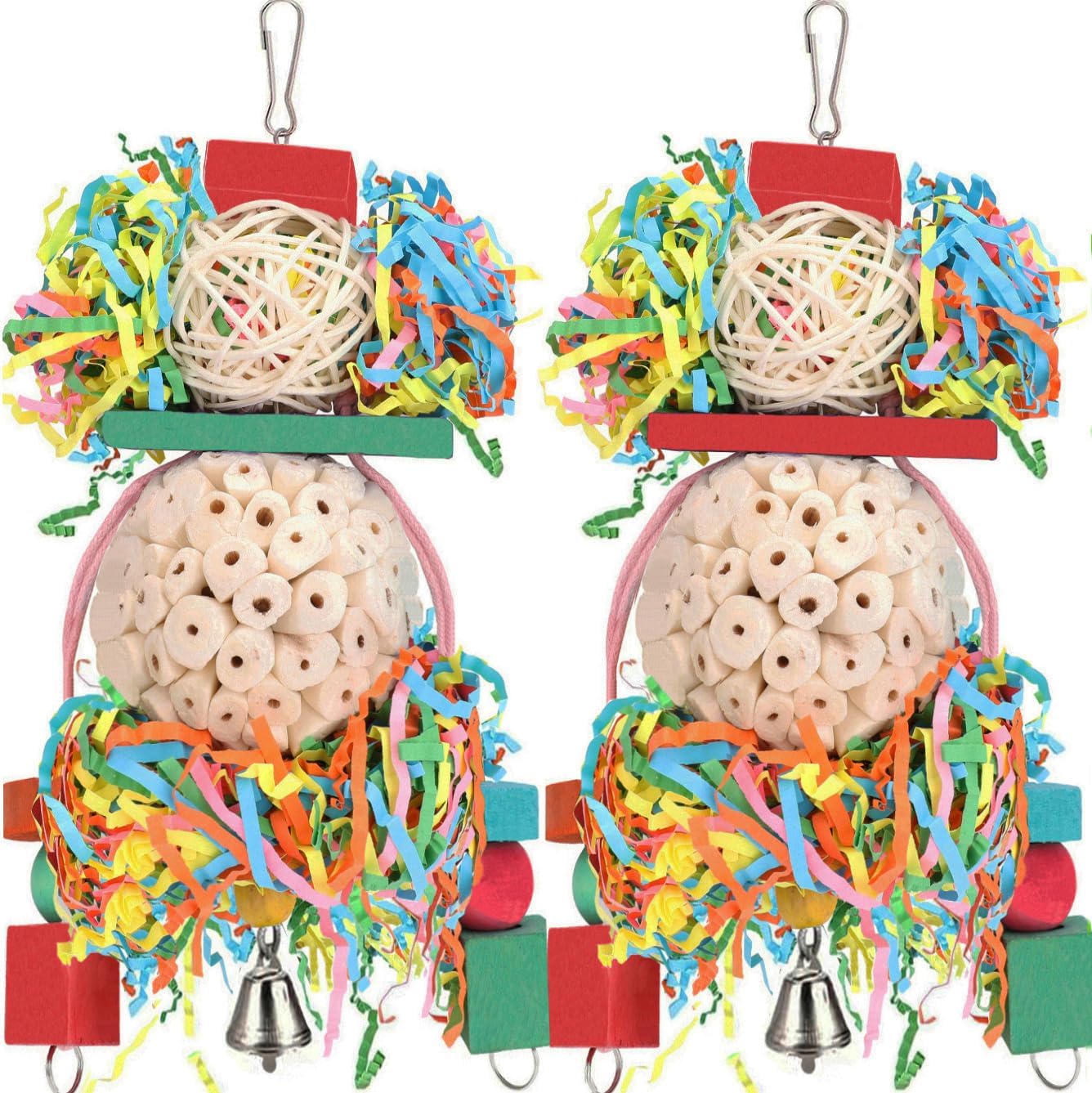
Budgies chew fast and often. Paper, cardboard, and soft wood pieces give that behavior somewhere to go besides cage bars or nearby household items. Because budgies go through destructible toys quickly, keeping a small rotating supply of cheap items on hand works better than relying on one expensive toy to last.
Research on captive parrots has linked consistent environmental enrichment to reduced feather-plucking behavior compared to birds kept without it, and foraging opportunities specifically are called out as one of the higher-impact changes available.
Exercise and Flight Space
Budgies are active fliers relative to their size, and cage placement matters as much as toys. A cage that allows short flights or hops between perches, plus supervised out-of-cage time in a bird-safe room (our household hazards guide covers what "bird-safe" actually rules out), covers physical enrichment that toys alone can't. Perches of varied width and texture support foot health at the same time.
Social Enrichment
A bonded pair reduces loneliness but doesn't replace foraging or destructible enrichment on its own, both birds still need it individually. For a single budgie, daily direct interaction, talking, hand-taming, and short training sessions substitute for some of what a companion bird would otherwise provide. Those training sessions run on the same positive reinforcement mechanics that work on any parrot.
Reading the Warning Signs
Feather plucking, repetitive pacing on the same perch, and screaming beyond normal contact calls are the clearest signs enrichment isn't covering current needs, and our feather loss guide covers how to tell plucking apart from a normal molt. These same signs can also flag illness, so treat them as a cue to check both enrichment and health rather than assuming one or the other.
Sources & Further Reading
❓ Frequently Asked Questions
Do budgies need enrichment, or just a cage and food?
They need enrichment. Budgies are small parrots, and in the wild they spend the bulk of their waking hours foraging, exploring, and interacting socially. A bare cage with a food dish removes almost all of that, and research links the resulting boredom to feather plucking and other stress behaviors.
What's the easiest first enrichment change to make?
Move part of the daily food into a puzzle feeder or hidden spot instead of an open dish. This single change reintroduces foraging, which is the behavior budgies are naturally wired to spend the most time on, without buying anything elaborate.
How do I know if my budgie is bored versus just resting?
Resting looks like a relaxed, fluffed bird sitting still with normal breathing. Boredom-driven behavior looks like repetitive pacing along the same stretch of perch, feather plucking, or screaming that's new or excessive. If those show up, both enrichment and a vet check are worth considering.
Can budgies destroy their toys too fast?
Yes, and that's normal, not a sign of a bad toy. Budgies are enthusiastic chewers. Rotating in inexpensive destructible items like paper and cardboard keeps that outlet available without needing to replace an expensive toy constantly.
Is a single budgie okay without a cage mate?
Not especially well on its own. A solo budgie needs the owner to supply substantial daily interaction, out-of-cage time, talking, and hands-on engagement, to make up for the flock companion it's missing. A cage mate helps with loneliness specifically but doesn't substitute for foraging or destructible enrichment either way.
🛒 Recommended Gear
As an Amazon Associate, we earn from qualifying purchases through the links above - at no extra cost to you.
Written by Michael Ryan
Mike has looked after neighbors’ budgies and lovebirds on and off for years.
Mike keeps two rescued bearded dragons, Dex and Cera, and writes the care guides on BeastlyFacts from his own research and mistakes. He is not a veterinarian.
More about Michael Ryan →Comments
No comments yet - be the first!