Boa Enrichment: A Big Snake in a Box Is Still a Snake in a Box
On This Page▾

The rack argument is usually had about ball pythons. It applies harder to boas, who get bigger, climb more, and have no research of their own.
Nothing has been published on boa enrichment. The closest evidence is the ball python housing study, which compared 35 snakes in racks against furnished terrariums and concluded racks are not a welfare alternative. Boas are larger and more arboreal, which makes that conclusion harder to argue with here, not easier.
What the Ball Python Study Found
Nothing on Boa constrictor. The nearest evidence, covered in full in our Ball Python enrichment guide, compared 35 ball pythons in a conventional rack system against furnished terrariums containing substrate, hiding places, climbing opportunities, a water basin large enough for bathing, elevated basking spots and living plants. The authors concluded that from a welfare perspective, rack systems are not an alternative to furnished terrariums.
A 2025 study on eastern indigo snakes looked at the effects of light and novel enrichment on behavior and physiology, and Hutchings reviewed the spatial needs of captive snakes generally.
The furnished enclosures in the ball python study deliberately included climbing structure, for a species usually described as terrestrial. Boas climb considerably more than ball pythons do, particularly as juveniles, so the part of that study that transfers best is the part it was least designed to test.
Climbing, and Why Boas Need It
Wild boas use trees regularly and juveniles are notably arboreal. Most commercial boa setups give them a floor and nothing else.
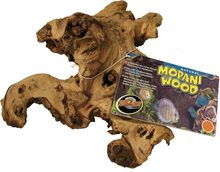
A thick, firmly braced horizontal branch that will take the animal's full weight is the single most under-provided item for this species. Boas are heavy and not agile, so stability is the requirement: something they can brace coils against that will not shift or roll.
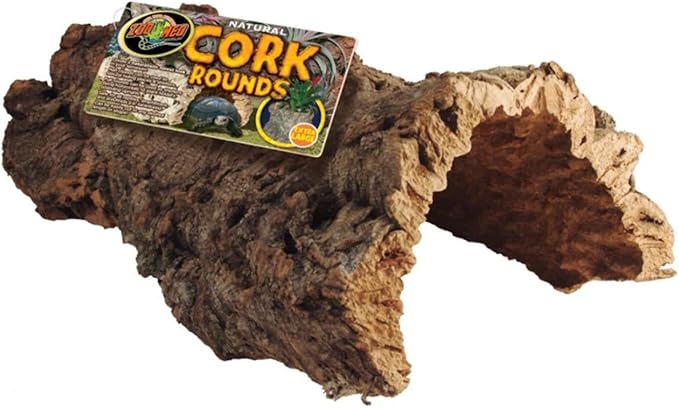
Stacked large cork rounds do the same job and double as cover.
Enclosure Size, Which Gets Worse With Age
The uncomfortable part of keeping this species. A boa that outgrows its enclosure usually gets moved into a tub, because tubs are what exist at that size and are what fit in a room; our tank setup guide has the real adult dimensions to build for instead.
That is the scenario the housing research argues against, and it gets stronger as the snake gets bigger. If you cannot house an adult properly, that is a decision to make before buying rather than after.
Cover Across the Floor
Two hides is a starting point. Cork, leaf litter and planting that break the whole floor into cover mean the snake can be anywhere without being exposed, rather than choosing between two boxes.
Water Big Enough to Get Into
The furnished condition in the ball python study included a bathing basin, and for a snake this size that means a serious container. A dish the animal can fully enter supports shedding and hydration and is entirely self-directed.
Priority Order
- An enclosure sized for the adult, decided before purchase
- Heavy stable climbing structure
- Cover across the entire floor
- A bathing-sized water container
- Scent novelty and varied feeding presentation
- Rearrangement, last
What Not to Do
Do not plan to move an adult boa into a tub, since that is the housing the only comparable study argues against. Do not provide climbing structure that shifts under weight, which teaches the snake not to use it. Do not treat feeding response as a reason to keep the enclosure sparse. Do not present ball python findings as boa findings.
Adult dimensions are the decision everything above turns on. A boa housed for the animal it will become has most of its enrichment already.
Sources & Further Reading
4 sources
- Borrowed evidence. No enrichment study exists for this species. The housing findings below are from ball pythons and are covered in full in our Ball Python enrichment guide.
- Kaufmann et al. Animal-appropriate housing of ball pythons, behavior-based evaluation of two types of housing systems. PLOS ONE
- The effects of light and novel enrichment on eastern indigo snake behavior and physiology. Applied Animal Behaviour Science
- Hutchings (2025). Recent scientific insight into the spatial needs of captive snakes
- Burghardt GM (2013). Environmental enrichment and cognitive complexity in reptiles and amphibians
❓ Frequently Asked Questions
Is there research on boa enrichment?
No. Nothing has been published on Boa constrictor. The nearest evidence is the ball python housing study, which compared 35 snakes in a rack system against furnished terrariums with substrate, hides, climbing structure, a bathing basin, elevated spots and live plants, and concluded racks are not a welfare alternative.
How well does that borrow to a boa?
Partly. Both are large-bodied ambush constrictors and the rack question applies to both, more urgently to boas given their size. But ball pythons are largely terrestrial and boas are considerably more arboreal, especially as juveniles, so the climbing component carries more weight here than the study itself measured.
Do boa constrictors climb?
Yes, and juveniles particularly. Wild boas use trees regularly, and captive animals will use sturdy elevated structure when it is stable enough to take their weight. Most commercial setups give them nothing to climb at all.
Is a rack acceptable for a boa?
The only study on a comparable species concluded rack systems are not a welfare-equivalent alternative to a furnished terrarium. For an animal that reaches this size and climbs, the argument is harder to make than it is for a ball python, not easier.
How big does the water dish need to be?
Large enough for the snake to get fully into. The furnished enclosures in the ball python study included a basin for bathing rather than a drinking cup, and soaking supports shedding and hydration in a snake this size.
What is the biggest enrichment mistake with boas?
Treating adult size as a reason to reduce the enclosure to something manageable. A large snake in a plastic tub is the scenario the housing research argues against, and it becomes more of a problem as the animal grows rather than less.
📰 More on the Boa Constrictor
📘 Boa Constrictor care guide
🐍 How Much Does a Boa Constrictor Really Cost?
🐍 How to Handle a Boa Constrictor Safely: Size Changes Everything
🐍 Common Boa Constrictor Health Issues
🐍 Boa Constrictor Enclosure Setup: Sizing for the Adult It Will Become
🐍 Boa Constrictor Feeding: Schedule, Prey Size, and Why Adults Eat So Rarely
🛒 Recommended Gear
As an Amazon Associate, we earn from qualifying purchases through the links above - at no extra cost to you.
Written by Michael Ryan
Mike keeps two rescued bearded dragons, Dex and Cera, and writes the care guides on BeastlyFacts from his own research and mistakes. He is not a veterinarian.
More about Michael Ryan →Comments
No comments yet - be the first!