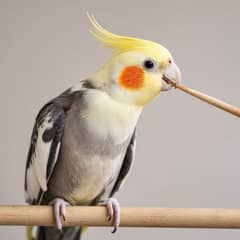
Quaker Parakeet Feeding: Seventy Percent Pellets, a Small Handful a Day, and the Seed Diet Behind the Fatty Liver
On This Page▾

A Quaker parakeet is a smart, greedy, selective eater that will build its own diet out of the fattiest items in any mix it is offered, and the disease the species is best known for follows directly from that. The diet below prevents it.
How Much, and What Share of It
| Component | Share of the diet | Notes |
|---|---|---|
| Formulated pellets | At least 70 percent | The only complete food in the cage |
| Vegetables, greens and fruit | The rest, up to 30 percent | Fruit the smallest share; pale watery vegetables left out |
| Seed | A very small part, or none | A treat, never the dish |
| Lean cooked meat, fish, egg, a little cheese | Occasionally | Table food in small amounts |
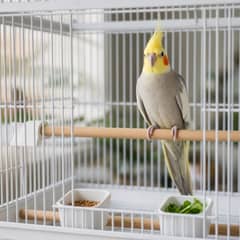
The portion is a small handful a day, which for a bird this size is the equivalent of a dinner-plate serving for a person. Put it out fresh each morning. Pull the produce after a couple of hours, or sooner in a warm room. Keep fresh water available at all times, in a dish washed daily with soap and water.
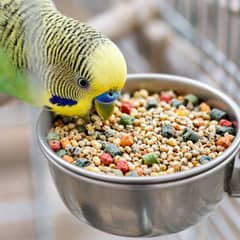
A Quaker on a seed mix is not eating the mix. It picks out the sunflower seeds and peanuts, both particularly high in fat, and leaves the rest. A diet of mainly seeds and peanuts is the one most associated with fatty liver disease in pet birds. Pellets are the floor because a pellet cannot be sorted.
What Quaker Parakeets Eat
Pellets, as the base. A nutritionally balanced pelleted diet is at least 70 percent of what the bird eats. A bird on that much pellet generally needs no vitamin supplement. The one exception is calcium for a laying hen, which the cuttlebone in the cage supplies. The bird pellet conversion guide covers moving a seed-raised bird over without starving it, which for a stubborn Quaker can take weeks.
Produce, the rest. Dark leafy greens, broccoli, carrot, squash, peppers and sweet potato, washed and chopped, with fruit kept to the smallest share for its sugar and water. Pale, watery vegetables such as iceberg lettuce and celery fill the crop and carry nothing.
Seed, barely. Commercial seed mixes are high in fat and short on nutrients, and a Quaker selects the worst of them. A pinch as a training reward is the whole role of seed in this diet.
Table food, a little. A small amount of lean cooked meat, fish, cooked egg or a little cheese is fine now and then. Birds cannot digest lactose well, so keep dairy to a taste. Cookies, crackers, bread, chips and pasta are not: frequent processed food leads to the same fatty liver a seed diet does.
Foods to Avoid
Never offer avocado or onion, which are toxic, or chocolate, caffeine in any form or alcohol. Leave out processed and salted food too. Skip grit, which a bird that shells its seed does not need and a Quaker will overeat. And do not serve the seed mix as a meal: it is not a poison, but it is the cause of the disease below.
Switching a Seed Bird to Pellets
A seed-raised Quaker may not even recognize a pellet as food at first, so make the change slowly.
- Mix pellets into the seed, so the bird gets used to their look and smell while it picks out the seed it knows.
- Offer pellets first thing in the morning, before anything else, when the bird is hungriest.
- Eat beside it. A Quaker is social and likes to eat with its people, so sit with the pellet dish and let it see you at the bowl.
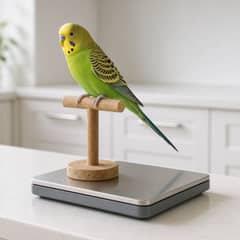
- Raise the share of pellets bit by bit, and weigh the bird daily until it eats them well.
- Call the avian vet if it eats less or loses weight.
Picky Eaters
A Quaker that turns down a new food one day may take it another day, so keep offering it. Put out small pieces of several vegetables each morning rather than a pile of one, and cut back a favorite the bird fills up on until it eats the rest.
When the Needs Change
A Quaker that is very young, stressed, injured, laying eggs or raising chicks can need a different pellet formula or extra calcium for a while. Ask the avian vet when any of those apply, and give a supplement only on the vet's advice.
Checking That It Eats Enough
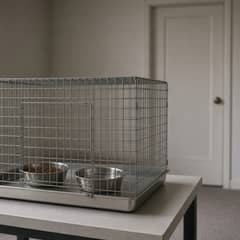
Watch what each bird eats every day, above all when two or more share a cage, since one can eat for both. Weigh the bird at the same time each morning on a gram scale during a diet change and once a week after that, and write the number down. Note what is left in the bowls each evening too, so a drop in eating shows up the first day.
The Disease That Comes From the Dish
Fatty liver disease, hepatic lipidosis, is the Quaker's signature illness, associated with a high-fat diet and a seed-based one above all. It builds quietly over years and can end in cirrhosis or fibrosis of the liver. The signs a keeper sees are wet, mushy droppings, urates (the white part of a dropping) stained yellow or green, more thirst, regurgitation, labored breathing, or a swollen, puffy abdomen. The bird droppings guide covers reading the urate color, which is often the first sign. The prevention is the table above, and the earlier a Quaker moves onto pellets the more of its 20 to 30 years it keeps.
Why Quaker Parakeets Stop Eating
It does not recognize the food. A seed-raised bird given a bowl of pellets may go hungry beside it, which is why a conversion is gradual and checked on a gram scale. A Quaker can starve in front of a full dish.
It is sick. A bird that sits fluffed, sleeps by day, or has the dropping changes above has stopped eating because it is ill. The Quaker health guide sorts those signs by how fast the bird needs a vet. Birds hide illness until it is advanced.
It is stressed. A new cage, a new person, a lost mate, or a nest it is being kept from building. A Quaker that is upset stops eating and starts plucking, often together.
It is hormonal. A hen coming into lay eats differently, and needs the calcium the pellet does not fully cover.
It is hot. A bird panting in a warm room stops eating until the room cools.
When to Worry
A Quaker weighs around a hundred grams and burns its reserve fast. Take a bird that has not eaten since morning to an avian vet the same day. Do not watch it overnight. The bird emergency plan guide covers keeping a small parrot warm and fed on the way.
The Diet the Bird Will Argue With
Seventy percent pellets, a chopped vegetable, a pinch of seed as a reward, and a small handful in total. It is the diet that prevents fatty liver disease, and the bird will resist every part of it at first.
Sources & Further Reading
Last reviewed 16 Sep 2026 · 2 sources
- VCA Animal Hospitals: Quaker or Monk Parakeets, Feeding; Liver Disorders in Birds
- Lafeber Pet Birds: Quaker Parakeet
A routine chart and equipment log you can fill in for your own setup. The Universal Pet Kit has it, among 19 forms for any pet that you can type into or print.
Frequently Asked Questions
How much should a Quaker parakeet eat a day?
A small handful in total. Pellets are at least 70 percent of it, fresh vegetables, greens and fruit the rest, up to 30 percent, and seed a very small part or none. Put it out fresh each morning and pull the produce within a couple of hours.
Why is seed so bad for a Quaker?
Because a Quaker picks the sunflower seeds and peanuts out of a mix and leaves the rest, and both are particularly high in fat. A seed and peanut diet is the one most associated with fatty liver disease in pet birds, and fatty liver is the Quaker's signature illness. Seed is a treat, not a meal.
What can a Quaker not eat?
Avocado and onion, which are toxic. Chocolate, caffeine and alcohol. Processed food such as cookies, crackers, bread and chips, which lead to the same fatty liver a seed diet does. Pale, watery vegetables like iceberg lettuce and celery are not toxic, just empty.
My Quaker will not touch pellets. What now?
Convert gradually, mixing pellets into the food it already eats and shifting the ratio over days to weeks, and never by pulling the seed. A bird that does not recognize pellets as food will go hungry beside a full dish, so weigh it through the change. It may take days, weeks or months, and a stalled bird holds at the last ratio it accepted.
More on the Quaker Parakeet
Recommended Gear
As an Amazon Associate I earn from qualifying purchases through the links above, at no extra cost to you.

Written by Michael Ryan
Mike keeps two rescued bearded dragons, Dex and Cera, and writes the care guides on BeastlyFacts from his own research and mistakes. He is not a veterinarian.
More about Michael Ryan →You May Also Like
Subscribe - it's free
An occasional email when something new is worth your time. No spam.
Health and More