Molly
Poecilia sphenops / P. latipinna
On This Page▾
🌍 Overview
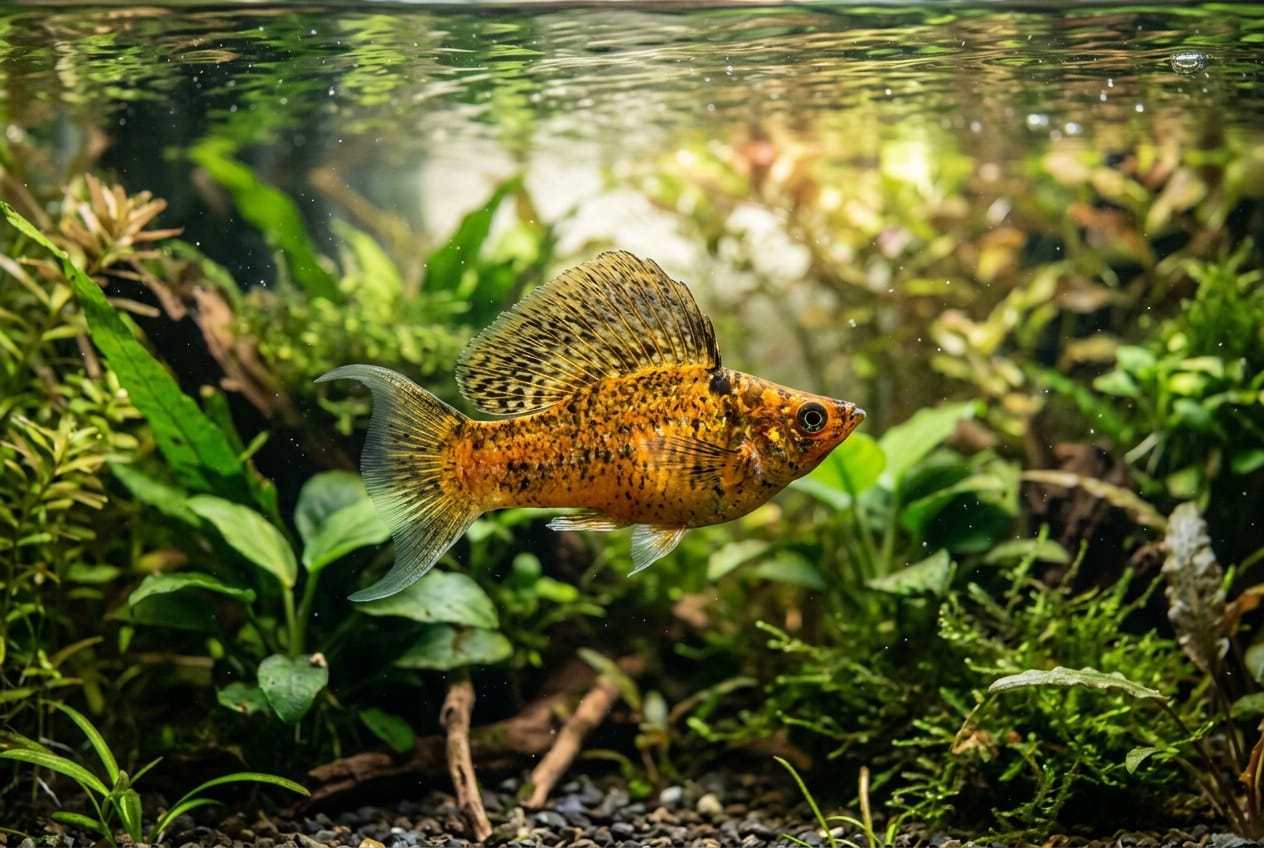
Mollies are prolific livebearing fish native to fresh and brackish waters of the southern United States, Mexico, and Central America, closely related to guppies and platies. Unlike most freshwater aquarium fish, mollies naturally inhabit coastal and brackish waters and can tolerate salt concentrations well past normal seawater, a genuine point of difference from their livebearer relatives, though whether a healthy freshwater tank benefits from added aquarium salt is a genuinely disputed question among experienced keepers rather than settled fact. Selective breeding has produced many color and finnage varieties, including the tall-finned sailfin molly.
📋 Quick Facts
Native Range
Southern United States, Mexico, and Central America
Natural Habitat
Fresh, brackish, and coastal waters
Adult Size
3-4.5 inches (7.5-11 cm); sailfin varieties up to 6 inches
Wild Diet
Algae, plant matter, and small invertebrates
Wild Lifespan
3-5 years
Conservation Status
Least Concern (IUCN, for wild Poecilia sphenops)
📜 History
The common name is a fossil of an obsolete genus. Charles Alexandre Lesueur coined Mollienesia in 1821 in honor of Nicholas Francois, Count Mollien, one of Napoleon's finance ministers, and although a 1963 revision folded the genus into Poecilia, the shortened form stayed attached to the fish. Mollies entered the aquarium hobby around 1905, and the black molly has a contested origin: one account credits a single breeder with seven years of selective work, while another holds that several American breeders arrived at it independently during the 1920s and 1930s, among them Bill Schomberg of Crescent Fish Farm in New Orleans. Today's fancy mollies draw on at least four wild species, which is why their pedigree resists tidy description.
⚖️ Compare
Molly
Human
Adult Size
3-4.5 inches (7.5-11 cm); sailfin varieties up to 6 inches
5-6 feet (150-185 cm); ~135-200 lbs
Wild Lifespan
3-5 years
~73 years (global average)
Wild Diet
Algae, plant matter, and small invertebrates
Omnivorous - eats just about anything
Native Range
Southern United States, Mexico, and Central America
Global - originated in Africa roughly 300,000 years ago
Natural Habitat
Fresh, brackish, and coastal waters
Everywhere from arctic tundra to tropical megacities
Conservation Status
Least Concern (IUCN, for wild Poecilia sphenops)
Least Concern (8+ billion and counting)
🧠 Test Yourself
What's the Molly's native range?
🤩 Fun Facts
🐠 At Home in Two Kinds of Water
Mollies are "euryhaline," meaning they can tolerate an unusually wide range of salinities for an aquarium fish. Wild populations turn up in everything from coastal saltwater lagoons to freshwater roadside ditches, sometimes just a short distance apart.
📖 Care Guide
Molly Care Guide
The easygoing livebearer that shrugs at water most fish would sulk in!
Subscribe - it's free
New animal facts and care guides straight to your inbox. No spam. 🐾
📰 Deep Dive
🐠 How Much Does Molly Fish Ownership Really Cost?
🐠 Mollies Aren't Handled Either, But They Do Need a Breeding Plan
🐠 Common Molly Health Issues (Starting With the 'Shimmy')
🐠 Molly Tank Setup: A Real 20 Gallons, Sturdy Filtration, and the Salt Question
🐠 Molly Feeding: Schedule, Diet, and Why Vegetables Matter
🐠 Molly Enrichment: The Biggest Livebearer Needs Room to Graze
🩺 Health and More
🐠 Aquarium Power Outages, Transport, and Moving Your Fish: The Complete Plan
🦠 How to Cycle a Fish Tank, Start to Finish: Fishless and Fish-In
🧽 Aquarium Filtration: How It Actually Works and How to Maintain It
🪣 Aquarium Water Changes: How Much, How Often, and What the Number Is For
🐟 Aquarium Stocking and Tankmates: How Many Fish, and Which Ones Go Together
🧪 Freshwater pH, GH, and KH: Why Chasing a Number Backfires
🤓 Did You Know?
Unlike most freshwater aquarium fish, mollies are naturally a brackish-water species that can tightly regulate their salt and water balance well past normal seawater concentration. Whether a healthy freshwater tank needs aquarium salt added is genuinely disputed among experienced keepers though, some use it routinely, others argue consistent water changes do the same job without salt's downsides for live plants and snails.
Explore More