Mollies Aren't Handled Either, But They Do Need a Breeding Plan
On This Page▾

Mollies are an observation and enjoyment pet, not a hands-on one, the same as most other community aquarium fish. What actually matters with this species isn't handling technique, it's understanding how readily it breeds, since that's what determines whether your tank stays the size you set it up to be.
What Mollies Are Like
Peaceful, active, and hardy, mollies do best in a group instead of alone, and they're widely considered one of the more forgiving species for a genuine beginner. Most common short-fin varieties run roughly 3 to 4.5 inches as adults, with sailfin varieties, distinguished by their males' tall, sail-like dorsal fin, reaching 4 to 6 inches.
Sexing: Gonopodium vs. Gravid Spot
Telling males from females is straightforward. Males carry a modified anal fin called a gonopodium, a slender, rod-like structure used to fertilize females internally, in place of the fuller fan-shaped anal fin females have. Females also tend to develop a dark "gravid spot" near the vent as they near giving birth, though not every individual female shows one clearly enough to rely on.
The Behavior That Matters Most: How Mollies Breed
Mollies are livebearers, females give birth to free-swimming fry directly instead of laying eggs that need separate incubation. That alone sets them apart from most other commonly kept aquarium fish, and it comes with a real consequence worth understanding before you buy.
A single mating can be enough to keep a female molly producing fry for a long stretch afterward, since females can store sperm internally and don't need a male present again for each new brood. Gestation runs roughly 4 to 6 weeks, and a typical brood lands somewhere between 20 and 60 fry, though the documented range runs as wide as 10 to over 100 depending on the female's age and condition. Put a male and female together with no plan, and the tank doesn't stay the size you started with.
Molly parents don't provide any care after birth, and adults will readily eat their own fry if given the chance. If you want fry to survive, dense live planting or a dedicated breeding tank gives them somewhere to hide until they're large enough to hold their own.
Managing Population, Practically
Keep males and females in separate tanks if you want to avoid breeding entirely. Keep a males-only group for a colorful, breeding-free display instead, bearing in mind that male mollies squabble among themselves more than male guppies do, so an all-male group needs space and numbers rather than a trio. Let it happen and plan for it, rehoming or selling fry as they mature, or accepting that natural predation will control numbers if you're not removing fry deliberately. If you do want controlled breeding, a ratio of roughly one male to two or three females reduces how much the females get chased and stressed by repeated mating attempts.
First-Time Keeper Mistakes
- Buying a mixed-sex group with no population plan at all, the single most common mistake with this species
- Undersizing the tank. Mollies need a genuine 20-gallon minimum for a small group, not the smaller footprint some other community fish get by on, and a growing colony needs more room fast
- Not cycling the tank before adding fish, which leads to ammonia stress right from the start. The aquarium cycling guide gives the three readings that tell you the cycle actually finished
A lot of the water-quality-driven stress mollies show, including the species' well-known "shimmy," traces back to that last mistake more than anything else.
How Molly Breeding Compares to Guppy Breeding
Mollies and guppies are close relatives in the same livebearer family, Poeciliidae, and their breeding biology looks nearly identical on paper: both store sperm internally, both produce repeat broods from a single mating, and both can overwhelm an unprepared tank within a couple of months. Our Guppy handling guide covers the same dynamics in more detail for that species.
The practical difference is scale. Mollies run larger on average, need a bigger tank to start with, and can produce noticeably larger broods, so an unmanaged mixed-sex molly tank tends to outgrow itself faster and more dramatically than a guppy tank does. If you're deciding between the two species, that's a genuinely useful thing to weigh, and our Guppy cost guide covers what the guppy side of that comparison costs.
The Molly encyclopedia profile covers the species itself.
Sources & Further Reading
❓ Frequently Asked Questions
Do you handle mollies the way you'd handle a hamster or a bird?
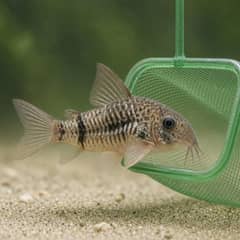
No. Mollies are an observation and enjoyment pet, not a hands-on one. If you need to move one, guide it with a net rather than touching it directly. Physical contact isn't part of normal molly care.
How can I tell if my molly is male or female?
Males have a modified, pointed anal fin called a gonopodium, used to fertilize females internally. Females have a fuller, rounder body and often develop a dark "gravid spot" near the vent, especially visible when pregnant. It's one of the more straightforward sexing calls in the livebearer family.
How do mollies breed?
Mollies are livebearers, females give birth to free-swimming fry directly rather than laying eggs. A single mating can produce multiple broods over time since females can store sperm internally, so a female doesn't need a male present again to keep producing fry. A typical brood runs roughly 20 to 60 fry, with a documented range as wide as 10 to over 100, born every 4 to 6 weeks or so.
How do I manage molly population if I don't want constant breeding?
Keep males and females in separate tanks to avoid breeding entirely, or keep a males-only group for a colorful, breeding-free tank, which needs space and numbers rather than a trio because males squabble among themselves. If you do want controlled breeding, a ratio of roughly one male to two or three females cuts down on females getting chased and stressed by mating attempts.
What's the most common molly-keeping mistake?
Buying a mixed-sex group with no population plan, the same mistake that trips up new guppy owners. Undersizing the tank is a close second, mollies need a real 20-gallon minimum, not the smaller footprint some other livebearers get by on.
How does molly breeding compare to guppy breeding?
Very similarly. Both are livebearers in the same family (Poeciliidae) that store sperm and produce repeat broods without a fresh mating each time. The main practical difference is scale, mollies run larger broods on average and need more tank space to house a growing colony comfortably.
📰 More on the Molly
📘 Molly care guide
🐠 How Much Does Molly Fish Ownership Really Cost?
🐠 Common Molly Health Issues (Starting With the 'Shimmy')
🐠 Molly Tank Setup: A Real 20 Gallons, Sturdy Filtration, and the Salt Question
🐠 Molly Feeding: Schedule, Diet, and Why Vegetables Matter
🐠 Molly Enrichment: The Biggest Livebearer Needs Room to Graze
Written by Michael Ryan
Mike keeps two rescued bearded dragons, Dex and Cera, and writes the care guides on BeastlyFacts from his own research and mistakes. He is not a veterinarian.
More about Michael Ryan →Comments
No comments yet - be the first!