Cockatoo
Cacatua alba
On This Page▾
🌍 Overview
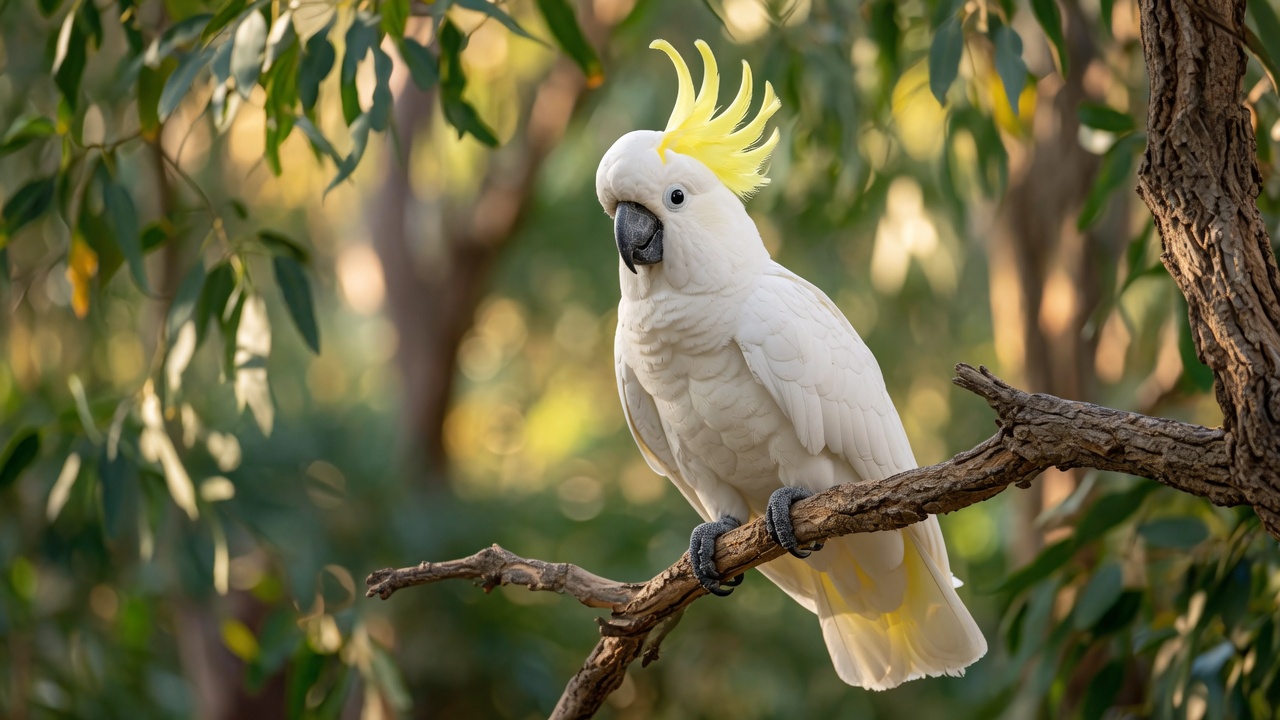
The umbrella cockatoo, native to the tropical rainforests of Indonesia's Maluku Islands, is one of the most commonly kept cockatoo species and among the most affection-dependent parrots in aviculture. In the wild, cockatoos maintain near-constant physical contact with their flock and mate, a trait that carries directly into captivity as an intense need for daily interaction with their keeper. Habitat loss and historic capture for the pet trade have made wild populations increasingly rare.
📋 Quick Facts
Native Range
Maluku Islands, Indonesia
Natural Habitat
Tropical lowland and hill rainforest
Adult Size
18 inches (46 cm); 1.1-1.7 lbs
Wild Diet
Seeds, nuts, fruit, and insects
Wild Lifespan
40-60 years (some individuals living considerably longer)
Conservation Status
Endangered (IUCN)
📜 History
Philipp Ludwig Statius Muller described the species in 1776, and it went onto CITES Appendix II in 1981, a listing designed to cap exports rather than halt them. The cap leaked badly. Indonesian quotas set from 1988 were routinely overshot, and in 1991 alone trappers took at least 6,600 birds, exceeding local quotas by as much as eighteen times; researchers estimate 17 percent of the world population was removed annually between 1990 and 1993. The United States recorded 10,143 imports across the 1990s. Indonesia finally set a zero quota in 1999, and the IUCN reclassified the species as Endangered in 2018.
⚖️ Compare
Cockatoo
Human
Adult Size
18 inches (46 cm); 1.1-1.7 lbs
5-6 feet (150-185 cm); ~135-200 lbs
Wild Lifespan
40-60 years (some individuals living considerably longer)
~73 years (global average)
Wild Diet
Seeds, nuts, fruit, and insects
Omnivorous - eats just about anything
Native Range
Maluku Islands, Indonesia
Global - originated in Africa roughly 300,000 years ago
Natural Habitat
Tropical lowland and hill rainforest
Everywhere from arctic tundra to tropical megacities
Conservation Status
Endangered (IUCN)
Least Concern (8+ billion and counting)
🧠 Test Yourself
What's the Cockatoo's native range?
📖 Care Guide
Cockatoo Care Guide
The feathered drama major that loves you loudly and forever!
⚖️ Where it is legal
5 US jurisdictions restrict this species, from outright bans to permits. Every one quotes the rule it comes from.
⚖️ Legal Guide
Subscribe - it's free
New animal facts and care guides straight to your inbox. No spam. 🐾
📰 Deep Dive
🦜 How Much Does a Cockatoo Really Cost?
🦜 How to Handle a Cockatoo (And Why They're So Often Surrendered)
🦜 Common Cockatoo Health Issues and What Causes Them
🦜 Cockatoo Cage Setup: Size, Material, and Daily Enrichment That Actually Matters
🦜 Cockatoo Feeding: Schedule, Diet, and the Ratio Worth Memorizing
🦜 Cockatoo Enrichment: What the Research Actually Supports
🩺 Health and More
⚠️ Household Hazards for Pet Birds: The Complete Safety Checklist
🚪 Quarantining a New Bird: The Real Timeline and Why It Matters
💩 Reading Bird Droppings: The Daily Health Check Every Owner Should Know
🌙 Photoperiod and Sleep: The Light Schedule That Controls Your Bird's Hormones
🦜 Converting a Seed-Eating Bird to Pellets Without Starving It
✂️ Wing Clipping: Flighted vs. Clipped, Both Sides Explained
🔦 Bird Emergency Plan: Power Outages, Travel, and Transport
⚖️ Sexing, Weight, and Body Condition in Pet Birds: What Actually Works
🥚 Chronic Egg Laying and Egg Binding in Budgies, Cockatiels, and Lovebirds
🪶 Why Is My Bird Losing Feathers? Molt vs. Plucking vs. PBFD vs. Giardia
🦜 Choosing a Pet Bird: What You're Actually Signing Up For
🦠 Avian Polyomavirus: Budgerigar Fledgling Disease and French Molt
🦜 Reading Bird Body Language: Fluffed Content vs. Fluffed Sick
🌫️ Feather Dust, Air Quality, and Bird Fancier's Lung
🎯 Parrot Training: The Behavior Ladder From Budgie to Macaw
🩹 Bird First Aid Kit and Grooming: Nails, Beak, and Blood Feathers
📋 Succession Planning for a Pet That May Outlive You
🕊️ Adopting a Rescue Parrot: The First Months, Honestly
⚠️ Four Pets, Four Things Nobody Mentions Before You Buy
🦜 Cockatiel vs. Cockatoo: Which Parrot Actually Fits Your Life
🦜 African Grey Parrot vs. Cockatoo: Which Big Parrot Commitment Fits You
🦅 The Ultimate Birdwatching Guide: Best Places, Times, and Tips for Beginners (2026)
🤓 Did You Know?
Cockatoos are considered the most affection-dependent parrots in aviculture. In the wild they maintain near-constant physical contact with their flock and mate, and a captive cockatoo often expects the same level of contact from its owner - which is exactly why the species has one of the highest rates of severe feather-plucking and behavioral problems of any commonly kept parrot when that need isn't met.
Explore More