Budgie / Parakeet
Melopsittacus undulatus
On This Page▾
🌍 Overview
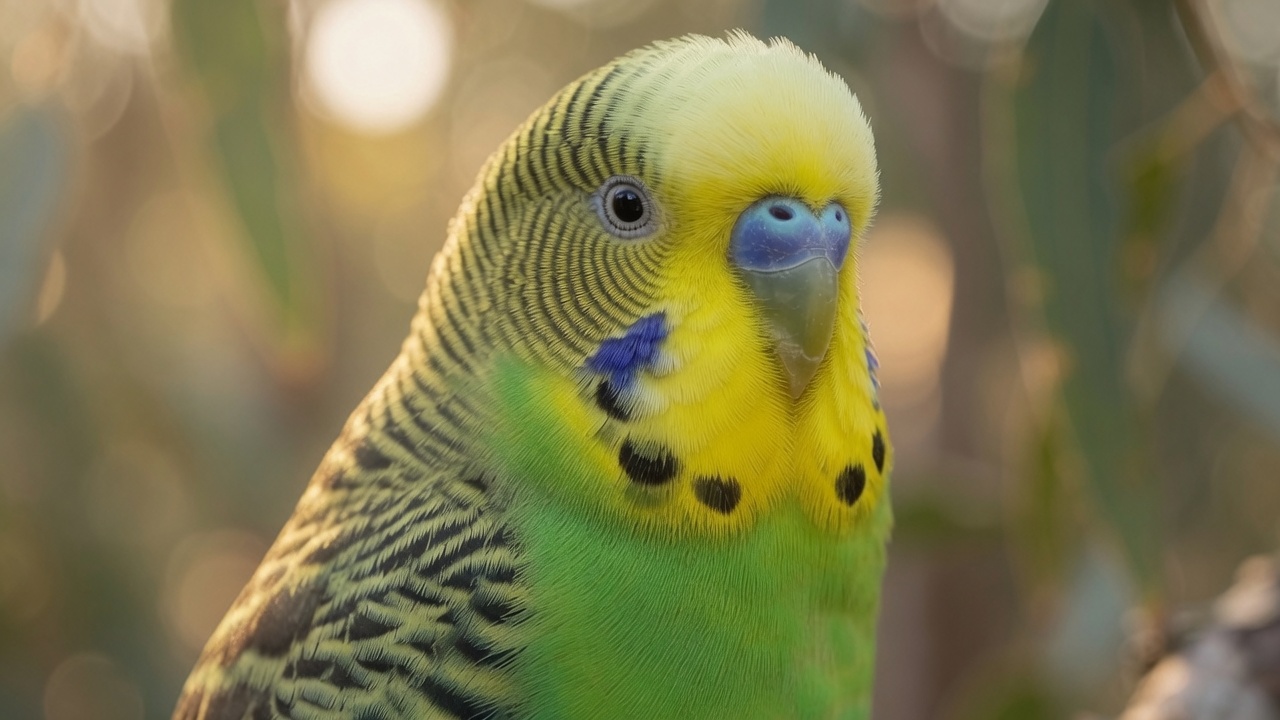
The budgerigar (budgie) is native to the semi-arid interior of Australia, where enormous nomadic flocks follow rainfall and seed availability across the outback. In the wild they are small, swift, and highly social - flocks of thousands are common. They are the third most popular pet in the world after dogs and cats, and the best-selling pet bird globally. With training, many budgies develop the ability to mimic speech - some hold records for the largest bird vocabulary.
📋 Quick Facts
Native Range
Interior of Australia
Natural Habitat
Open grassland, scrubland, and open woodland
Adult Size
7 inches (18 cm); 1-1.4 oz
Wild Diet
Grass seeds, berries, and plant matter
Wild Lifespan
Not well documented in the wild; typically 7 to 15 years in captivity, with the oldest documented individual living 29 years, 2 months (Guinness World Records)
Conservation Status
Least Concern (IUCN)
📜 History
George Shaw described the species in 1805, and John Gould gave it the binomial Melopsittacus undulatus in 1840, the same year he carried four live birds home to Britain from his Australian expedition. Most of what Gould brought back survived the voyage only as stuffed specimens; the budgerigar was hardy enough to arrive alive. Aviculturists had it breeding in captivity by the 1850s, and blue birds soon turned up in continental collections, fetching a steep premium once they reached British keepers. The Budgerigar Club formed in 1925 and staged its first show the year after, setting the exhibition standards that produced the heavy show type kept alongside the ordinary pet bird.
⚖️ Compare
Budgie / Parakeet
Human
Adult Size
7 inches (18 cm); 1-1.4 oz
5-6 feet (150-185 cm); ~135-200 lbs
Wild Lifespan
Not well documented in the wild; typically 7 to 15 years in captivity, with the oldest documented individual living 29 years, 2 months (Guinness World Records)
~73 years (global average)
Wild Diet
Grass seeds, berries, and plant matter
Omnivorous - eats just about anything
Native Range
Interior of Australia
Global - originated in Africa roughly 300,000 years ago
Natural Habitat
Open grassland, scrubland, and open woodland
Everywhere from arctic tundra to tropical megacities
Conservation Status
Least Concern (IUCN)
Least Concern (8+ billion and counting)
🧠 Test Yourself
What's the Budgie / Parakeet's native range?
Subscribe - it's free
New animal facts and care guides straight to your inbox. No spam. 🐾
📰 Deep Dive
🐦 How Much Does a Budgie Really Cost?
🐦 How to Handle and Tame a Budgie
🐦 Common Budgie Health Issues and Why Diet Drives Most of Them
🐦 Budgie Cage Setup: Width Over Height, and a Few Rules That Actually Matter
🦜 Budgie Feeding: The Squeak That Means Iodine
🐦 Budgie Enrichment: Foraging, Toys, and Cutting Cage Boredom
🩺 Health and More
⚠️ Household Hazards for Pet Birds: The Complete Safety Checklist
🦠 Avian Gastric Yeast (Megabacteriosis): The Silent Weight-Loss Disease
🚪 Quarantining a New Bird: The Real Timeline and Why It Matters
💩 Reading Bird Droppings: The Daily Health Check Every Owner Should Know
🌙 Photoperiod and Sleep: The Light Schedule That Controls Your Bird's Hormones
🦜 Converting a Seed-Eating Bird to Pellets Without Starving It
✂️ Wing Clipping: Flighted vs. Clipped, Both Sides Explained
🔦 Bird Emergency Plan: Power Outages, Travel, and Transport
⚖️ Sexing, Weight, and Body Condition in Pet Birds: What Actually Works
🥚 Chronic Egg Laying and Egg Binding in Budgies, Cockatiels, and Lovebirds
🪶 Why Is My Bird Losing Feathers? Molt vs. Plucking vs. PBFD vs. Giardia
🦜 Choosing a Pet Bird: What You're Actually Signing Up For
🦠 Avian Polyomavirus: Budgerigar Fledgling Disease and French Molt
🦜 Reading Bird Body Language: Fluffed Content vs. Fluffed Sick
🐦 Colony and Aviary Keeping: Budgies, Canaries, and Finches in Groups
🌫️ Feather Dust, Air Quality, and Bird Fancier's Lung
🎯 Parrot Training: The Behavior Ladder From Budgie to Macaw
🩹 Bird First Aid Kit and Grooming: Nails, Beak, and Blood Feathers
📋 Succession Planning for a Pet That May Outlive You
🕊️ Adopting a Rescue Parrot: The First Months, Honestly
📏 Rabbit and Budgie: Two Classic Pets, Almost Always Kept Too Small
🦜 Budgie vs. Cockatiel: Which Beginner Bird Fits You Better
🦜 Lovebird vs. Budgie: Which Small Parrot Actually Fits Your Household
🦅 The Ultimate Birdwatching Guide: Best Places, Times, and Tips for Beginners (2026)
🤓 Did You Know?
Budgies can learn to talk and have been known to learn over 1,700 words! The Guinness World Record holder was a budgie named Puck who knew 1,728 words, more than any other bird on record!
Explore More