Ackie Monitor
Varanus acanthurus
On This Page▾
🌍 Overview
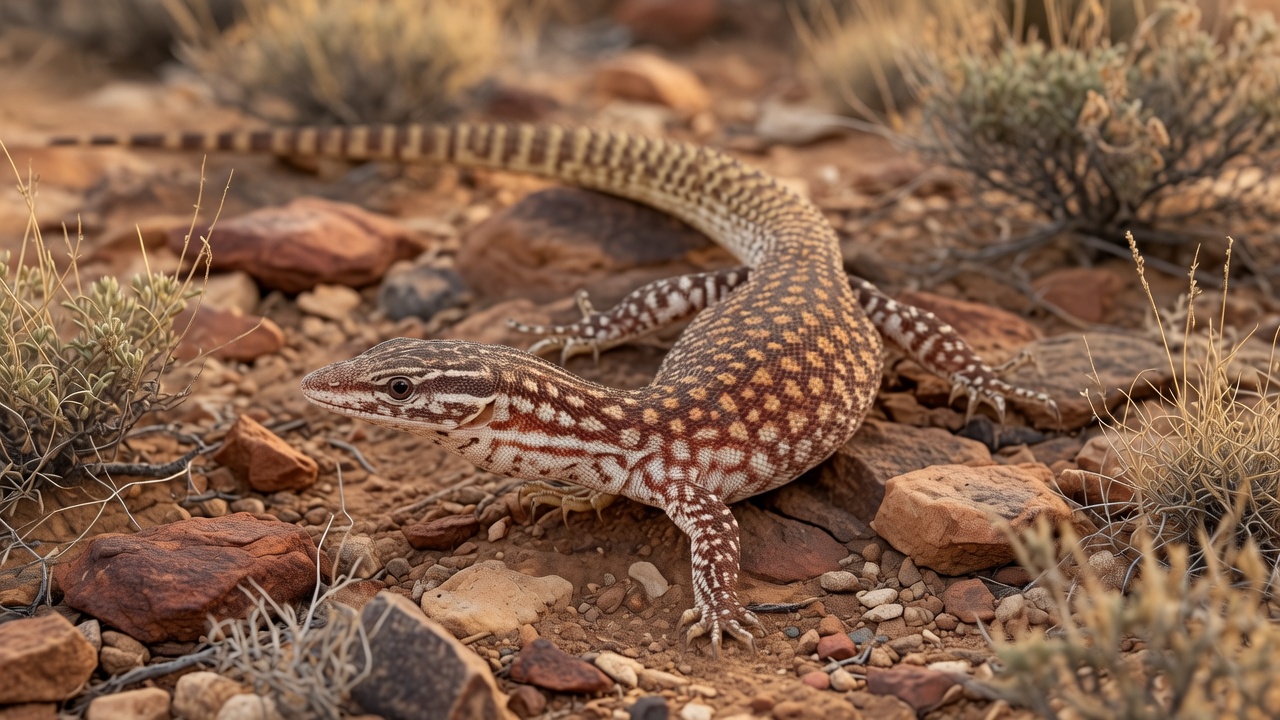
The ackie monitor (ridge-tailed monitor) is a small, active monitor lizard native to the rocky arid regions of northwestern and central Australia. Despite being a "dwarf" member of the Varanus genus - which includes the massive Komodo dragon - ackies exhibit the same intelligence and prey drive as their larger relatives. They use their spiny, whip-like tails to wedge themselves into rock crevices when threatened.
📋 Quick Facts
Native Range
Northwestern and central Australia
Natural Habitat
Rocky desert, arid scrubland, and spinifex grassland
Adult Size
Around 2 feet (0.6 m) typical, reported from 17.3 inches (44 cm) to 30 inches (76 cm)
Wild Diet
Insects, spiders, scorpions, small lizards, and eggs
Wild Lifespan
Not well documented in the wild; the widely quoted 15 to 20 years is a captive-care figure
Conservation Status
Least Concern (IUCN)
📜 History
George Albert Boulenger described the species in 1885 in the second volume of his catalogue of the lizards held by the British Museum, naming all three currently recognized subspecies in the same work. Australia banned the commercial export of live native animals in 1982, so nothing has legally left the country for the trade since, and foreign stock descends from a small pool of earlier founders. The species turned out to breed freely in captivity, with clutches of up to 18 eggs, and that output is what carried it from specialist rarity to a fixture of the reptile hobby. Ridge-tailed monitors nevertheless remain among the Australian reptiles most often found for sale on overseas websites, which keeps smuggling out of Australia a live enforcement problem.
⚖️ Compare
Ackie Monitor
Human
Adult Size
Around 2 feet (0.6 m) typical, reported from 17.3 inches (44 cm) to 30 inches (76 cm)
5-6 feet (150-185 cm); ~135-200 lbs
Wild Lifespan
Not well documented in the wild; the widely quoted 15 to 20 years is a captive-care figure
~73 years (global average)
Wild Diet
Insects, spiders, scorpions, small lizards, and eggs
Omnivorous - eats just about anything
Native Range
Northwestern and central Australia
Global - originated in Africa roughly 300,000 years ago
Natural Habitat
Rocky desert, arid scrubland, and spinifex grassland
Everywhere from arctic tundra to tropical megacities
Conservation Status
Least Concern (IUCN)
Least Concern (8+ billion and counting)
🧠 Test Yourself
What's the Ackie Monitor's native range?
📖 Care Guide
Ackie Monitor Care Guide
The miniature Komodo dragon with a huge personality!
⚖️ Where it is legal
12 US jurisdictions restrict this species, from outright bans to permits. Every one quotes the rule it comes from.
Subscribe - it's free
New animal facts and care guides straight to your inbox. No spam. 🐾
📰 Deep Dive
🦎 How Much Does an Ackie Monitor Really Cost?
🦎 How to Handle an Ackie Monitor
🦎 Common Ackie Monitor Health Issues and What Causes Them
🦎 Ackie Monitor Enclosure Setup: Bigger, Hotter, and Deeper Than You'd Guess
🦎 Ackie Monitor Feeding: Schedule, Diet, and Why They Stop Eating
🦎 Ackie Monitor Enrichment: Eight Out of Eight, First Try, Ten Minutes
🩺 Health and More
🔌 Reptile Emergency Plan: Power Outages, Travel, and Pet Sitters
💧 Reading Reptile Stool, Urates, and Hydration: A Daily Health Check
🧼 Salmonella and Reptile Hygiene: The Rules That Actually Matter
🌡️ Reptile Heating and Thermostats: Preventing Burns
🧫 Reptile Quarantine: Why New Snakes and Lizards Need Months, Not Weeks
🦎 Understanding Reptile Shedding (Ecdysis)
🤓 Did You Know?
Ackie monitors 'taste' the air constantly with their forked tongues, using their Jacobson's organ to detect prey scent, just like their giant Komodo cousins!
Explore More