Parrotlet Cage Setup: Small Bird, Big Space and Enrichment Needs
On This Page▾

Parrotlet housing gets underestimated for the same reason the bird does: the size fools people into thinking a small cage and a quiet life will do. A few details, tight bar spacing among them, matter more than the small footprint suggests.
Cage Size
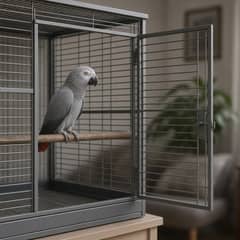
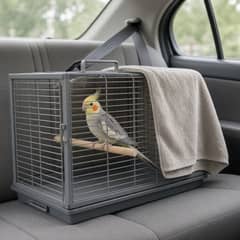
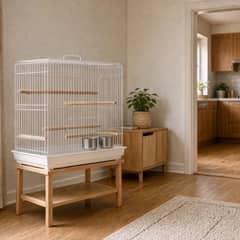
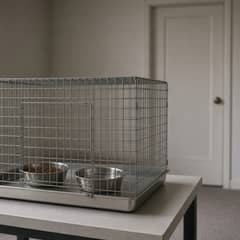
A cage made for a budgie or lovebird works for a parrotlet if its bars are tight enough, and bigger is always better. About 18x18x24 inches is a sensible minimum for a single bird. Parrotlets are active and playful for their size, so a wide cage with play space gets used. A pair needs much more space than the single-bird minimum.
Bar Spacing: Tighter Than Most Small-Bird Cages
Choose bars spaced about 1/4 inch apart. A parrotlet's head is small, so spacing that is safe for a slightly larger bird can let it squeeze out or get a head or foot caught, which is sometimes fatal. Skip round cages, and make sure every door locks securely, because this clever bird can work out a simple latch.
Materials
Powder-coated or stainless steel only. Avoid painted finishes, galvanized wire, or anything made with lead or zinc. All of them are toxic if chewed, and parrotlets are persistent, strong chewers for their size.
Where the Cage Goes
Put the cage in a fairly busy room where the family spends its day, so the bird gets regular interaction, with one side against a wall for security. Never put it in the kitchen: overheated nonstick cookware gives off fumes that kill birds. The bird also needs somewhere it can sleep without interruption. A room that goes dark and quiet at night, or a second sleep cage, matters as much as the daytime spot.
Temperature
Normal household range, roughly 65 to 80°F, works well. No special heating or cooling is needed. Keep the cage out of drafts and direct sun.
Lining the Tray
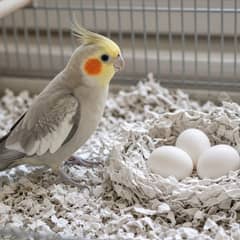
A paper cage liner is the simplest, most hygienic option. Change it every day. Avoid substrates prone to mold in a humid environment. A grate over the tray keeps the bird out of its droppings. Paper shows the droppings clearly, and a change in them is the easiest early sign of illness.
Lighting
Indoor birds benefit from extra UV light to make vitamin D3 for calcium absorption, because window glass filters out the wavelengths that matter. Calcium ties directly to the egg-binding risk a hen carries. Keep a steady day and night cycle too: about 10 to 12 hours of covered darkness supports healthy sleep and a calmer hormonal cycle in females.
Perches
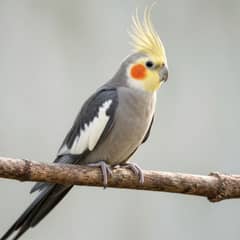
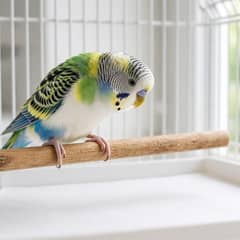
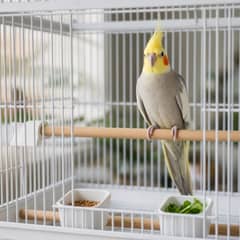
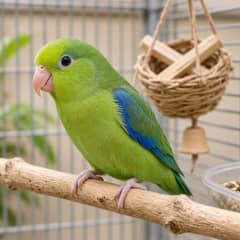
A parrotlet spends nearly all its life standing, so the perches are its floor. Use perches of varied diameter and material, since natural wood of different thicknesses spreads the pressure across the foot better than uniform dowels.
- Size: the toes should wrap about three-quarters of the way around the perch. One too thick for the foot leaves the bird slipping, especially when startled.
- Branches from outside: use only safe trees such as apple, elm, ash, maple or willow, and bake them at 200°F for 30 minutes first. Never use cherry, apricot, peach, nectarine, plum, oak, laurel, pitch pine or yew.
- Rope: soft cotton or hemp is easy on the feet. Check it daily for loose strands that can wrap a toe.
- Concrete or grooming perches: fine as one of several, never the only one, because they rub the soles of the feet.
Skip sandpaper perch covers. Set perches at different heights, none directly over a dish, and replace any that are chewed or splintered.
Food and Water Dishes
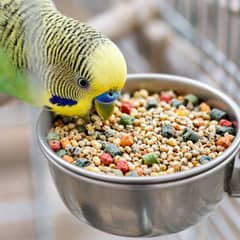
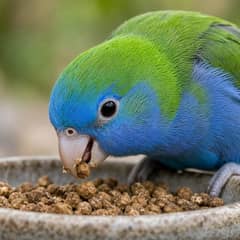
Use three dishes: dry food, fresh fruit and vegetables, and water. Attach them to the side of the cage, not the floor, so droppings do not fall in, and keep them shallow enough for a small beak to reach the bottom. Stainless steel works well. Wash them every day. Keep a cuttlebone or mineral block clipped to the bars at all times.
Toys and Toy Safety
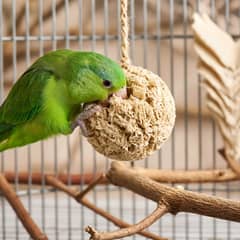
A parrotlet is a clever, high-energy bird, and without an outlet, boredom leads to feather plucking and other stress behavior. Offer shreddable toys of natural fiber rope, leather and soft wood, plus parrot kabobs (chew pieces threaded on a skewer), swings, boings (coiled rope perches) and interactive puzzles. Rotate in foraging and shreddable chew toys regularly rather than leaving the same one or two in the cage indefinitely. No one regulates bird toy safety, so check each one before it goes in:
- No snaps, clasps, bell clappers or open chain links that can trap a beak, toe or tongue.
- No loose fibers or parts small enough to swallow.
- No glass. A polished stainless steel mirror is the safer kind, and any mirror comes out if a hen starts treating it as a mate.
Introduce new toys slowly, wash soiled ones in warm, soapy water, and replace any that are damaged.
Bathing
Many parrotlets bathe in the water dish, and many love a gentle mist from a plant sprayer. Indoor heating and air conditioning dry the feathers, so offer a shallow dish of lukewarm water or a fine mist from a spray bottle most days, early enough for the feathers to dry before night.
The Deep Clean
On top of the daily liner change and dish wash, scrub the whole cage once or twice a month:
- Move the bird to another room, and open a window or run a fan.
- Spray the cage with a bird-safe disinfectant or mild dish soap in hot water, and leave it on for 10 to 15 minutes.
- Scrub every bar, tray and perch, then rinse with fresh water until no residue is left.
- Dry everything before the bird goes back in.
Replace wood and other porous perches and toys every 6 to 12 months, since dirt soaks into them.
In the wild, Pacific parrotlets live in flocks of 40 to 50 birds. In a home they still pair easily and can live in groups in a large aviary, but they squabble over objects and territory, which is why setting up for a pair looks so different from setting up for one bird.
Single Bird or Pair: Decide Before You Buy the Cage
A single bird needs less floor space but real daily time with you to stay well adjusted. A pair will likely bond closely to each other, more than to you, and needs a noticeably larger cage from the first day. Keep parrotlets apart from other bird species, and introduce a second parrotlet gradually, under supervision:
- Quarantine the new bird in a separate room for 30 to 45 days.
- Then keep the birds in separate cages in the same room.
- Give them supervised time together out of the cage.
- Move them into one cage only once both are visibly comfortable, ideally a cage neither bird has already claimed.
Dropping two parrotlets in together and hoping they get along is a common first-timer mistake, and this species can fight hard enough to injure a cage mate.
Before the Bird Comes Home
- Put the cage in its spot: a busy room, one side against a wall, away from the kitchen, drafts and direct sun.
- Fit the grate and line the tray with paper.
- Fit the perches at different heights, none over a dish.
- Clip the three dishes and the cuttlebone to the bars.
- Add two or three toys.
- Check everything for snaps, loose strands and splinters.
- Fill the food and water dishes.
- Have the cage cover ready, or pick the dark, quiet spot where the bird will sleep.
Tight Bars, Locked Doors and Room to Move
Buy the roomiest cage you can with bars about 1/4 inch apart, locks on every door, and no zinc or lead anywhere a beak can reach. Then fill it with things to chew and give the bird daily time out of it with you.
Sources & Further Reading
Last reviewed 20 Sep 2026 · 3 sources
- Lafeber Pet Birds: Parrotlet, Personality, Food & Care; Pacific Parrotlet, Personality, Food & Care
- PetMD: Meet the Parrotlets (Laurie Hess, DVM)
- VCA Animal Hospitals: Housing Large Birds; Perches for Birds; Cage Hygiene in Birds; Bathing Birds
A routine chart and equipment log you can fill in for your own setup. The Universal Pet Kit has it, among 19 forms for any pet that you can type into or print.
Frequently Asked Questions
What size cage does a parrotlet need?
A cage sized for a budgie or lovebird works if the bars are tight enough, and bigger is better. About 18 by 18 by 24 inches is a sensible floor for one bird, and wider beats taller for a bird this active.
How tight does bar spacing need to be on a parrotlet cage?
About 1/4 inch. A parrotlet's head is small enough to slip between or get caught in bars spaced for a slightly bigger bird.
What cage material is safe for a parrotlet?
Powder-coated or stainless steel. Skip painted finishes, galvanized wire, and anything with zinc or lead in it, since all carry a real risk of toxic exposure to a persistent chewer.
How much enrichment does a parrotlet need?
More than its size suggests. This is an intelligent, high-energy bird that needs daily out-of-cage time and a rotating supply of foraging and chew toys. Without them, boredom is a common path toward feather plucking and other stress behavior.
Should I set up for one parrotlet or a pair?
One bird bonds most closely with you but needs your time every day. A pair needs a bigger cage and a slow introduction, and will likely bond to each other more than to you. Decide before you buy the cage.
Recommended Gear
As an Amazon Associate I earn from qualifying purchases through the links above, at no extra cost to you.

Written by Michael Ryan
Mike keeps two rescued bearded dragons, Dex and Cera, and writes the care guides on BeastlyFacts from his own research and mistakes. He is not a veterinarian.
More about Michael Ryan →You May Also Like


Subscribe - it's free
An occasional email when something new is worth your time. No spam.
Health and More