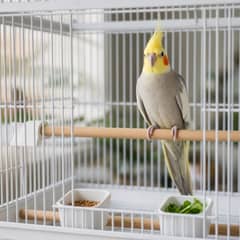
Parrotlet Enrichment: Five Inches of Full-Sized Parrot
On This Page▾

Parrotlets are sold on the basis of being small. Everything difficult about them comes from being a parrot.
A parrotlet has a full parrot's intelligence, destructiveness and temperament in a five inch body. The requirements do not scale down with the animal. A small cage and a quiet life are the standard route to a nippy, territorial, bored bird.
A Day on the Dry Pacific Slope
The wild Pacific parrotlet lives on the dry western side of the Andes, from western Ecuador into northwestern Peru, from the coast up into the foothills. It does not migrate. Its country is dry: thorny scrub, cactus scrub, deciduous and riverside woods, and the plantations, irrigated fields and gardens people have made there.
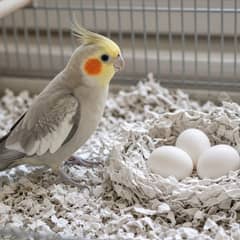
The day is spent working for food. Parrotlets pick grass seed, berries, tamarind pods and cactus fruit, foraging both up in the vegetation and down on the ground. They move in chattering groups that call constantly in flight and quiet down once they settle. They breed from January to May in almost any hole they can find: a tree cavity, a fence post, the end of a pipe, even another bird's old mud or stick nest. The hen lays four to six eggs.
Each part of that day points to something a pet parrotlet needs: food to find in branches and on the floor, things to chew and pull apart, and company and conversation.
Foraging Alongside the Bowl
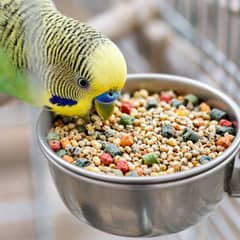
Make the bird work for part of its food. This is the cheapest change and the one that does the most: in other parrots, foraging work has prevented and reduced feather picking. A wild parrotlet spends its day searching for food, and a full dish as the only source removes all of it.
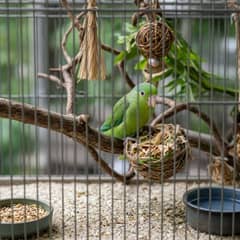
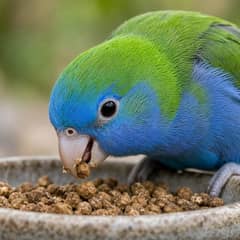
Hang forage toys sized for a small beak, wrap food in paper, and tuck it into cardboard. Split it across several spots so the bird has to search. Because wild parrotlets feed on the ground as well as in the branches, scatter a little seed on a clean floor tray some days, with no perch above it. Rotate the presentation, because a parrotlet works things out fast.
None of this changes what goes in: the pellet base is the same either way, and a bowl of it stays available as the fallback, since a small bird that fails to solve a toy still has to eat that day.
Chewing, in Constant Supply
A parrotlet's beak never stops chewing. Give the bird untreated soft wood, plain paper, cardboard and shreddable toys, and replace them as they get destroyed. Bird-safe wooden chews, natural rope, leather, fir or pine branches and heat-sterilized pine cones all get used, and parrot kabobs (chew pieces threaded on a skewer) are a favorite. Check any branch from outside against the safe and unsafe tree list and bake it at 200°F for 30 minutes first.
A cuttlebone covers the calcium and beak-conditioning side. A parrotlet with nothing it is allowed to destroy starts on perches, cage fittings or its own feathers.
Perches and Movement
Fit perches of varied diameter and natural branch, so the grip changes through the day. Small feet on uniform dowel all day is how pressure sores develop. Place them so there is still a clear span to fly across, and add a swing, a rope or a boing (a coiled rope perch), which parrotlets use hard.
Training and Attention
Train for 5 to 10 minutes, two or three times a day, with rewards, and end each session while the bird is still engaged. Target training (touching a stick for a treat), the step-up (stepping onto a finger when asked) and recall (coming to you when called) all work with a bird this size. A parrotlet can also learn simple tricks such as hanging upside down from a finger, a few words and its own name.
Short, reward-based sessions are one of the fixes for feather picking, alongside foraging, and training does more than anything else to keep a territorial little parrot manageable.
Time Out of the Cage
A parrotlet has to be handled every day to stay tame, even if only for a short time. A hand-raised bird left in the cage for a stretch of busy weeks drifts back toward nipping, and winning it back takes longer than the weeks that were skipped.
Supervise every minute out. The hazards come from the bird's size. A parrotlet on the floor gets stepped on, one that squeezes into a gap behind furniture gets trapped, and a cat or dog treats it as prey. Close the doors, put other pets in another room, and keep the session in one room you have checked for hazards rather than the run of the house. Fans, open water and nonstick fumes are hazards in any home with a bird loose in it.
Company, One Way or the Other
Give it company in one of two ways: a bonded pair, or an owner who is there every day. A bonded pair covers the social requirement and usually bonds less to you. That is the trade. Parrotlets pair easily and can even live in groups in a large aviary, but they squabble over objects and territory.
A second parrotlet is for the keeper who cannot give a daily session. Two birds keep each other company through a long working day, and a male and a female kept together will breed.
Do not mix parrotlets with other species.
Parrotlets are famously unbothered by size differences and will square up to birds several times their weight. That boldness gets them hurt, and it is the main reason they are not mixed-aviary birds.
Bathing and Sleep
Parrotlets like to bathe, and many bathe in the water dish or enjoy a gentle mist from a spray bottle. Offer shallow water or a mist most days, in the morning, so the feathers dry well before night.
Give it 10 to 12 hours of dark, quiet sleep a night. Under-slept small parrots get nippier, which is the behavior owners then attribute to temperament.
A Day in Practice
- Morning: fresh pellets and water, chopped vegetables in their own dish and taken out within a couple of hours, a bath or mist, and a short training session.
- Midday: foraging toys loaded with part of the day's pellets and the seed allowance, and a new chew to destroy.
- Afternoon or evening: supervised time out of the cage in one room you have checked for hazards, with a second short training session.
- Night: cage covered or the room dark, and 10 to 12 hours of quiet.
How to Tell It Is Working
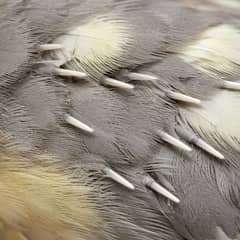
A parrotlet with enough to do chatters, plays, shreds its toys, works its foraging toys and steps up readily. Its feathers are smooth and whole. The warning signs are feather picking, a bird that nips more and more, screaming, and one that sits fluffed and quiet. The same signs can mean illness. A bird that sits fluffed and quiet, or starts picking its feathers, needs an avian vet, a vet who treats birds, within about a day.
New Things, One at a Time
Add one new toy or change at a time, and introduce it slowly. Swap toys in and out instead of piling them up, and let the bird get used to each change before the next one.
Priority Order
- Part of the food delivered through foraging, with the pellet bowl as the fallback
- Constant chewing and shredding material
- Daily short training sessions
- Perches of varied diameter, with a clear flight span
- A bonded pair, or daily supervised time out with an involved owner
- Ten to twelve hours of dark, quiet sleep
- Novel objects, rotated and never piled up
Start With the Food
If the cage changes in only one way this week, make it the food: some pellets in a forage toy, a little seed on the floor tray, the bowl still full. Add the chewing supply and the daily training next.
Sources & Further Reading
Last reviewed 24 Sep 2026 · 6 sources
- World Parrot Trust: Pacific Parrotlet (Forpus coelestis), for the wild bird's range, habitat, diet and breeding
- BirdLife International DataZone: Pacific Parrotlet
- Meehan CL, Millam JR and Mench JA (2003). Foraging opportunity and increased physical complexity both prevent and reduce psychogenic feather picking by young Amazon parrots. Applied Animal Behaviour Science
- Feather damaging behaviour in parrots: a review with consideration of comparative aspects (PDF, downloads)
- Lafeber Pet Birds: Parrotlet, Personality, Food & Care
- PetMD: Meet the Parrotlets (Laurie Hess, DVM)
Frequently Asked Questions
Can foraging prevent feather picking?
It is the first thing to try. A parrotlet with food to search for has less time and less reason to pick, and a vet check rules out a medical cause.
Is a parrotlet an easy small bird?
No. A parrotlet is a true parrot in a five-inch body, with the intelligence and temper to match. Given a small cage and little to do, it tends to turn nippy and territorial.
Are parrotlets aggressive?
They can be territorial and are bold well beyond their size, including toward much larger birds. That is a reason to house them alone or as a bonded pair rather than in a mixed aviary, and a reason not to leave one loose around other pets.
Should I get two?
A bonded pair covers the social side well and usually means less bonding to you. A single parrotlet with an involved owner also works. What does not work is a single bird with an owner who is out all day.
How much chewing material do they need?
More than the size suggests. Small beaks work constantly, and a parrotlet with nothing to destroy will start on perches, cage furniture or feathers. Soft wood, paper and consumable toys should be in constant supply.
What is the easiest improvement to make?
Make the bird work for part of its food. Put the seed allowance and some pellets into foraging toys and paper parcels, and keep the pellet bowl full as the fallback.
More on the Parrotlet
Recommended Gear
As an Amazon Associate I earn from qualifying purchases through the links above, at no extra cost to you.

Written by Michael Ryan
Mike keeps two rescued bearded dragons, Dex and Cera, and writes the care guides on BeastlyFacts from his own research and mistakes. He is not a veterinarian.
More about Michael Ryan →You May Also Like
Subscribe - it's free
An occasional email when something new is worth your time. No spam.
Health and More